Japanese Resumes | Job Search and Career Change Support for International Residents - GTN MAGAZINE
日本語
日本語
English

Japanese Resumes | Job Search and Career Change Support for International Residents

In Japanese corporate culture, there is a strong tendency to emphasize an applicant's personality and social skills. Consequently, the resume is positioned as a vital tool for making these judgments. Providing accurate information, writing neatly, and submitting a clean document free of typos are seen as indicators of an applicant's attitude toward work and attention to detail.

This article explains the characteristics, writing methods, and support available for Japanese resumes, specifically for foreign residents. We hope you find it helpful.

目次

What is a Japanese Resume?

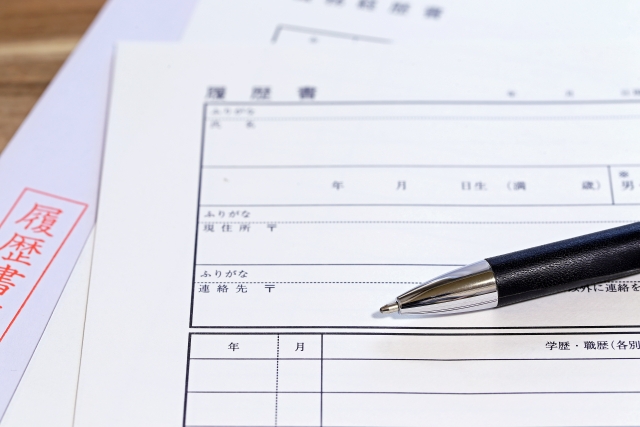
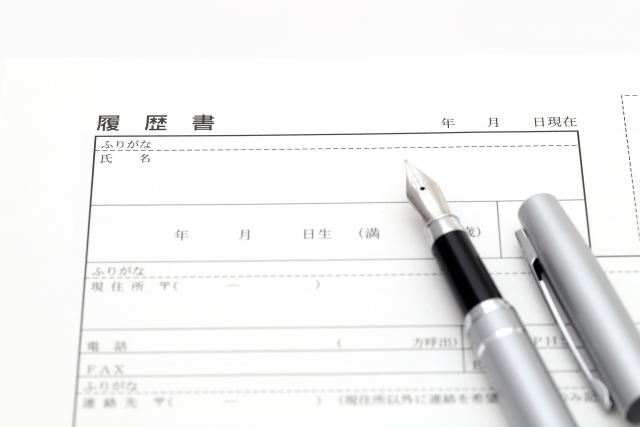
A Japanese resume (Rirekisho) is one of the most important documents in job hunting and career change activities.It is a document that lists an applicant's basic information, educational background, work history, qualifications, and special skills, serving as the first clue for hiring managers to evaluate the applicant.Japanese resumes have unique characteristics not found in other countries.The most distinctive features are the level of detail in personal information and the strictness of the filling-out method. In addition to name, address, and date of birth, it is common to attach a headshot. Furthermore, the basic rule is to list entries in chronological order (from oldest to newest).

The Role of a Resume

A resume is not just a document for providing information; it plays the following roles:

•Formation of First Impression: The first source of information an interviewer obtains before meeting the applicant.

•Confirmation of Basic Skills: Checking Japanese language proficiency and document creation ability.

•Confirmation of Career Consistency: Checking the flow of the career and the consistency of career choices.

•Material for Aptitude Judgment: Judging suitability for the company based on the reason for application and self-PR.

•Providing Topics for the Interview: Serving as the basis for questions and topics during the interview.

For foreign residents, creating a Japanese resume is the first major hurdle in job hunting in Japan.Creating a resume that follows Japan's unique rules and customs is an excellent opportunity to demonstrate your understanding of and ability to adapt to Japanese companies.


Differences Between Japanese and Overseas Resumes

There are many differences in format, content, and points of emphasis between Japanese resumes and overseas (especially Western) resumes (Resumes/CVs).It is important for foreign residents to understand these differences when conducting job hunting or career change activities in Japan.

Main Points of Difference

ItemJapanese ResumeOverseas Resume (Resume/CV)
FormatUnified format (Ministry of Health, Labour and Welfare format, JIS standard, etc.)High degree of freedom, unique designs possible
Personal InformationIncludes photo, age, gender, date of birth, etc.No photo required; age, gender, and date of birth are not listed to prevent discrimination
ChronologyFrom oldest to newest (Education/Work History)From newest to oldest (Emphasis on most recent experience)
MethodHandwritten is traditional (PC creation is also common recently)PC creation is standard (Handwriting is almost non-existent)
EmphasisOverall career (No gaps in education/work history)Skills and achievements related to the job
Page CountBasically 1-2 pages of a fixed format1 to multiple pages depending on work history (1-2 pages in the US, multiple pages possible in Europe)
CorrectionIf there is an error, rewrite everything (Correction fluid, etc., is not allowed)Common to improve while making corrections


Details of Characteristic Differences

•Presence of a Headshot: While it is common to attach a ID photo to a Japanese resume, in countries like the US, photos are not included from the perspective of preventing discrimination.

•Handling of Personal Information: It is standard to include personal information such as age, gender, and date of birth in a Japanese resume, but overseas, this information is usually not listed to prevent discrimination based on age or gender.

•Order of Education and Work History: In Japan, it is common to list education and work history in chronological order (oldest first), whereas overseas, the basic rule is to list from the most recent experience.

•Points of Appeal: In overseas resumes, skills and achievements related to the applied position are brought to the forefront, but in Japanese resumes, there is a tendency to emphasize the overall career and background.

•Listing References: Western resumes may have a "References" section, but this item does not exist in Japanese resumes.

A resume is also a document that reflects cultural differences. The fact that Japanese resumes require detailed personal information and emphasize format can be seen as an expression of the emphasis on "belonging" and the tendency to look at suitability for a group in Japanese corporate culture. On the other hand, the emphasis on skills and achievements in overseas resumes reflects a culture that values individual ability and results.


Basic Format of a Japanese Resume

There are mainly the following types of Japanese resumes.It is important to understand the characteristics of each and choose the appropriate one according to the company you are applying to and the situation.

Main Types of Resumes

•JIS Standard Resume: This was the standard format previously defined by the Japanese Industrial Standards (JIS) and was the most common. Although it was removed from the JIS standards in July 2020, it is still sold in many stationery stores as "JIS standard compliant."

•Ministry of Health, Labour and Welfare (MHLW) Format: This is a new format created by the MHLW after the removal of the JIS standard, designed with consideration for fair recruitment and selection. It reflects recent social conditions, such as making the gender field optional.

•Company-Specific Format: Some companies may use their own unique formats. In such cases, the principle is to follow the format specified by the company.

•Templates from Job Sites/Agents: There are also templates provided by various job hunting support sites and recruitment agencies, designed to make it easier to appeal to employers, such as having large sections for self-PR and reasons for application.

Basic Layout of a Resume

A typical Japanese resume consists mainly of the following sections:

SectionContent
DateThe date the resume is submitted
Basic InformationName, date of birth, address, contact information, etc.
PhotoID photo (approx. 30mm x 40mm)
Educational BackgroundList educational history from high school onwards in chronological order
Work HistoryList work experience in chronological order
Licenses/QualificationsQualifications and licenses obtained
Reason for ApplicationReason for wanting to work at the company
Self-PRAppeal of one's strengths and characteristics
Commuting TimeTime required to commute from current address to the workplace
Number of DependentsNumber of dependents (including presence of a spouse)
Personal RequestsDesired salary, working conditions, etc.


Points for Choosing a Basic Format

•Check the Application Requirements: If the company specifies a particular format, follow it.

•Consider Your Appeal Points: If you want to write your self-PR or reason for application in detail, choose a template with large sections for those items.

•Pay Attention to the Filling Method: Check whether handwriting or PC input is more suitable (if not specified, PC input is fine).

•Check the Paper Size: Generally, A4 size is used.

•Font and Size of Characters: When creating on a PC, use a readable font such as MS Mincho and a size of about 10 to 12 points.

As a point of particular caution for foreign residents, check if there is enough space to list overseas schools and work history.Also, if Japanese is not your native language, it is a good idea to choose a template with a section where you can list qualifications such as the Japanese-Language Proficiency Test (JLPT) to demonstrate your Japanese ability.


How to Fill Out Each Section of a Resume

Each item on the resume has an appropriate way to be filled out.We will explain the points that foreign residents should know when creating a Japanese resume.

Date

•Enter the date of submission or the interview date, not the day you wrote the resume.

•Unify using either the Western calendar or the Japanese calendar (Reiwa, etc.). (The Western calendar may be easier for foreign residents to understand.)

•Example: "May 20, 2025" or "Reiwa 7, May 20"

Name and Furigana

•Enter your name as it appears officially on your family register or residence card.

•For foreign residents, match the notation on your passport or residence card.

•Put a space between your surname (family name) and given name (first name).

•In the furigana field, enter the reading of your name in Katakana.

•Example: "Chris Allen" (Kanji notation is also acceptable if possible)

Date of Birth and Age

•Enter the date of birth in the Western or Japanese calendar (unify with the date field).

•Enter your age as of the time of resume submission.

•Example: "Born October 15, 1995 (30 years old)"

Address and Contact Information

•Enter the address accurately without omission (postal code, prefecture, city/ward/town/village, house number, building name, room number).

•Don't forget to enter the furigana for the address.

•For the phone number, list a number (preferably multiple) where you can definitely be reached.

•Use a business-appropriate email address (e.g., one that includes your real name).

•Example: "〒123-4567 101 Shinjuku Mansion, 1-2-3 Nishi-Shinjuku, Shinjuku-ku, Tokyo"

Photo

•Use an ID photo of size 30mm x 40mm (4cm vertical x 3cm horizontal).

•Choose a photo with a plain background (white or blue) and a bust-up shot (from the chest up).

•Take the photo in formal attire such as a suit.

•Aim for a natural smile in your expression.

•It is a good idea to write your name on the back of the photo (in case it peels off).

Educational Background

•List all educational history from high school onwards, not just the final education, in chronological order.

•For overseas schools, enter the official name (in English or Japanese translation) and clearly state the country.

•Enter details down to the department, major, and course, not just the school name.

•Enter the month and year of enrollment and graduation (or expected graduation).

•If you dropped out, state "Withdrew"; if currently enrolled, state "Enrolled" or "Expected to graduate."

•Example: "September 2015: Enrolled in Department of Business Administration, Faculty of Economics, XX University, USA" "June 2019: Graduated from the same department, faculty, and university"

Work History

•Like educational background, list in chronological order.

•Use official company names and do not abbreviate "Co., Ltd." (Kabushiki Kaisha).

•For overseas companies, it is good to state the country after the company name.

•Enter the department and position as well.

•Enter the month and year of joining and leaving.

•If currently employed, enter "To the present."

•Details of job duties are basically listed in a separate work history document (Shokumu Keirekisho), not the resume.

•Example: "July 2019: Joined Sales Department, XXX Co., Ltd." "March 2022: Assigned to Marketing Department, same company" "April 2025: Resigned from the same company"

Licenses and Qualifications

•List in order of acquisition (oldest first).

•Prioritize qualifications related to the position you are applying for.

•Be sure to list language-related qualifications such as the Japanese-Language Proficiency Test (JLPT).

•Don't forget to enter the month and year of acquisition.

•Example: "December 2018: Obtained JLPT N1" "May 2020: TOEIC 920 points" "February 2022: Nissho Bookkeeping Grade 2"


Pitfalls Foreign residents Often Fall Into When Creating a Resume

There are specific pitfalls for foreign residents when creating a Japanese resume.By understanding and avoiding these, you can increase your chances of passing the document screening.

Pitfalls Due to Cultural Misunderstandings

•Over-Assertiveness vs. Modesty: In a Japanese resume, asserting yourself too strongly like in a Western resume can sometimes have the opposite effect. However, being too modest will not convey your appeal.

•Solution: Aim for an objective appeal based on specific facts and figures. Instead of asserting "I can do X," it is often more appropriate to use expressions like "I have experience in X."

•Individualism vs. Teamwork: While there is a tendency to emphasize individual uniqueness and leadership overseas, Japanese companies also value adaptability to a team.

•Solution: Include descriptions of team work experience and cooperativeness. It is important to emphasize not only individual results but also contributions to the team.

•Privacy Awareness: It is common not to list personal information (age, marital status, etc.) overseas, but this information may be required in a Japanese resume.

•Solution: Follow the standard Japanese resume format and fill in the necessary personal information. However, there are changes, such as the gender field becoming optional in the recent MHLW format.

Formal and Technical Pitfalls

•Chronological Order: While it is common to list from the newest experience in overseas resumes, in Japanese resumes, you list from the oldest.

•Solution: Always list educational and work history in chronological order (from past to present).

•Inappropriate Photos: Using photos with inappropriate clothing or a casual atmosphere will create a bad impression.

•Solution: Always use an ID photo with a plain background in formal attire such as a suit. It is safer to keep the smile modest.

•Japanese Language Accuracy: If Japanese is not your native language, errors in grammar and honorifics may be unavoidable, but it is important to be as accurate as possible.

•Solution: We recommend having a friend who is fluent in Japanese or a professional proofread it. Consulting with teachers at a Japanese language school or job support agencies is also an option.

•Gaps in Career: In Japanese resumes, if there are blank periods in your education or work history, you will often be asked for the reason.

•Solution: If there are blank periods, be prepared to describe what you were doing during that time (language study, preparation for qualifications, etc.).

•Mixing Handwriting and Digital: You should avoid mixing digital creation with manual additions.

•Solution: Unify everything as either all handwritten or all digitally created. If not specified, digital creation is fine for readability.

•Mixing Eras/Calendars: Mixing the Japanese calendar and the Western calendar within the same resume is hard to read and causes confusion.

•Solution: Unify with one or the other. For foreign residents, the Western calendar may be easier to understand.

By understanding and avoiding these pitfalls, you can create a resume that makes a good impression on Japanese hiring managers.


How to Take and Choose a Resume Photo

Photos are a very important element in a Japanese resume.An appropriate photo gives a good impression and can increase the pass rate of document screening.Since many countries do not attach photos to resumes, foreign residents need to be particularly careful.

Conditions for an Ideal Resume Photo

•Size: Standard is 4cm vertical x 3cm horizontal (30mm x 40mm).

•Color: Must be a color photo.

•Finish: Glossy finish is common.

•Recency: Desirable to be a new photo taken within the last 3 months.

•Background: Plain background (white or light blue).

•Composition: Upper body (bust-up) photo.

•Posture: Facing forward.

•Expression: Natural expression (not too stiff, not laughing too much).

•Angle: Angle where the entire face is clearly visible.

•Attire (Men): Suit (dark color) and tie.

•Attire (Women): Suit or collared blouse (not flashy).

•Hairstyle: Neat hairstyle (hair not covering the face).

•Makeup/Accessories: Avoid excessive makeup or flashy accessories.

•Glasses: If wearing glasses, ensure there is no light reflection.

Choosing a Location for Photo Shooting

•ID Photo Booth:

•Pros: Easy, inexpensive, and immediately available.

•Cons: Difficult to adjust light, expressions tend to be stiff.

•Price: Approx. 600 to 1,000 yen.

•Photo Studio:

•Pros: High-quality photos by a professional, guidance on poses and expressions.

•Cons: Often requires a reservation and is relatively expensive.

•Price: Approx. 1,000 to 3,000 yen.

•Job Hunting Photo Studio:

•Pros: Specialized in photos for job hunting/resumes, so you can receive appropriate advice.

•Cons: Few outside of large cities.

•Price: Approx. 1,500 to 3,000 yen.

Precautions for Attaching the Photo

•Attach firmly to the designated position (apply glue to the back).

•Be careful not to let the photo protrude.

•Paste it straight so it doesn't tilt.

•Write your name on the back of the photo (in case it peels off).

Things to Avoid When Choosing a Photo

•Shooting in casual clothes or private clothes.

•Using profile photos for SNS or photos taken during travel.

•Using photos cut out from group photos.

•Photos that are too dark or too bright.

•Photos that have been unnaturally corrected or processed.

•Photos where the expression is too stiff or laughing too much.

Precautions Specific to Foreign Residents

foreign residents may have different standards for a "good photo" based on their own culture compared to Japanese standards.For example, a full smile may be preferred in the West, but a modest expression is considered appropriate for Japanese resume photos.Also, if you wear a head covering for religious reasons, it is not a problem as long as your entire face is clearly visible.If you have such special circumstances, it is good to be prepared to explain them during the interview.Choosing the right photo is the first step to making a good impression on hiring managers. Preparing a photo that meets Japanese standards will lead to better results.


Effective Ways to Write Reasons for Application and Self-PR

The most important sections in a resume are the "Reason for Application" and "Self-PR."These are valuable opportunities to convey your thoughts and strengths, not just facts.Utilize your unique perspective and experience as a foreign resident to create impressive content.

How to Write the Reason for Application

The reason for application is the part where you clearly convey why you want to work for that company. It is effective to write with the following structure:

•1st Paragraph: Why you became interested in that industry/job (the trigger).

•2nd Paragraph: Why you chose that specific company (results of company research).

•3rd Paragraph: How you want to contribute after joining (the intersection of your strengths and company needs).

•Emphasize Specificity: Instead of "I was impressed by your products," write specifically like "I was impressed by the feature X of your product Y."

•Show Company Research: Thoroughly research the company's characteristics, strengths, challenges, and vision, and state your reason for application based on that.

•Connect with Your Experience: Connecting your experience with the company's characteristics, such as "From my experience in X, I empathized with your philosophy of Y," increases persuasiveness.

•Utilize Your Strengths as a Foreign Resident: Think of reasons for application that utilize strengths unique to foreign residents, such as diverse cultural backgrounds, language skills, and international perspectives.

•Reasons focusing only on benefits: Such as "Because the salary is high" or "Because there are many holidays."

•Reasons where the specific company doesn't seem necessary: Such as "Because I want to work in Japan."

•Abstract reasons lacking specificity: Such as "Because I want to grow."

•Reasons including dissatisfaction or criticism of other companies.

How to Write a Self-PR

The self-PR is the part where you appeal your strengths and characteristics. It is effective to write with the following structure:

•1st Paragraph: Core strength (the thing you want to appeal most).

•2nd Paragraph: Specific episode (an episode that proves your strength).

•3rd Paragraph: Contribution after joining (how you will utilize that strength).

Utilizing the STAR Method:

•Situation: What was the situation?

•Task: What was the task you worked on?

•Action: What action did you take?

•Result: What result was obtained?Writing specific episodes according to this framework increases persuasiveness.

•Show Relevance to the Job: Clearly show the relevance between your self-PR and the applied position.

•Express in Numbers: Whenever possible, quantify your achievements, such as "Increased sales by 20% in a team project," to increase persuasiveness.

•Utilize Perspectives Unique to foreign residents: Appeal your strengths gained from your experience as a foreign resident, such as adaptability to different cultures and understanding of diverse values.

•Unfounded self-praise: Such as "I am very excellent."

•Appealing only hobbies or special skills unrelated to the job.

•Fixed phrases or content that is too general, as if memorized.

•Negative expressions or self-deprecation.

Examples for Foreign Residents

Example of Reason for Application:

After studying business administration at XX University in my home country, I worked for three years at an international trading company, where I was in charge of transactions with Japanese companies. From that experience, I was strongly attracted to Japanese business culture and the high quality of products, and I began studying Japanese. Your company's product XX received high praise even in the transactions I was in charge of, and I was particularly impressed by the technology of YY. Furthermore, I empathized with your company's global expansion strategy and commitment to sustainability, and I came to strongly desire to contribute as a member. I understand both the culture and business practices of my home country and Japan, and I would like to utilize this strength to contribute to the expansion of your company's global business. Especially in the expansion to the ZZ region, I would like to be involved in the planning and execution of marketing strategies based on local market characteristics.

Example of Self-PR:

My strength is the ability to solve problems in cross-cultural environments. In my previous job, I served as a coordinator with business partners from five countries, including Japanese companies, and played a role in resolving misunderstandings arising from cultural differences. Particularly impressive was a delivery trouble that occurred between Japanese and Thai companies. There was a gap in the perception of the delivery date due to the difference in the sense of time between the two parties. After understanding the cultural backgrounds of both parties, I created a specific schedule and introduced a step-by-step reporting system, succeeding in reducing subsequent troubles by 80%. I believe I can utilize this experience at your company to contribute to building smooth communication with overseas bases and as a bridge between staff with different cultural backgrounds. I have already obtained JLPT N1 and can perform business communication in Japanese without any problems.

These examples utilize the background and experience as a foreign resident while showing specific episodes and the willingness to contribute to the company. Replace them with your own experiences to create original content.


Correct Way to Write Educational Background and Work History

The educational background and work history sections are important parts that should be filled out with particular care.For foreign residents, the challenge is how to list overseas education systems and work experiences in accordance with the Japanese resume format.

How to Write Educational Background

•List all educational history from high school onwards.

•List in chronological order (from past to present).

•Clearly state the month and year of enrollment and graduation.

•Enter the school name, faculty, and department accurately.

•It is easier to understand if you also enter the country where the school is located.

•Example: "September 2015: Enrolled in Department of Economics, Faculty of Economics, University of California, Los Angeles (UCLA), USA" "June 2019: Graduated from the same department, faculty, and university"

•If possible, it is easier to understand if you list overseas degrees alongside the equivalent Japanese degrees.

How to Write Work History

•List in chronological order, just like educational background.

•Use official company names and do not abbreviate "Co., Ltd."

•For overseas companies, it is good to state the country after the company name.

•Enter the department and position as well.

•Enter the month and year of joining and leaving.

•If currently employed, enter "To the present."

•Details of job duties are basically listed in a separate work history document (Shokumu Keirekisho).

•Example: "July 2019: Joined Sales Department, XXX Co., Ltd., UK" "March 2022: Assigned to Marketing Department, Tokyo Office, same company" "April 2025: Resigned from the same company"

Precautions for Listing Educational Background and Work History

•Gaps in Career: If there are blank periods, hiring managers may be concerned. If there are reasons such as language study or military service, it is better to state them briefly.

•Translation of Job Titles: If you translate job titles from your home country into Japanese, use terms that are easy for Japanese people to understand. If there is no equivalent, describe the content briefly.

•Company Recognition: If the company you worked for is a major company in your home country but not well-known in Japan, it may be a job type or industry unfamiliar to Japanese hiring managers. In that case, explain in more detail in the work history document or briefly mention it in the self-PR section of the resume.

•Diverse Working Styles: There are various ways of working and learning overseas. It is important to honestly and clearly describe experiences that differ from standard Japanese careers, such as part-time students, working holidays, gap years, and remote work periods.

Example Table for Listing Educational Background and Work History for foreign residents

Below is an example of listing for someone with overseas educational and work history.

Year/MonthEducational Background / Work History
September 2013Enrolled in Department of Economics, Faculty of Economics, University of London, UK
June 2016Graduated from the same department, faculty, and university (Obtained Bachelor's degree)
September 2016Enrolled in MBA course, INSEAD Business School, France
August 2017Completed the same course (Obtained MBA)
October 2017Joined Accenture PLC (UK) as an analyst in the consulting department
April 2019Assigned to the consulting department, Japan branch of the same company (Tokyo office)
June 2021Resigned from the same company
August 2021Joined Strategic Planning Department, Japan Business Consulting Co., Ltd.
April 2023Assigned to International Business Development Department, same company
 To the present


Educational background and work history are the skeleton of the resume. Aim for content that is accurate based on facts and easy for Japanese hiring managers to understand.


Choosing Between Digital and Handwritten Resumes

In Japanese resume culture, handwritten and digital (PC input) resumes each have their own characteristics.It is important to choose according to the situation and the company you are applying to.Especially for foreign residents, who may feel anxious about handwriting in Japanese, an appropriate choice is necessary.

Comparison of Characteristics Between Handwritten and Digital Resumes

ItemHandwritten ResumeDigital Resume
ImpressionPersonality and sincerity are easily conveyedGives a readable and organized impression
Suitable IndustriesTraditional companies, SMEs, service industry, etc.IT, foreign-affiliated companies, creative industries, etc.
ProsShows individuality, can appeal diligenceEasy to correct, readable, easy to duplicate
ConsDifficult to correct, may be difficult if not good at Japanese handwritingUniform and hard to show individuality
Japanese AbilityHigh Japanese ability (especially written) is requiredA good-looking document can be made as long as you can input


Selection Guide by Situation

•Choose Handwritten if:

•The company clearly specifies handwriting.

•Applying to traditional Japanese companies or SMEs.

•Applying for positions in the service or hospitality industry.

•You are confident in your Japanese handwriting ability.

•Choose Digital if:

•The company specifies or allows digital resumes.

•Applying to foreign-affiliated companies, IT companies, or startups.

•Applying for technical, research, or programmer positions.

•You are anxious about your Japanese handwriting.

•Web application or email submission is required.

•Industries tending to prefer handwriting: Finance (especially regional banks), civil service, education, Ryokan/hotel industry (service positions), traditional industries.

•Industries tending to allow/recommend digital: IT, foreign-affiliated companies, advertising, media, engineering, R&D.

Effective Resume Creation Methods for foreign residents

•Practice: Try writing on practice sheets several times before the real thing.

•Choice of Writing Utensils: Use a black ballpoint pen (avoid erasable ones).

•Prioritize Diligence: Prioritize diligence over speed.

•Use of Drafts: You can lightly draft with a pencil and trace over it with a pen (erase the pencil lines at the end).

•Caution with Simplified/Traditional Characters: Those from Chinese-speaking regions should be careful about differences from Japanese Kanji.

•Choice of Appropriate Fonts: Choose readable fonts such as MS Mincho or Yu Mincho.

•Unify Character Size: Unify at about 10 to 12 points.

•Print Quality: Aim for high-quality printing, and be careful of ink blurring or wrinkles.

•Check File Format: For electronic submission, PDF format is common (non-editable format).

•Check Layout: Check the overall balance and page breaks before printing.

•If not confident in writing Kanji:

•Write furigana (Hiragana/Katakana) alongside.

•Choose digital creation.

•Practice writing difficult Kanji accurately without simplifying them.

•If anxious about handwritten Japanese:

•Choose a digital resume and utilize proofreading tools or checks by native Japanese speakers.

•If handwriting is mandatory, have a friend fluent in Japanese correct it.

•If difficult to obtain paper:

•Download and print a resume template from online.

•Use online shops of Japanese stationery stores.

Modern Trends

In recent years, companies have tended to respond more flexibly with the increase in foreign recruitment. Especially, there are changes such as:

•Increase in Digital Submission: With the spread of online application systems, the acceptance of digital resumes is increasing.

•Acceptance of English Resumes: Global companies are increasingly accepting English versions of resumes.

•Diversification of Resume Formats: Formats that consider human resources with diverse backgrounds, such as the appearance of the new MHLW format, are spreading.

•Review of Entry Items: Review of mandatory items, such as making the gender field optional, is progressing.

While resume formats are changing with the times, it is most important to follow the policies of the company you are applying to and the customs of the industry. If you have any doubts, it is most certain to check with the company's hiring manager before applying.


Useful Resume Templates and Download Sources

We will introduce resume templates and their download sources that are useful for foreign residents when conducting job hunting or career change activities in Japan. Choose the most suitable template according to your situation and purpose.

Resume Templates Provided by Public Institutions

The new resume format provided by the Ministry of Health, Labour and Welfare considers fair recruitment and selection and reflects recent social conditions, such as making the gender field optional.

•Characteristics: Gender field is optional, simple format, available for download in Word format.

•Source: "Hello Work Internet Service" on the MHLW website.

•Supported Formats: Word, PDF.

Some local governments and international exchange associations provide resume templates with explanations for foreign residents.

•Characteristics: Japanese and English (or other languages) listed together, includes filling examples, detailed explanations.

•Source: Websites of regional international exchange associations, foreign resident support centers, etc.

•Supported Languages: English, Chinese, Vietnamese, Tagalog, etc. (varies by region).

Resume Templates Provided by Private Sites

Major job support sites such as Mynavi, Rikunabi, and doda provide various resume templates for free.

•Characteristics: Easy-to-use designs, large self-PR sections, can be created in input form format.

•Source: "Resume Download" page of each job support site.

•Supported Formats: Word, Excel, PDF, online editors.

Sites specializing in employment for foreign residents provide resume templates optimized for foreign residents.

•Characteristics: Substantial fields for overseas educational and work history, explanations in multiple languages.

•Source: Foreign resident employment support sites ("Hataraku JAPAN," "Foreign Resident Recruitment Support Center," etc.).

•Supported Formats: Word, PDF, online editors.

Points for Choosing a Template

•For New Graduates: Those with substantial educational background and self-PR sections.

•For Mid-Career Recruits: Those with large work history sections.

•For Specified Skilled Workers or Part-time Jobs: Simple ones focusing on basic information.

•Space for Overseas History: Is there enough space to enter overseas educational and work history?

•Appeal for Language Skills: Are there substantial sections for language skills and qualifications?

•Space for Motivation/Self-PR: Is there enough space for the reason for application and self-PR?

•For Handwriting: Those with large entry spaces and easy-to-see ruled lines.

•For Digital Input: Those with form functions and automatic character size adjustment.

•For Printing: Layouts that are easy to see when printed.

List of Recommended Resume Template Sites

Site NameCharacteristicsProvided FormatsMultilingual Support
Hello Work Internet ServiceOfficial MHLW format, optional gender fieldWord, PDFJapanese only
Mynavi TenshokuSimple and easy to use, large self-PR sectionWord, Excel, PDFJapanese only
dodaMultiple templates for various industries/jobsWord, PDFJapanese only
Hataraku JAPANIncludes explanations for foreign residents and examplesWord, PDFEnglish, Chinese, etc.
G TalentSpecialized for foreign residents, includes examples for education/work historyWord, PDFEnglish, Vietnamese, etc.
Recruit AgentFor professionals, detailed work history fieldsWord, ExcelJapanese only


Additional Resources for Creating Resumes for foreign residents

•Canva: Provides many highly designed resume templates.

•Resume Maker: A tool for creating Japanese resumes just by inputting.

•Bilingual CV Creator: A tool for creating Japanese-English bilingual resumes.

•Proofreading Services by NPOs: Some NPOs provide free resume proofreading for foreign residents.

•Proofreading by Job Agents: Agents specializing in foreign resident employment provide proofreading services.

•University Career Centers: Many universities provide resume proofreading for international students.

•Example Sentence Sites: Sites listing many examples for reasons for application and self-PR.

•Industry-Specific Examples: Sites providing examples for industries such as IT, manufacturing, and service.

•Success Case Collections: Examples of resumes of foreign residents who actually obtained job offers (personal information anonymized).

By choosing an appropriate template and creating it carefully, you can make a good first impression on Japanese companies. A resume is not just a document; it is a tool to express yourself. Find a template that suits you and use it for effective resume creation.


Conclusion

A resume is the starting point of job hunting.By giving a solid impression here, it leads to the next interview.By understanding Japanese resume culture and creating it carefully, you can convey your enthusiasm and sincerity to the hiring manager.Being a foreign resident is not a disadvantage, but rather a great strength as a person with a diverse background and perspective.Convey that strength effectively in your resume and open the door to a new career in Japan.We sincerely hope that your job hunting or career change activities in Japan will be fruitful. Good luck!


関連記事