Finding the Perfect Japanese Apartment: A Complete Guide to Floor Plans for Foreign Residents - GTN MAGAZINE
日本語
日本語
English

Finding the Perfect Japanese Apartment: A Complete Guide to Floor Plans for Foreign Residents

For foreigners looking for apartments in Japan, unfamiliar floor plan notations like ”1R,” ”1DK,” and ”LDK” can be quite confusing. Understanding the unique characteristics of Japanese housing and residential facilities is also essential. This article provides a comprehensive explanation of the basics of Japanese apartment floor plans, how to choose them, and important considerations during contract negotiations from a foreign resident's perspective.

Basic Knowledge of Japanese Floor Plan Notations

Unique Japanese Floor Plan Notation System

When foreign residents search for apartments in Japan, the first difference they notice is the floor plan notation system. While Western countries typically use descriptions like "3 bedrooms, 2 bathrooms" to indicate the number of bedrooms and bathrooms, Japan uses combinations of letters and numbers such as "1LDK" or "2DK."

Understanding this system is the first step toward choosing suitable housing. Japanese floor plan notations consist of the following elements:

  • Numbers: Represent the number of rooms (bedrooms or other private rooms)
  • Letters: Represent the types of shared spaces
  • L: Living room
  • D: Dining room
  • K: Kitchen

For example, "2LDK" means a floor plan with a combined living-dining-kitchen space plus two separate rooms.

Area Measurements: Tatami (Jo) and Square Meters

In Japan, room size is often expressed using "tatami (jo)," a traditional unit based on the area of one tatami mat. While the size varies slightly by region, the general guidelines are:

  • 1 tatami ≈ 1.62㎡ (square meters)
  • 6 tatami ≈ 9.72㎡
  • 8 tatami ≈ 12.96㎡

While recent property listings increasingly include square meter measurements, expressions like "6-tatami room" or "8-tatami living room" remain commonly used.

Tatami sizes vary by region as follows:

Tatami TypeSizeArea per TatamiMain Usage Region
Edo-ma (Kanto-ma)Approx. 176cm×88cmApprox. 1.55㎡Kanto region
Kyo-ma (Kansai-ma)Approx. 191cm×95.5cmApprox. 1.82㎡Kansai region (Kyoto, Osaka)
Chuukyo-maApprox. 182cm×91cmApprox. 1.65㎡Tokai region (Nagoya)
Danchi-maApprox. 170cm×85cmApprox. 1.45㎡Public housing and apartment complexes

Representative Floor Plan Types and Their Characteristics

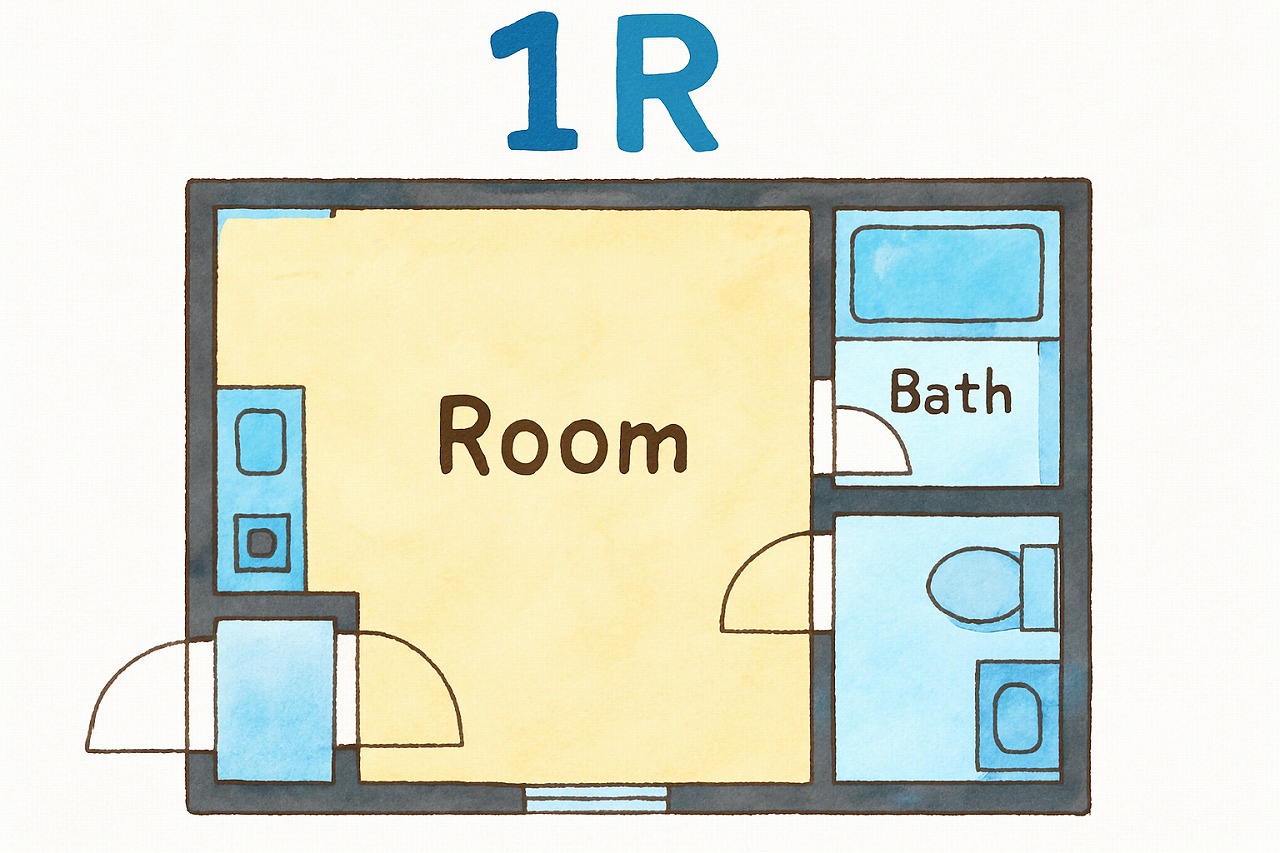
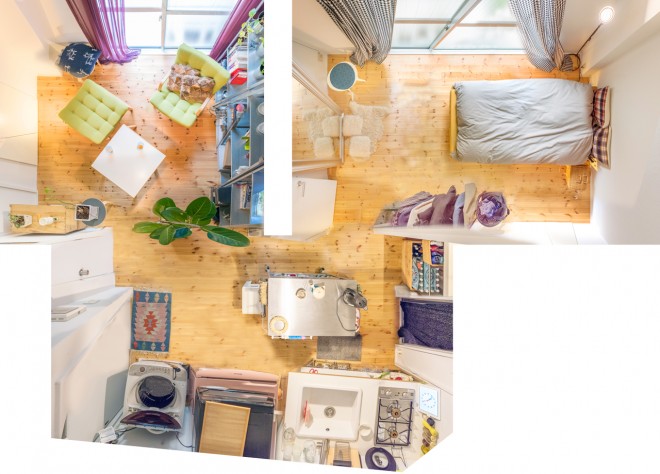
Studio Apartment (1R)

A simple floor plan where you enter directly into one room from the entrance, with the kitchen space included within the same room. There's no partition between the room and kitchen, creating one unified space.

Characteristics:

  • Lower rent
  • Usually 15-20㎡ in size
  • Very compact kitchen space
  • Cooking odors spread throughout the entire room

Suitable for:

  • Students or single residents living alone
  • International students on a budget
  • Short-term residents
  • People who prefer simple living
  • Those who eat out frequently

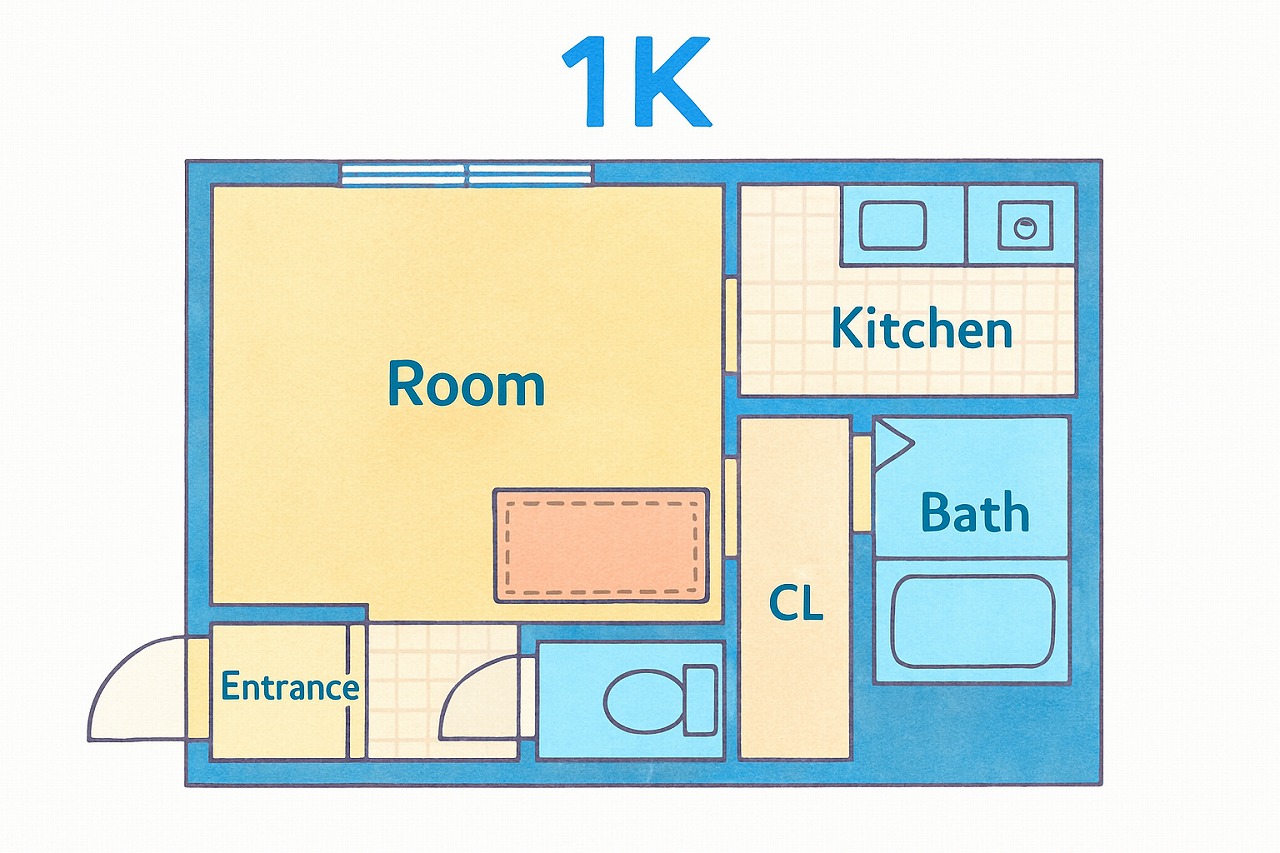
1K (One-K)

An evolved version of 1R with a partition between the room and kitchen. The kitchen space is independent but generally compact with limited cooking space.

Characteristics:

  • Kitchen space is separated from the room
  • Cooking odors don't spread easily to the room
  • Usually 13-25㎡ in size
  • Kitchen space is approximately 2-3㎡

Suitable for:

  • Single residents who cook moderately
  • International students planning long-term stays
  • People who value privacy
  • Those seeking a balance between budget and convenience

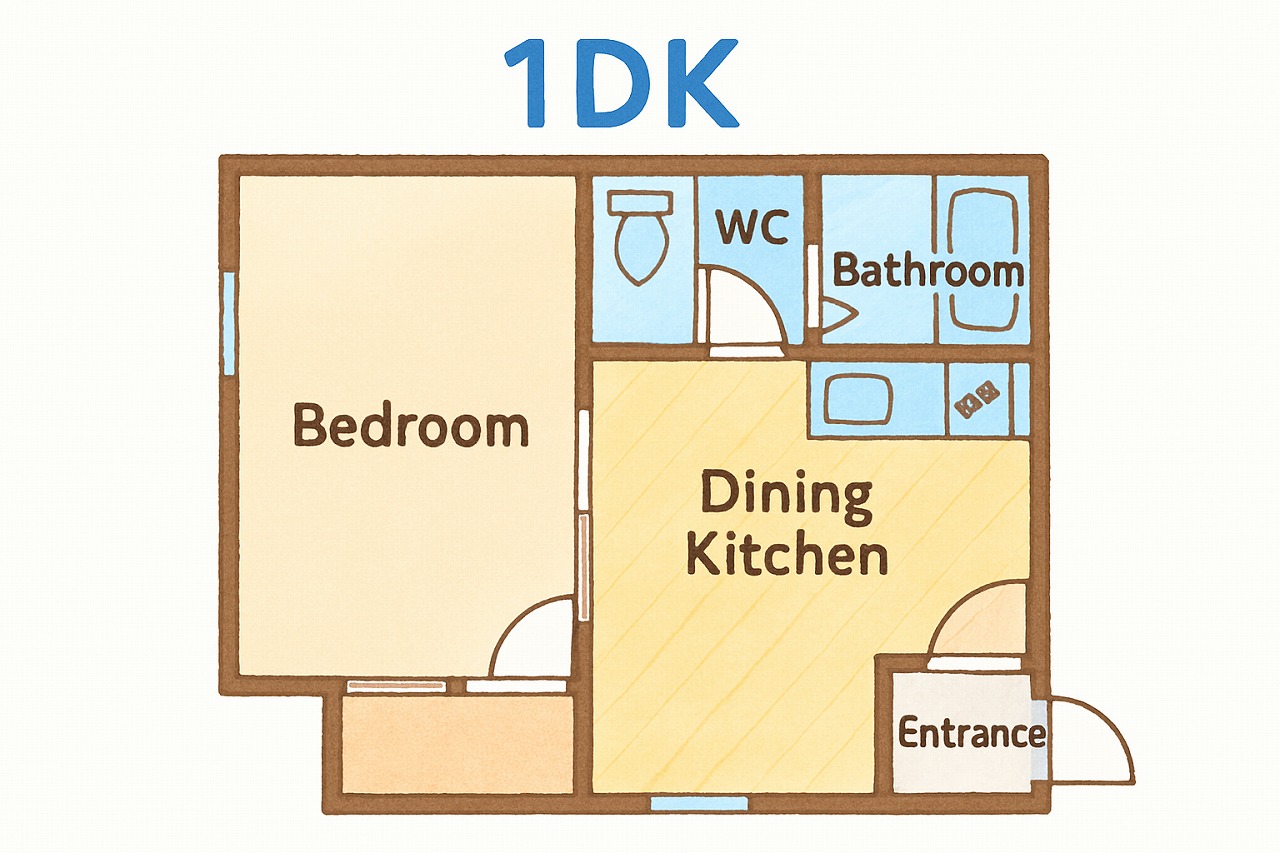
1DK (One-DK)

A further evolution from 1K, where the kitchen space also serves as a dining space. The kitchen area is 4.5 to less than 8 tatami in size, featuring space for a small table for dining.

Characteristics:

  • Spacious kitchen with room for a dining table
  • Clear separation between living room and kitchen-dining area
  • Usually 25-30㎡ in size
  • Possible to host friends for meals
  • Allows comfortable living even for single residents

Suitable for:

  • People who cook frequently
  • Those who work from home
  • People who want to enjoy meals at leisure
  • Those who frequently invite friends over

1LDK (One-LDK)

A floor plan with a combined living-dining-kitchen space (LDK) and one independent room. The LDK space is generally 8 tatami or larger, featuring a spacious shared area.

Characteristics:

  • Spacious combined living-dining-kitchen area
  • Independent bedroom available
  • Usually 23-35㎡ in size
  • Suitable for couples or two-person households
  • Can maintain private space when hosting guests

Suitable for:

  • Couples or married couples
  • Single residents with frequent remote work
  • People who desire spacious living areas
  • Foreign residents planning long-term stays

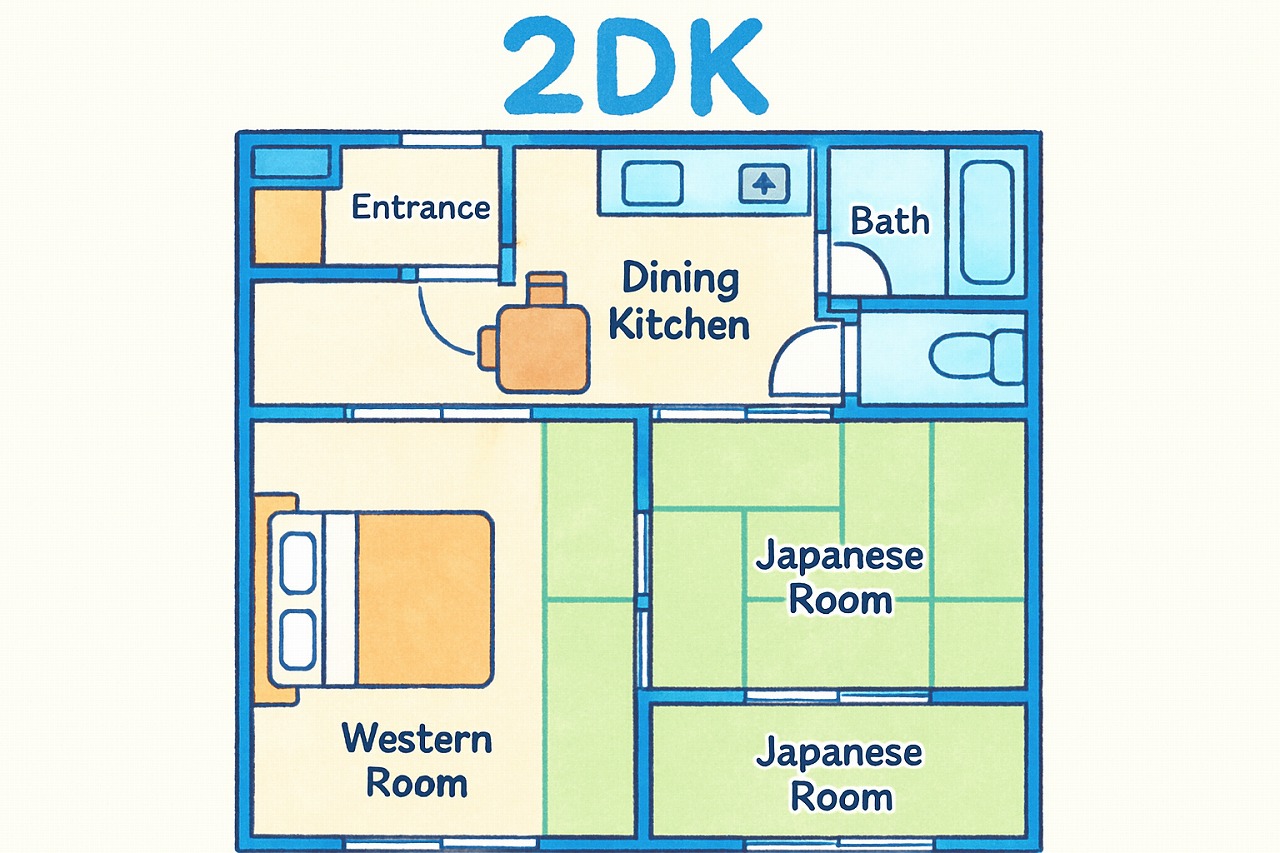
2DK, 2LDK and Larger Floor Plans

Floor plans with two or more private rooms, designed for families. 2DK consists of a dining-kitchen and two private rooms, while 2LDK features a living-dining-kitchen and two private rooms.

Characteristics:

  • Suitable for family occupancy
  • Individual rooms can be used as children's rooms or studies
  • Approximately 45㎡ for 2DK, 50-60㎡ for 2LDK
  • Relatively abundant storage space

Suitable for:

  • Families with small children
  • People wanting to use as share houses
  • Those needing study or workspace
  • Foreign families planning long-term stays

The Appeal of Tatami and Its Cultural Background

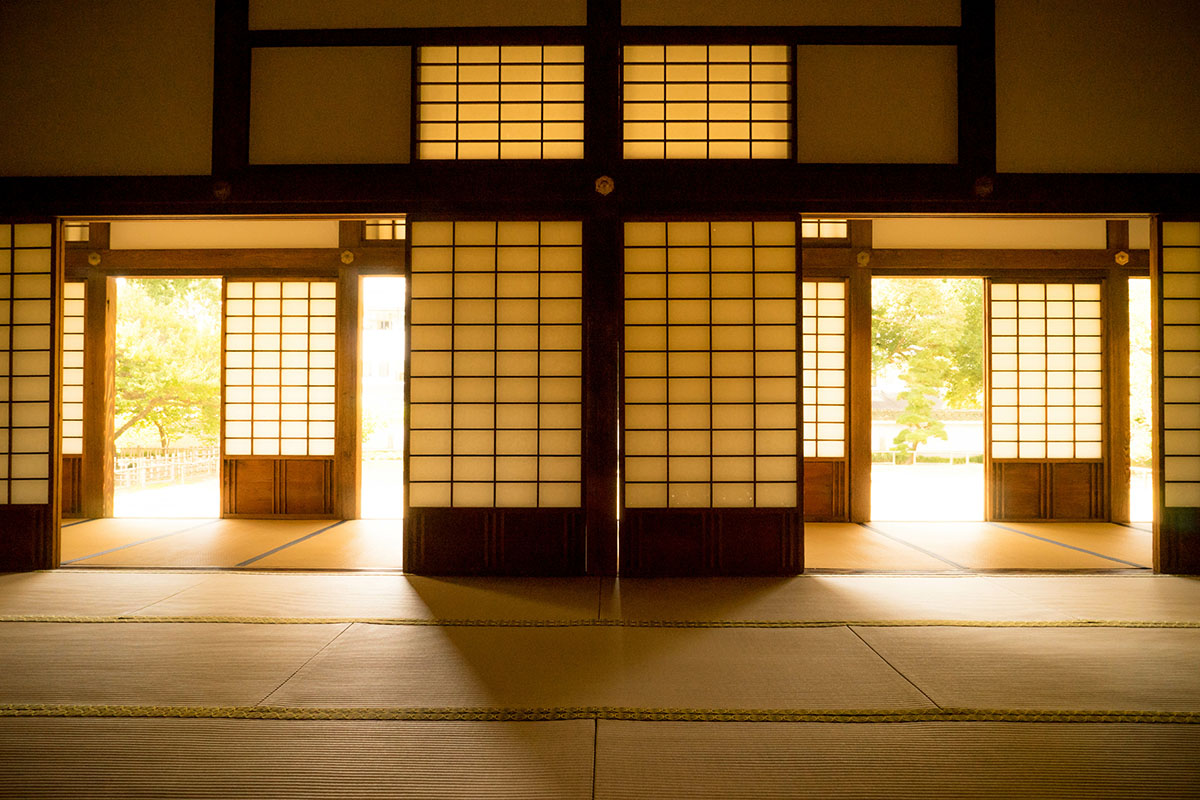
Japanese tatami room

When searching for Japanese apartments, you may encounter properties with "washitsu" (Japanese-style rooms) featuring tatami flooring. Tatami is traditional Japanese flooring with the following characteristics:

Structure and Features of Tatami

Tatami consists of "tatami-omote" (surface) and "tatami-doko" (base). The tatami-omote is woven from rush grass (igusa), while the tatami-doko is a foundation made primarily of straw or polystyrene foam. These materials give tatami the following excellent properties:

  • Humidity control: Each tatami mat can absorb approximately 500ml of moisture, suitable for Japan's humid climate
  • Insulation: Provides coolness in summer and warmth in winter
  • Deodorizing effect: Rush grass has natural deodorizing properties
  • Cushioning: Appropriate elasticity that reduces impact during falls
  • Relaxation effect: The unique scent of tatami has relaxing properties

Cultural Significance of Japanese Rooms

Japanese rooms are not merely rooms but spaces that embody traditional Japanese culture and lifestyle. Japanese living customs such as sitting directly on the floor and sleeping on futon bedding have been practiced on tatami. Japanese rooms also feature:

  • Multi-purpose use: Can serve as living room during the day and bedroom at night
  • Flexibility: Space can be freely divided by opening and closing fusuma (sliding doors) and shoji (paper screens)
  • Harmony with nature: Composed of natural materials like wood, paper, and grass
  • Simplicity: Minimal spatial design possible without excess furniture

Appeal of Japanese Rooms for Foreign Residents

For foreign residents, Japanese rooms offer special spaces to experience Japanese culture. For short-term residents, they provide touristic appeal, while for long-term residents, they offer discovery of new lifestyles. They also provide practical benefits such as:

  • Furniture cost savings: No bed needed as futon can be laid directly (minimal furniture living possible)
  • Flexible space utilization: Large space can be secured for yoga, stretching, etc.
  • Comfortable living space: Tatami has humidity regulation functions that absorb and release moisture

How to Read Floor Plans and Symbol Meanings

When searching for rental properties in Japan, knowing how to read floor plans is extremely important. Floor plans use many unique symbols and abbreviations, and understanding these helps grasp property characteristics.

Basic Floor Plan Reading

  • Orientation: Direction symbols like "N" at the top of floor plans indicate north
  • Scale: Shows the ratio between dimensions on the drawing and actual dimensions
  • Room divisions: Thick solid lines represent walls, thin solid lines represent doors and windows
  • Dimensions: Room and hallway sizes are often listed in meters

Common Symbols and Abbreviations in Floor Plans

The following table shows meanings of commonly seen symbols and abbreviations in floor plans:

Symbol/AbbreviationMeaningDescription
LLivingLiving room, space for relaxation
DDiningSpace for dining
KKitchenCooking space
WCToiletWater closet
UBUnit BathCombined bathroom and toilet facility
CLClosetStorage space
WICWalk-in ClosetLarge storage space you can enter
SBShoe BoxShoe storage shelf
MBMeter BoxLocation of electricity, gas, and water meters
PSPipe ShaftSpace for pipes
ACAir ConditionerAir conditioner installation location
BSBalcony/VerandaOutdoor space partially covered by roof

Points for Reading Floor Plans

  1. Orientation and window positions: Check orientation and window position relationships to confirm sunlight and ventilation
  2. Traffic flow: Check ease of movement from entrance to each room
  3. Water facility layout: Check positional relationships of kitchen, bath, and toilet
  4. Storage space: Check quantity and positions of storage spaces like closets
  5. Balcony direction: Important point affecting sunlight and views

Recommended Floor Plans by Purpose of Stay

Optimal floor plans vary greatly depending on your purpose for staying in Japan. Here we introduce recommended floor plans by purpose.

Short-term Stay (3 months to 1 year)

Recommended floor plans: 1R, 1K

For short-term stays, simple living with minimal furniture and appliances is cost-effective.

  • Benefits: Lower rent, relatively easy contracts, furnished properties easier to find
  • Points to check: Distance from station, access to convenience stores and restaurants, whether properties accommodate foreigners

International Students (1 year or more)

Recommended floor plans: 1K, 1DK

Floor plans that provide environments conducive to studying and enable food cost savings through cooking are recommended.

  • Benefits: Independent kitchen allows separation of study and dining spaces, appropriate size with easy cleaning
  • Points to check: Commute time to school, surrounding noise environment, internet environment

Business Professionals (Single Assignment/Expatriates)

Recommended floor plans: 1DK, 1LDK

Important to have relaxation space for work stress relief and sufficient size to sometimes serve as home office.

  • Benefits: Size accommodating remote work, can handle guests
  • Points to check: Commute convenience, surrounding environmental quietness, security, internet environment

Couples/Married Couples

Recommended floor plans: 1LDK, 2DK

Ideal floor plans provide shared spaces for quality time together and private spaces when needed.

  • Benefits: Can relax in living room while having separate rooms when necessary
  • Points to check: Adequacy of storage space, bathroom size, kitchen usability

Families (with children)

Recommended floor plans: 2LDK, 3DK, 3LDK

Important to have individual rooms according to children's ages and numbers, plus living spaces for family gathering.

  • Benefits: Can secure children's rooms, maintain family privacy
  • Points to check: Access to surrounding schools, parks, medical facilities, shopping convenience

Differences Between Japanese and Overseas Housing

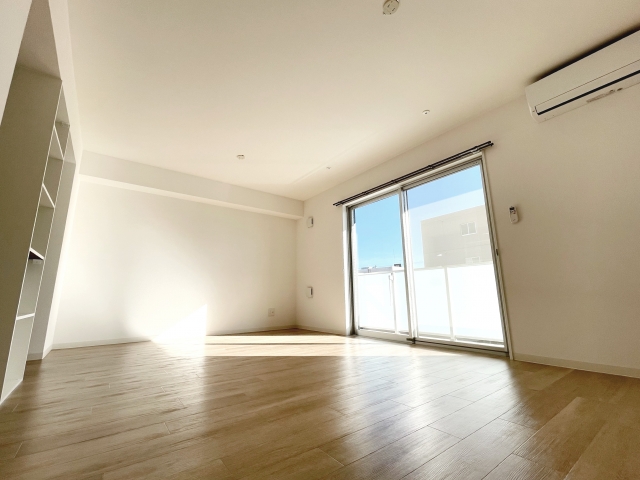
Japanese apartment interior

Japanese apartments have many differences compared to overseas housing. Understanding these differences enables smooth initiation of life in Japan.

Differences in Space Usage

Japanese characteristics:

  • Compact design: Design commonly maximizes utilization of limited space
  • Multi-functionality: Same space used for different purposes by time of day (e.g., Japanese room as living room during day, bedroom at night)
  • Storage emphasis: Abundant storage spaces like wall storage and closets

Differences from overseas:

  • Overseas housing generally has larger rooms with clearly separated purposes for each room
  • While Japan tends toward minimal furniture and effective floor space utilization, overseas tends toward more furniture placement

Differences in Architectural Style and Materials

Japanese characteristics:

  • Earthquake-resistant structure: Design emphasizing earthquake resistance due to being an earthquake-prone country
  • Insulation challenges: Particularly older properties may have low insulation performance
  • Lightweight construction: Many wood-frame or light steel constructions with thin walls potentially causing soundproofing issues

Differences from overseas:

  • Overseas housing commonly uses heavy materials like stone or brick
  • Japanese housing often emphasizes ventilation-focused design for hot, humid climates

Equipment Differences from Living Customs

Japanese characteristics:

  • Genkan (entrance): Entrance space reflecting the culture of removing shoes
  • Bathroom: Bathtubs in addition to showers due to bathing culture
  • Toilet: Heated toilet seats with washlet functions are common
  • Kitchen: Gas stoves are mainstream due to fish cooking culture

Differences from overseas:

  • Western countries don't have shoe-removal customs at entrances, resulting in different entrance space designs
  • Many overseas locations have shower-only bathrooms, while Japan standardly includes bathtubs
  • Electric or IH stoves are common in many Western regions

Important Points During Rental Contracts

Challenges Commonly Faced by Foreign Residents

Let's review challenges foreign residents commonly face when renting housing in Japan:

  1. Language barriers: Contracts often provided only in Japanese
  2. Guarantor issues: Many properties require Japanese guarantors
  3. Key money and security deposit customs: Advance payment customs that don't exist overseas
  4. Strict screening: Rental screening may be stricter for foreign residents

Solutions and Necessary Preparations

To address these challenges, the following preparations are helpful:

  1. Residence card and foreign registration certificate: Legal residence status proof
  2. Income verification: Documents showing stable income
  3. Japanese-speaking contact: Emergency contact person
  4. Guarantor company usage: Option to use guarantor companies when guarantors unavailable
  5. Foreign-friendly property search services: Utilizing real estate companies and websites handling foreign-accommodating properties

Points to Check During Contracts

Before signing contracts, always confirm the following points:

  1. Contract period: Generally 2-year contracts are common, but short-term contracts may also be possible
  2. Renewal fees: 1-2 months' rent may be required for contract renewals
  3. Move-out conditions: Confirm scope and cost responsibility for restoration obligations
  4. Pet, instrument, and guest restrictions: Understand lifestyle-related rules
  5. Internet and common area fees: Costs separate from rent
Contract Cost ItemsDescriptionGeneral Market Rate
Security DepositDeposit for cleaning and repairs upon move-out1-2 months' rent
Key MoneyGratitude money to landlord (non-refundable)1-2 months' rent
Brokerage FeeFee to real estate company1 month's rent + tax
Advance RentProrated rent for move-in month plus next month's rentApproximately 1.5 months' rent
Fire InsuranceMandatory fire insurance premiumAnnual ¥10,000-20,000
Guarantor Company FeeFee paid to guarantor company0.5-1 month's rent

Japanese Residential Equipment and Usage

Japanese apartments contain many facilities that foreign residents see for the first time or have unique usage methods. Knowing how to use these facilities enables comfortable living.

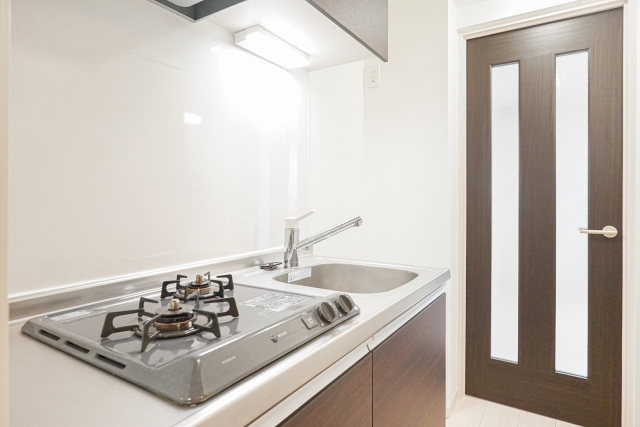
Kitchen Equipment

Gas Stoves

  • Gas stoves using city gas or propane gas are mainstream in Japan
  • Open the main valve before use and always close it after use
  • Many properties require purchasing and installing your own gas stove

Rice Cookers

  • Specialized equipment for cooking rice, Japan's staple food
  • Range from simple to high-function models; international students might start with used ones

Bathroom and Toilet

Unit Bath

  • Japanese-unique bathroom combining shower and bathtub
  • "Bath" and "washroom" are often combined in one unit
  • For humidity control, run ventilation fans after use and utilize bathroom drying functions when available

Heated Toilet Seats (Washlets)

  • Japanese invention with warm water washing functions
  • Control panels may have many buttons
  • Many high-function models allow temperature and water pressure adjustment

Storage and Living Spaces

Oshiire (Closets)

  • Traditional storage spaces in Japanese rooms
  • Suitable for futon storage but can be used multi-purpose with storage boxes

Genkan (Entrance)

  • Features "doma" (earth floor) space for shoe removal due to shoe-removal culture
  • Often equipped with "shoe boxes" or "geta boxes" for shoe storage

Air Conditioning and Electrical Equipment

Air Conditioners

  • Combined cooling and heating units are common
  • Remote control operation for temperature, fan speed, and air direction adjustment
  • Many properties have only mounting brackets, requiring purchase of the air conditioner unit

Lighting Equipment

  • Japanese apartments often lack ceiling light fixtures (only wiring for lighting fixtures)
  • Need to purchase and install lighting fixtures upon move-in

Finding Your Ideal Japanese Apartment

Deepening understanding of Japanese apartment floor plans is an important step for beginning comfortable life in Japan. Here's a checklist for finding ideal housing:

Floor Plan Selection Checklist

Basic Requirements

  • Floor plan suitable for stay duration
  • Rent within budget
  • Commute/school convenience
  • Surrounding environment (shopping, medical facilities, public transportation)

Lifestyle Considerations

  • Cooking frequency
  • Time spent at home
  • Guest frequency
  • Space needed for hobbies and activities

Property Details

  • Sunlight and orientation
  • Adequate storage space
  • Water facility usability
  • Soundproofing and insulation

Property Search Methods Friendly to Foreign Residents
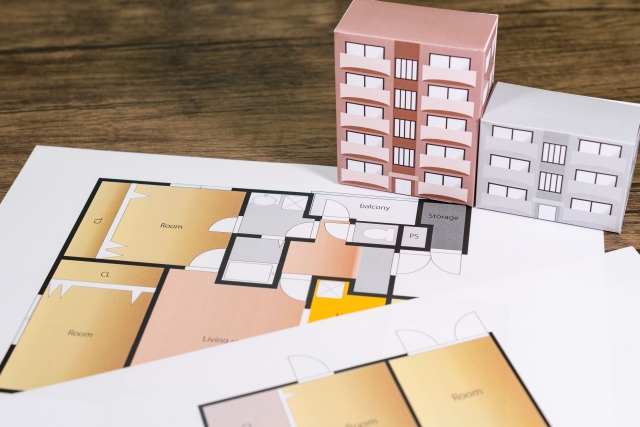
We introduce property search methods usable even by those with limited Japanese:

  • Multilingual rental sites: YOLO HOME, GaijinPot, UR rental housing, etc.
  • International student support: University international exchange departments and international student support offices
  • Foreign communities: Information exchange through SNS groups and nationality-based communities
  • Foreign-friendly real estate companies: Real estate companies with foreign language-capable staff

Japanese apartments may initially be confusing with their unique floor plans and facilities, but many feature rational designs adapted to Japan's climate and culture. When viewing properties, we recommend focusing on living flow and storage usability, selecting from long-term perspectives.

Additionally, properties for foreign residents have been increasing recently, with growing language support and guarantor-free properties. Clarify your priorities and find your ideal housing while considering necessary compromises.


関連記事