Starting April 2026: Bicycle Violations Now Subject to Fines (“Blue Tickets”) — New Traffic Rules Foreign Residents in Japan Need to Know - GTN MAGAZINE
日本語
日本語
English

Starting April 2026: Bicycle Violations Now Subject to Fines (“Blue Tickets”) — New Traffic Rules Foreign Residents in Japan Need to Know

Starting in April 2026, Japan’s bicycle rules have changed, with the introduction of the “blue ticket” system (on-the-spot fines). Actions that were often overlooked in the past—such as riding with an umbrella or using a smartphone while cycling—can now result in fines. This applies to anyone aged 16 and over, including foreign residents and international students. This guide clearly explains the key prohibited behaviors you need to know, a list of fines, and exceptions to rules such as riding on sidewalks.

Introduction: New Bicycle Rules Officially Take Effect in April 2026

“I didn’t know” won’t be an excuse—bicycles are treated as vehicles

Bicycles are a convenient way to get around in Japan. However, as of April 1, 2026, the rules governing bicycle use have changed significantly.

Under Japanese law, bicycles are classified as light vehicles, meaning they are treated as part of the same category as cars. In recent years, there has been an increase in serious accidents caused by bicycle traffic violations, leading to much stricter enforcement by the police. It’s no longer safe to assume that “a small violation won’t matter”—breaking the rules can now result in immediate fines. Foreign residents living in Japan should make sure they fully understand the country’s bicycle rules.。

1. New and Important: What Is the “Blue Ticket” (Traffic Violation Fine) System?

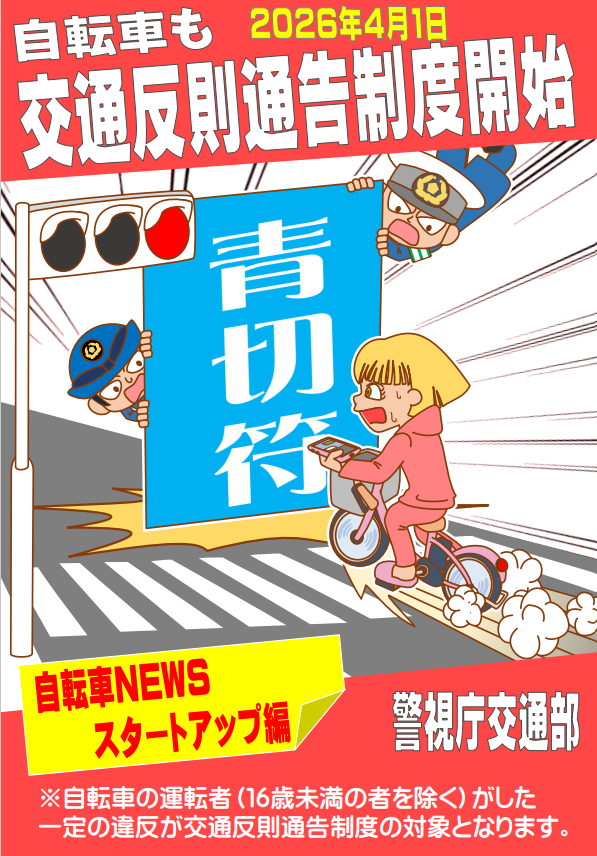
Source: Tokyo Metropolitan Police Department website, “Start of the Bicycle Traffic Violation Notification System”

This system requires bicycle riders aged 16 and over to pay fines for certain traffic violations. According to the National Police Agency, bicycles are legally considered “vehicles” under the Road Traffic Act, and this system was introduced to ensure that traffic rules are properly followed.

Who Does This Apply To? (Includes International Students and Foreign Residents)

The blue ticket system applies to anyone aged 16 and over who is riding a bicycle. Nationality does not matter. This means it applies not only to Japanese citizens, but also to international students and foreign residents working in Japan. The National Police Agency has clearly stated that this system covers traffic violations committed by anyone aged 16 and older.

What Happens If You Violate the Rules? (From Ticket to Payment)

If a police officer confirms a violation, the process generally follows these steps:

1.You are issued a blue ticket and a payment slip
You will be stopped on the spot, and the officer will give you a “blue ticket” detailing the violation, along with a payment slip for the fine.

2.Pay the fine within 7 days (in principle)
If you acknowledge the violation, you must pay the fine within 7 days from the day after receiving the notice. Payment is typically made at a bank or post office.

3.No criminal proceedings if you pay on time
If the fine is paid by the deadline, you will not need to appear for questioning or court, and you will not be prosecuted. It also does not result in a criminal record.

[Important] Ignoring a Fine Could Lead to Criminal Penalties—and Even Affect Your Visa

Do not ignore a fine just because you’re unsure what to do. Leaving it unpaid can have serious consequences. If you fail to pay the fine by the specified deadline, the case may be referred for criminal procedures. This can lead to court proceedings, additional penalties, and potentially a criminal record. For foreign residents, having a criminal record could also affect visa-related matters, such as renewals or status changes. If you do receive a ticket, make sure to pay it within the required timeframe.

2. [Fine List] Zero Tolerance: Bicycle Violations You Must Avoid

As of April 1, 2026, the “blue ticket” system for bicycle violations is fully in effect. Even minor offenses that might have previously resulted in just a verbal warning can now lead to an on-the-spot fine if you’re caught.

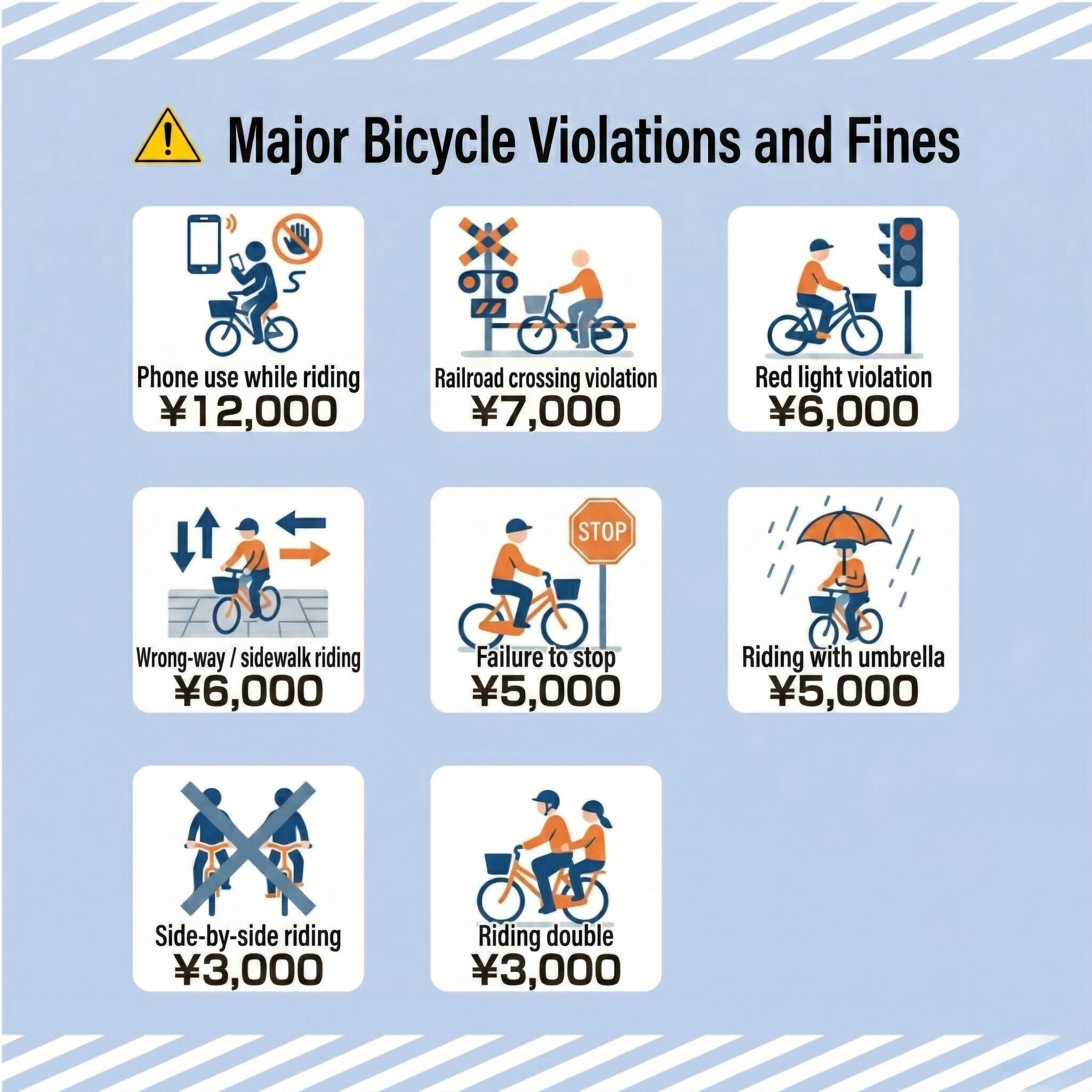
Make sure to check the table below to see which actions are subject to fines.

*Note: Actual fine amounts may vary depending on the situation and the prefecture.

[Highest Fine: Using a Smartphone While Riding]
The most expensive bicycle violation is using a mobile phone or smartphone while riding—whether making a call or looking at the screen—with a fine of 12,000 yen. Riding while looking at your phone is extremely dangerous, as it increases the risk of missing pedestrians or running red lights. Make sure to avoid this at all times.

3. Common Bicycle Rule Pitfalls for Foreign Residents in Japan

The way you normally ride a bicycle in your home country may actually be a violation in Japan.。
This is especially important for those who have just arrived in Japan or who don’t usually pay close attention to traffic rules when cycling.

(1) Thinking “Bicycles Belong on the Sidewalk”

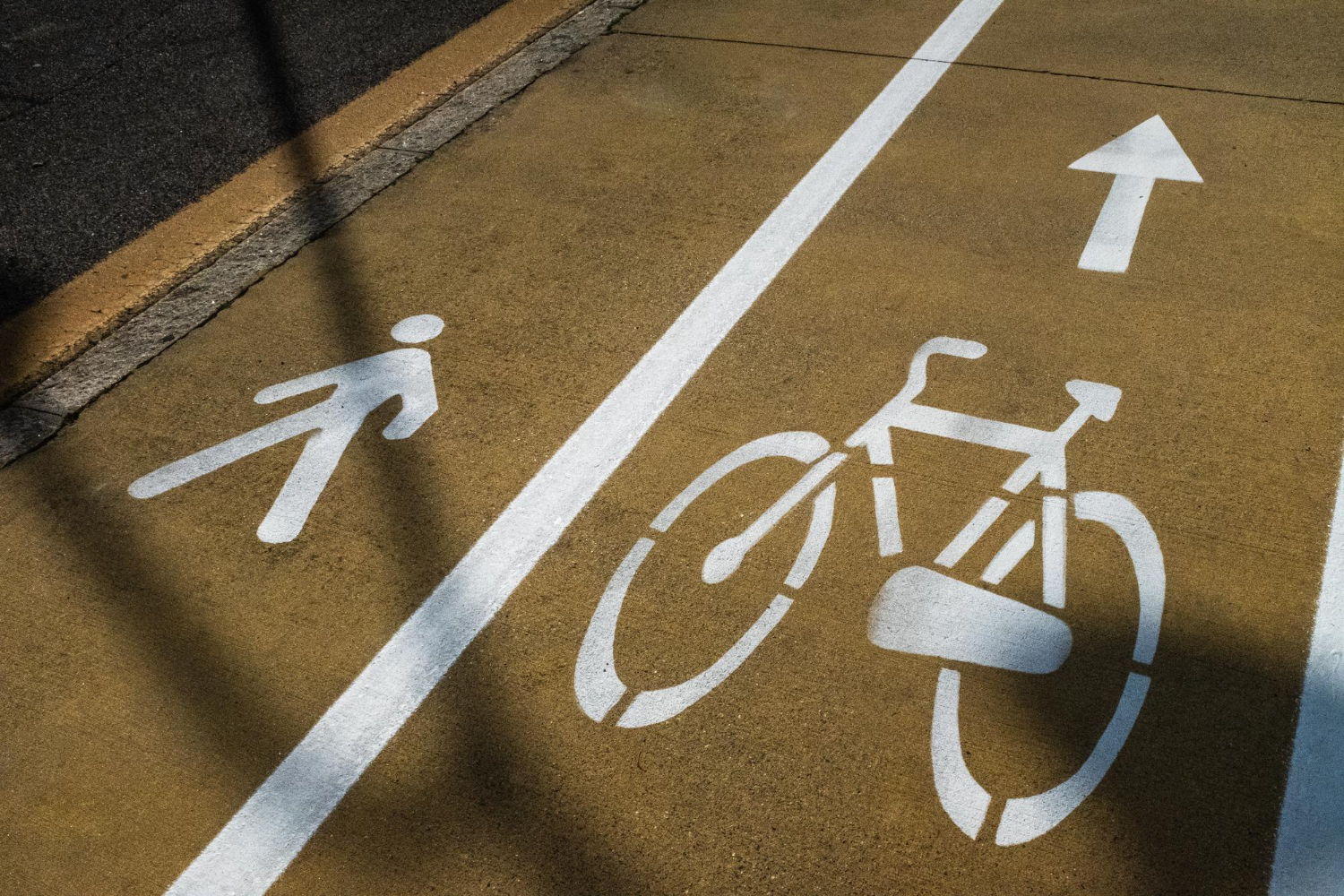
In many countries, it’s common for bicycles to ride on sidewalks. However, in Japan, bicycles are considered vehicles, and the general rule is to ride on the left side of the roadway.

Because of this, riding against traffic on the right side of the road, or riding on sidewalks in a dangerous or non-compliant way, may be subject to enforcement.

That said, sidewalk riding is not completely prohibited in Japan. There are exceptions where it is allowed:

  • When there is a sign indicating “Bicycles Allowed on Sidewalk”
  • When the rider is under 13 or aged 70 or older
  • When it is unavoidable for safety reasons (e.g., heavy traffic, narrow roads, or many parked cars)

However, even in these cases, you cannot ride freely on the sidewalk. You must ride slowly on the side closer to the roadway, and if you may obstruct pedestrians, you are required to stop. In Japan, pedestrians always have priority on sidewalks.

(2) Riding with Earphones (“Listening While Cycling”)

Many people are used to listening to music with earphones during their commute or on the way to school.
However, in Japan, riding a bicycle while unable to hear your surroundings is considered dangerous behavior.

For example, not being able to hear approaching cars, horns, railroad crossing alarms, or pedestrians calling out can create serious risks. This kind of riding may be subject to enforcement.

So where is the line?:

  • Use caution in cases such as: headphones that cover both ears, noise-isolating earphones, or volume levels that are too loud
  • Often considered safer: types that don’t completely block the ears, using only one earbud, or bone conduction earphones

That said, what matters most here is not the type of device itself.
No matter what you use, if you can’t hear your surroundings, it’s dangerous.
Rather than assuming “bone conduction is always safe” or “one ear is fine,” always prioritize safety.

(3) Riding Side by Side or Using an Umbrella While Cycling

Riding next to a friend while chatting, or holding an umbrella with one hand on a rainy day—these are behaviors you shouldn’t take lightly in Japan.

First, riding side by side is generally prohibited.
Riding with two people on one bicycle is also generally not allowed. Even for a short distance, it’s best not to assume “it should be fine just this once.”

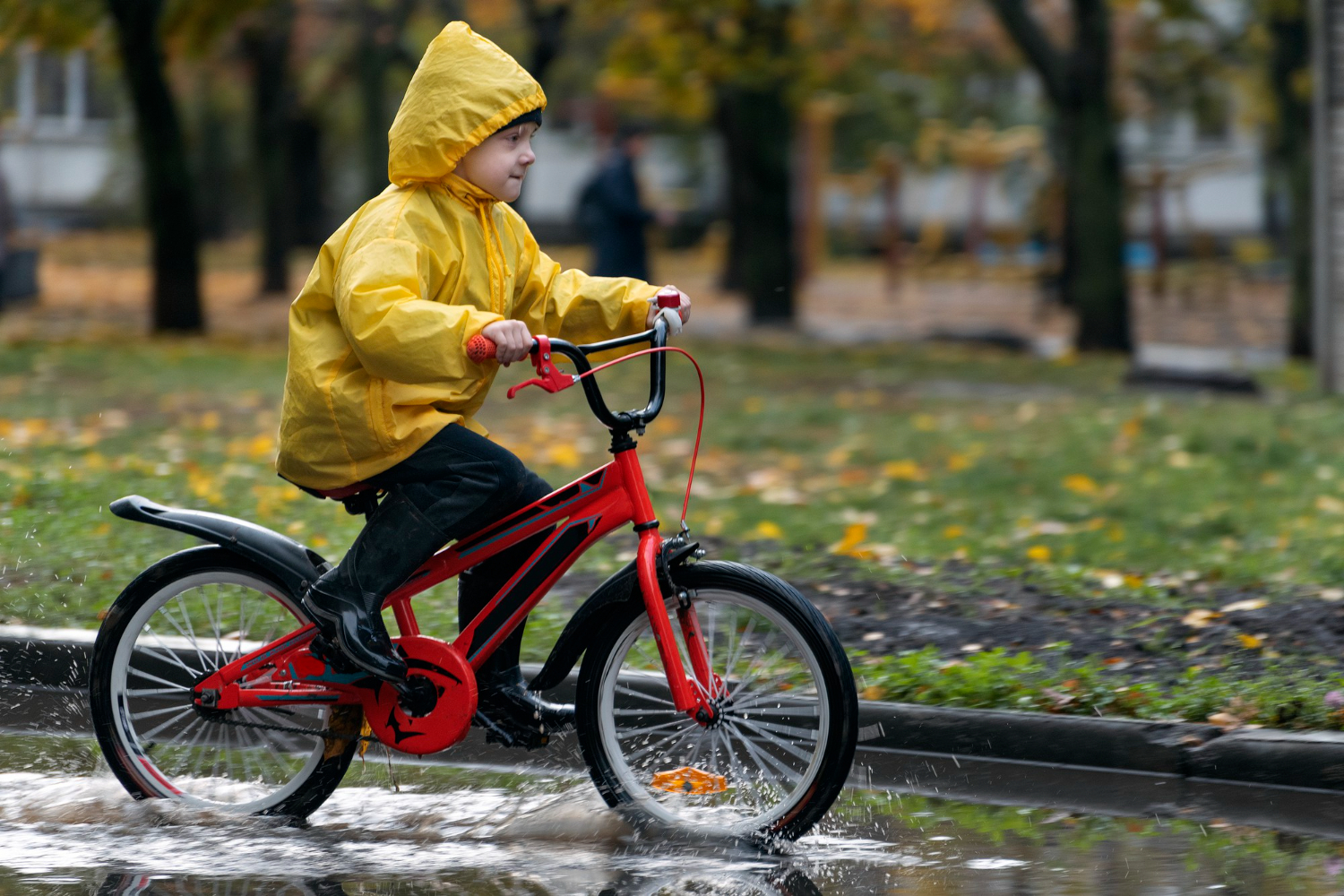
Using an umbrella while riding in the rain is also very dangerous.
Since it requires one-handed riding, it’s easier to lose balance, and your visibility is reduced. Wind or uneven road surfaces can easily lead to a fall.

If you need to ride on a rainy day, the basic rule is to use a raincoat or proper rain gear instead of an umbrella.
Rather than thinking “everyone else is doing it,” it’s important to focus on whether it could lead to an accident.

4. Protect Your Life—and Your Wallet: Basic Rules You Should Know

Not just to avoid fines, but to protect your own safety and those around you, it’s important to review the basic rules for riding a bicycle.

Stop at Intersections and Always Check for Safety

Many accidents involving bicycles and cars occur at intersections. 
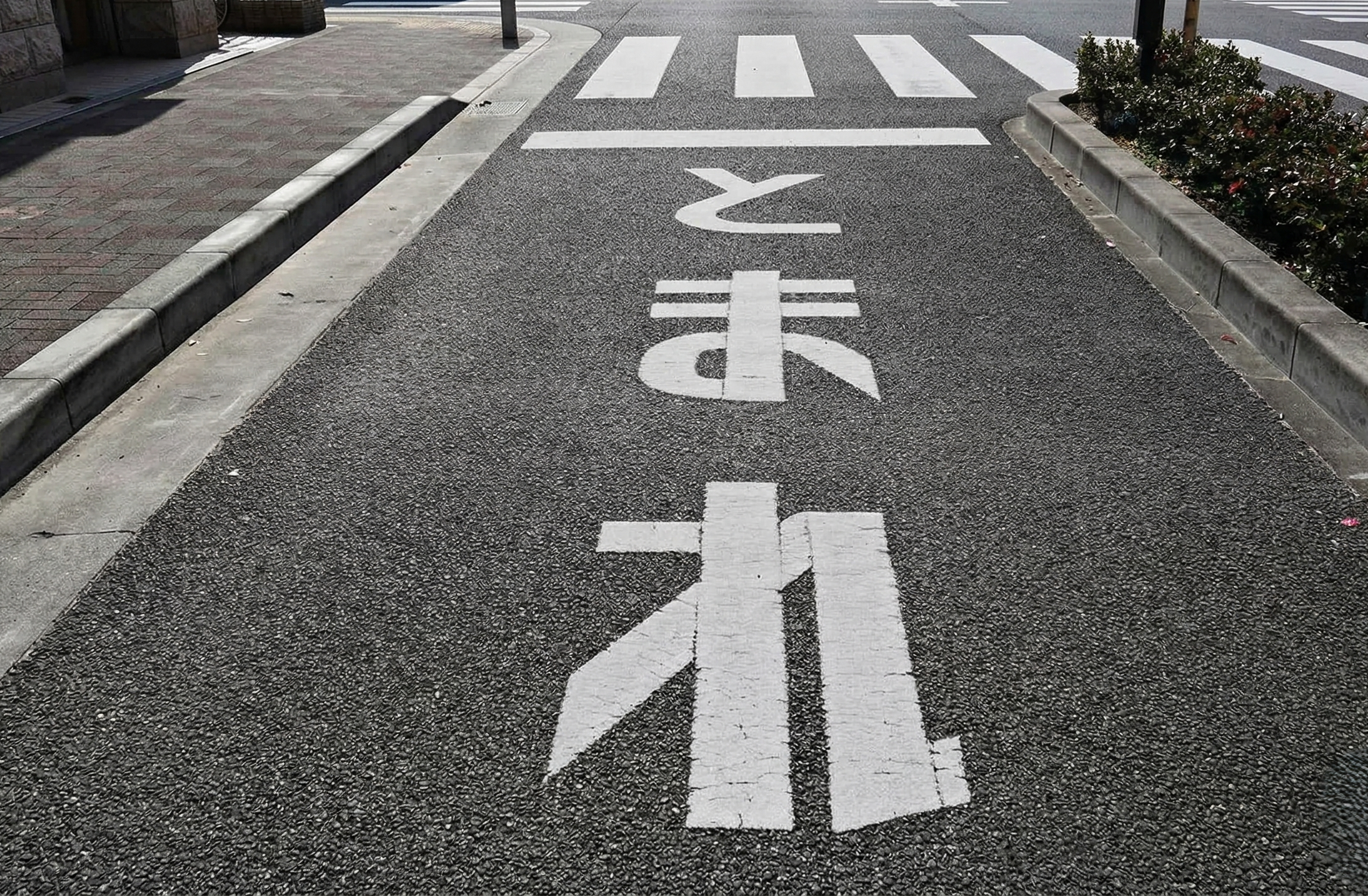
At locations with a “Stop” sign, you must come to a complete stop just before the stop line and check for traffic in both directions. If there is no stop line, you must stop right before entering the intersection.

When riding a bicycle, it can be tempting to just slow down and keep going, but this can still count as a violation (failure to stop at a designated location) and may be subject to enforcement. In fact, according to National Police Agency data, ignoring traffic signals and failing to stop make up a large portion of bicycle violations.

Turn on Your Lights at Night

When riding a bicycle at night, using a front light is required.
This isn’t just to help you see the road ahead—it’s also to make sure cars and pedestrians can see you.

According to National Police Agency data, riding without a light at night is associated with a higher risk of fatal accidents. Even for short distances, it’s dangerous to think “it’s just a quick ride” and go without a light. Always turn your lights on at night.


Drunk Cycling Is Not Covered by a Blue Ticket

Thinking “I’ve had a drink, but biking should be fine” is dangerous.
According to the National Police Agency, riding a bicycle under the influence of alcohol—whether fully intoxicated or just over the limit—is considered a serious offense and is not handled under the blue ticket system. In other words, this is not something you can resolve by simply paying a fine; it may lead to criminal procedures.

In Japan, riding a bicycle after drinking is prohibited regardless of your blood alcohol level. In addition, encouraging someone to ride after drinking, providing a bicycle to someone who has been drinking, or riding as a passenger on a bicycle operated by someone who has been drinking can also be subject to penalties.

After drinking, don’t assume “just a short ride is fine.” Either walk your bicycle home or leave it and come back for it later.

5. Summary: Ride Safely in Japan

So far, we’ve covered the new blue ticket system for bicycles and the key traffic rules you need to know.
These rules aren’t just about avoiding fines—they’re there to protect both you and the people around you.

In Japan, bicycles are treated as vehicles under the Road Traffic Act. It’s important not to assume “it’s just a short distance” or “it should be fine,” and to follow the basics: obey traffic signals, come to a full stop when required, ride on the left side of the road, and avoid distracted riding.

It’s also important to be prepared.
In many areas of Japan, you are required to have bicycle liability insurance in case of an accident. If you injure a pedestrian, the compensation can be very high, so it’s a good idea to check whether you’re covered.

Finally, while wearing a helmet is not subject to fines, it is considered a recommended obligation in Japan. To protect yourself in case of an accident, wearing one is strongly encouraged.

6. Q&A: Bicycle Rules in Japan — FAQs for Foreign Residents

Q1. Do foreign residents and international students have to pay fines too?

A1. Yes.
Nationality does not matter. Anyone aged 16 or older riding a bicycle in Japan may be subject to the blue ticket system.

Q2. If riding on the road feels unsafe because of traffic, can I still use the sidewalk?

A2. The general rule is to use the roadway, but there are exceptions.
You may ride on the sidewalk in cases such as: where there is a “Bicycles Allowed on Sidewalk” sign, if the rider is under 13 or aged 70 or older, or if riding on the road is clearly dangerous. However, pedestrians always have priority. Ride slowly on the side closer to the roadway and stop when necessary.
 

Q3. Is it illegal to ride with an umbrella on rainy days?

A3. Yes, it is considered dangerous behavior and may be subject to enforcement.
Holding an umbrella requires one-handed riding, which can delay braking and make it easier to lose balance. On rainy days, use a raincoat or proper rain gear instead.

Q4. Aren’t Japan’s bicycle rules too strict?

A4. They are intended to prevent serious accidents.
In recent years, major accidents caused by violations such as ignoring traffic signals or distracted riding have become a serious issue. The rules may feel strict, but following them helps protect both you and others—not just from fines, but from harm.

Q5. Will I be fined for not wearing a helmet?

A5. No, not wearing a helmet itself is not subject to a fine.
However, helmet use is strongly recommended in Japan. According to National Police Agency data, the risk of fatal injury is higher when a helmet is not worn, so wearing one is encouraged for your safety.

7. GTN Support: If You’re Unsure About Life Rules and Procedures in Japan
Living in Japan involves more than just traffic rules for bicycles. There are many other systems that can be confusing for foreign residents, such as garbage disposal rules, rental contracts, and mobile phone plans.

If you ever find yourself wondering, “Is this allowed?” or “What should I do?”, try usingGTN Mobile Assistants.
You can get support while checking the information you need for daily life in Japan.

If you run into trouble with rules or procedures, don’t deal with it alone—feel free to reach out and get help.

関連記事