Can You Keep a Rabbit in an Apartment in Japan? A Guide to Pet-Friendly Rentals - GTN MAGAZINE
日本語
日本語
English

Can You Keep a Rabbit in an Apartment in Japan? A Guide to Pet-Friendly Rentals

Can You Have a Pet Rabbit in a Japanese Apartment?

When starting a new life in Japan, many foreign residents hope to live with their pets.

Because rabbits are small and quiet, they’re often seen as suitable for apartment living.


However, whether you can keep a rabbit in a Japanese apartment depends on several factors and is not always as simple as it may seem.

In this article, we’ll explain what you need to know about keeping a pet rabbit in Japan — from choosing the right apartment to everyday care tips.

Pet Policies in Japanese Rental Housing

In Japan’s rental market, it’s estimated that only around 20% of properties allow pets. In major cities, that percentage tends to be even lower. Factors such as building structure, consideration for neighbors, and concerns about damage or restoration fees at move-out all contribute to these restrictions.

Pet-Friendly vs. No-Pet Listings

In Japanese rental listings, pet policies are generally classified as follows:

CategoryMeaningNotes
Pet-FriendlyPets are allowedRestrictions may apply to species, size, or number
Pets NegotiablePets may be allowed under certain conditionsRequires individual negotiation with the landlord
No PetsPets are not allowedMay include small animals, fish, or insects


Rabbits are often treated as “small animals,” and some properties that prohibit dogs and cats may still allow rabbits. However, policies differ widely by property and owner, so it’s essential to confirm in advance.

How to Find Pet-Friendly Rentals

There are several effective ways to search for pet-friendly apartments in Japan:

Use Real Estate Websites: Major platforms such as Pet Home Web, SUUMO, and HOME’S allow you to filter listings by “pet-friendly.”

Consult a Real Estate Agency: Work with agencies that specialize in pet-friendly rentals and share your preferred conditions.

Be Flexible with Search Criteria: Loosening requirements such as distance from the station or building age can increase available options.

Use Services for Foreign Residents: Choosing real estate agencies that support foreign residents can help with language and paperwork.

When searching, also look for terms such as “small pets allowed” or “small animals allowed.” These may include rabbits and other small pets.

Can You Keep a Rabbit in an Apartment?

In short, yes — with the right conditions, rabbits can live comfortably in Japanese apartments. Because they are quiet and relatively easy to manage in terms of odor, rabbits are well-suited to apartment living.

Benefits of Keeping a Rabbit in an Apartment

The benefits of keeping a rabbit in an apartment include:

  • Very Quiet: Unlike dogs or birds, rabbits don’t bark or make loud noises that disturb neighbors.
  • Requires Minimal Space: With an appropriate cage, they can be kept even in a studio apartment.
  • No Need for Walks: Indoor exercise is usually enough to keep them healthy.
  • Relatively Clean: With proper care and setup, odor can be kept to a minimum.

Things to Be Careful About

On the other hand, there are several points to keep in mind:

  • Chewing Instinct: Rabbits tend to chew as a natural behavior, which can damage wallpaper, furniture, or electrical cords.
  • Temperature Sensitivity: Rabbits are vulnerable to heat, so extra care is required during Japan’s hot summers.
  • Sensitive to Noise: They prefer quiet environments, and loud surroundings can cause stress.
  • Regular Cleaning Required: Daily care is important, including cleaning droppings and dealing with shedding.

Procedures for Renting a Pet-Friendly Apartment

When renting a pet-friendly apartment in Japan, you may be asked to complete additional procedures related to your pet on top of the standard lease paperwork.

Required Documents

Depending on the property, the following documents may be requested:

DocumentDescriptionNotes
Pet PhotoA photo of the rabbit you plan to keepShould show body size
Pet Ownership AgreementA document outlining rules for keeping petsSignature and seal may be required
Health CertificateProof of the rabbit’s health conditionIssued by a veterinarian
Vaccination CertificateProof of completed vaccinationsNot always required for rabbits

The documents required vary by property and management company. For foreign residents, choosing a real estate agency that offers language support can make the process smoother.

Key Screening Points

For pet-friendly rentals, the tenant screening process may include additional considerations related to pet ownership on top of the standard requirements. Key points include:

  • Ownership Experience: Whether you have kept pets before
  • Care Plan: How you plan to care for the pet and how long it will be left alone
  • Pet Condition: Health, temperament, and size
  • Consideration for Neighbors: Awareness of noise and odor issues

For foreign residents, landlords may also check visa status, proof of income, and communication ability in Japanese as part of the screening process.

Choosing the Right Apartment for a Rabbit

To live comfortably with a rabbit, it’s important to pay attention to certain factors when selecting an apartment.

Ideal Living Conditions

Rabbits prefer environments with the following conditions:

  • Temperature Control: Rabbits do best at around 18–24°C (64–75°F). An apartment where you can regulate the temperature with air conditioning is ideal.
  • Humidity Control: The preferable range is roughly 40–60%. Excess humidity increases the risk of skin issues.
  • Light and Ventilation: Avoid direct sunlight, but choose a unit with adequate natural light and good airflow.
  • Low Noise Levels: It’s best to avoid locations near busy roads, train tracks, or construction sites.

Interior Features to Consider

There are also structural details inside the apartment that matter when keeping a rabbit:

  • Flooring Type: Slippery flooring can put strain on a rabbit’s legs.
  • Gaps and Small Openings: Rabbits may squeeze into small spaces or get stuck.
  • Balcony Design: Check the spacing of balcony railings to prevent escapes.
  • Indoor Space: Make sure there’s room not only for a cage but also for safe exercise.

Preparing to Live Comfortably with a Rabbit

Before bringing a rabbit into an apartment, it’s important to prepare the right equipment and environment.

Necessary Supplies

ItemDescriptionWhat to Look For
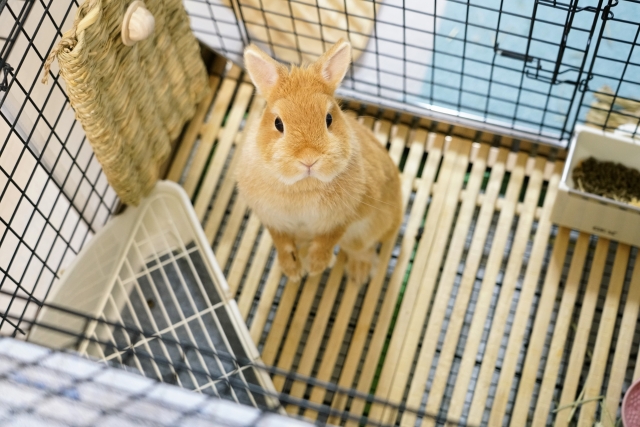
CageA rabbit’s main living spaceAdequate size (at least around 90×60 cm), easy to clean
Litter BoxFor managing wasteCan be secured in place, low enough for easy access
Water Bottle / DispenserFor hydrationStable and spill-resistant, with appropriate capacity
Flooring MaterialPlaced at the bottom of the cageSoft on the feet and absorbent
Food BowlFor feedingStable and difficult for rabbits to tip over
Thermometer & HygrometerFor monitoring temperature and humidityEasy to read and place in a visible location


Safety Measures Inside the Apartment

If you plan to let your rabbit roam freely indoors for part of the day, be sure to take the following safety precautions:

  • Protect Electrical Cords: Rabbits may chew on cables, which can cause electric shock. Use cord covers or keep cables out of reach.
  • Remove Toxic Plants: Check that any indoor plants are safe for rabbits.
  • Keep Small Objects Out of Reach: Small items can be swallowed accidentally.
  • Prevent Escapes: Pay attention when opening and closing doors or windows.
  • Add Anti-Slip Mats: Use mats or rugs on slippery flooring to prevent injury.

Tips for Keeping a Rabbit in an Apartment

Temperature & Humidity Control

Because Japan’s climate varies widely by season, maintaining a stable indoor environment is essential for a rabbit’s health.

  • Summer: Rabbits are sensitive to heat, so air conditioning is often necessary. Avoid direct sunlight and keep the temperature below 25°C (77°F).
  • Winter: Cold temperatures can also be an issue. Try to keep the room above 15°C (59°F) and use heating when needed.
  • Humidity: The ideal range is around 40–60%. During the rainy season, consider using a dehumidifier.

Odor Management

Managing odor is especially important in apartment settings. The following measures can help minimize it:

  • Frequent Litter Cleaning: Remove waste daily and do a full clean once or twice a week.
  • Appropriate Flooring Material: Use absorbent pads or materials that help control odor.
  • Regular Ventilation: Air out the room several times a day.
  • Safe Deodorizers: Use deodorizing products that are safe for rabbits.
  • Routine Cage Cleaning: Thoroughly wash and disinfect the cage about once a month.

Noise Reduction

Rabbits themselves are quiet, but cage activity can generate noise. If it becomes noticeable, try the following:

  • Use Mats Under the Cage: This helps absorb vibration and sound.
  • Consider Activity Times: Rabbits are most active in the morning and evening, so be mindful during those hours.
  • Cage Placement: Keeping the cage slightly away from walls can reduce vibration noise.

Things Foreign Residents Should Keep in Mind

Foreign residents living in Japan should also be aware of the following when keeping a rabbit.

Dealing with Language Barriers

  • Rental Contracts: Pet-related rules should be fully understood; consider using an interpreter if needed.
  • Veterinary Services: Look for animal clinics that can provide support in your language.
  • Emergency Situations: Know who to contact and where to go in case your rabbit suddenly becomes ill.

When Returning to Your Home Country

It’s important to plan ahead for situations such as temporary trips home or permanent relocation.

  • Temporary Return: Arrange a reliable pet sitter or boarding facility.
  • Permanent Return: Consider rehoming the rabbit in Japan or researching procedures to bring it back to your home country.
  • International Transport: Check quarantine rules and transportation requirements in advance.

Residency Status and Long-Term Planning

If your residency has a limited duration, keep in mind that rabbits have a life expectancy of around 5–10 years. Make a long-term plan and ensure you have someone who can care for the rabbit in emergencies.

What You Should Know to Keep a Rabbit Healthy

Food & Water

Proper diet management is essential for keeping rabbits healthy.

  • Staple Food: Provide high-quality hay (such as timothy) at all times.
  • Pellets: Feed in limited quantities (about 25 g per kg of body weight per day).
  • Vegetables: Offer fresh leafy greens in moderation (about 50 g per kg of body weight).
  • Water: Always provide fresh, clean water.
  • Treats: Fruits and other treats should be given in small amounts once or twice a week.

Daily Care

Regular care helps maintain a rabbit’s overall health:

  • Brushing: Brush thoroughly during shedding periods.
  • Nail Trimming: Trim nails about once a month.
  • Teeth Check: Monitor front teeth to ensure they aren’t overgrown.
  • Weight Monitoring: Weigh the rabbit about once a week to track changes.
  • Full Body Check: Check eyes, ears, nose, and rear for any issues.

Exercise

Rabbits need regular exercise, even in an apartment setting.

  • Free-Roaming Time: Allow the rabbit to roam safely for 1–2 hours per day.
  • Toys: Provide chewable or rollable toys to encourage activity.
  • Environmental Enrichment: Occasionally change the cage layout to stimulate exploration.

Troubles and How to Handle Them

Issues with Neighbors

Here are some common issues that can arise when keeping a pet in an apartment, along with ways to address them:

IssueHow to Handle It
Odor ComplaintsStrengthen cleaning and deodorizing measures; apologize if necessary
Noise ComplaintsAdd noise-reducing measures to the cage and manage activity times
Allergy ConcernsBe considerate in shared areas and ensure proper ventilation

Health Emergencies

Be prepared for possible health emergencies by checking the following in advance:

  • 24-Hour Animal Hospitals: Locate clinics in your area that can provide emergency care.
  • Transportation Options: Have multiple ways to get to the hospital quickly.
  • Basic First Aid: Know safe handling techniques and how to keep body temperature stable.
  • Emergency Contact List: Keep contact information for veterinarians and reliable advisors.

Legal Considerations for Keeping a Rabbit in a Japanese Apartment

Regulations Related to Pet Ownership

When keeping a rabbit in Japan, be aware of the following legal and contractual points:

  • Animal Welfare and Management Act: Prohibits abuse and requires proper care and living conditions.
  • Local Ordinances: Some municipalities have their own regulations.
  • Rental Contract Rules: Tenants must follow pet-related rules specified in the lease.

Risks of Violating Pet Policies

Keeping a rabbit without permission in a no-pet property may carry several risks:

  • Lease Termination: In the worst case, forced eviction is possible.
  • Additional Charges: Repair fees for odor, stains, or damage may be charged.
  • Loss of Security Deposit: Part or all of the deposit may be withheld.
  • Impact on Future Rental Applications: Violations can negatively affect screening for future rentals.

Living with a Rabbit in a Japanese Apartment

To live comfortably with a rabbit in a Japanese apartment, both preparation and ongoing care are essential. Keeping the following points in mind can help create a happy life together:

  • Choose the Right Property: Look for pet-friendly or “pets negotiable” listings and make sure the environment suits a rabbit.
  • Review Contract Details: Understand the pet-related rules in the lease and complete any required procedures.
  • Set Up a Proper Living Environment: Prepare a cage and necessary supplies, and ensure the space is safe.
  • Provide Daily Care: Maintain the rabbit’s health through regular cleaning, temperature control, and general care.
  • Be Considerate of Neighbors: Manage odor and noise, and have a plan for emergencies.

By following these steps, it’s entirely possible to enjoy a wonderful life with a rabbit in a Japanese apartment. Rabbits are gentle, affectionate pets, and they can be a great source of comfort — even when starting a new life abroad.

Frequently Asked Questions

Q: Is it difficult to find pet-friendly rentals in Japan?

A: Pet-friendly listings account for only about 20% of the market, and they tend to be even scarcer in central Tokyo. However, some properties that allow “small animals” may permit rabbits. It’s important to search carefully through real estate websites and agencies.

Q: Are there veterinarians in Japan who can support foreign languages?

A: In major cities, the number of clinics that can provide services in English has been increasing. It’s a good idea to research clinics in your area in advance. Some clinics offer interpreter support or multilingual information.

Q: Japan’s summers are very hot. Is it still okay to keep a rabbit?

A: Yes, as long as temperature is managed properly. Rabbits are sensitive to heat, so use air conditioning to keep the room below 25°C (77°F). Avoid direct sunlight and consider cooling mats when needed.

Q: How much does restoration cost when moving out if I kept a rabbit?

A: Normal wear and tear is not typically the tenant’s responsibility, but special damage caused by rabbits—such as chew marks or stains—may incur repair costs. In addition to standard cleaning fees, odor removal or repair work may cost from several tens of thousands of yen to more, depending on the extent.

Q: What should I do if I plan to return to my home country in the future?
A: Options include: (1) finding a new owner, (2) using a pet sitter temporarily, or (3) bringing the rabbit with you. If transporting internationally, research import/export procedures and quarantine rules in advance. Make a long-term plan and prioritize the rabbit’s welfare.


関連記事

おすすめ記事