
Day Trips from Tokyo | How to Make the Most of Your Day - GTN MAGAZINE
日本語
日本語
English

Day Trips from Tokyo | How to Make the Most of Your Day

Tokyo is one of the world’s largest cities, but a short trip beyond the city opens the door to destinations rich in Japanese tradition and natural beauty. Leaving the hustle and bustle behind to enjoy peaceful scenery and the beauty of each season can make for a memorable experience, even if your time in Japan is limited.

This guide introduces some of the best destinations for a day trip from Tokyo. From historic temples and shrines to spectacular natural scenery and relaxing hot spring towns, you’ll find a variety of ways to experience more of Japan in just one day. It’s a great resource for travelers who want to make the most of their limited time.

目次

The Appeal of Day Trips from Tokyo

Scenic view of a day-trip destination near Tokyo

Tokyo is a city with many faces, but there are also plenty of sightseeing destinations nearby that you can visit on a day trip. Day trips based in Tokyo offer the following appeal:

  • Making the most of your time: Even on a limited schedule, you can experience the charms of Japan beyond Tokyo.
  • Easy access: Thanks to a well-developed rail network, you can reach many destinations in about one to two hours.
  • Varied experiences: Beyond city sightseeing, you can enjoy nature, history, culture, hot springs, and more.
  • Cost performance: You save on accommodation and can sightsee efficiently.
  • A change of pace: Leave the noise of the city behind and enjoy a completely different atmosphere.

For visitors from abroad in particular, day trips are a great chance to efficiently experience Japan's many charms. Getting away from the hustle and bustle of Tokyo to experience Japan's traditional landscapes and nature will deepen your understanding of the country.

Transportation and Money-Saving Pass Information

Money-Saving Transit Passes for Foreign Tourists

When enjoying a day trip from Tokyo, the following transit passes for foreign visitors are a great value:

Pass NameCoverage AreaValidityMain FeaturesApproximate Price
JR TOKYO Wide PassGreater Kanto area3 daysAccess to major sightseeing spots across KantoAdult ¥15,000 / Child ¥7,500
Fuji Hakone PassShinjuku–Mt. Fuji–Hakone3 daysUnlimited rides on the Odakyu Line, Hakone Tozan Railway, buses, ropeways, and moreAdult ¥10,100 / Child ¥3,100
NIKKO PASS all areaTobu Railway–Nikko–Oku-Nikko4 daysUnlimited rides on Tobu lines and buses, with discounts at major facilities¥8,000
Hakone FreepassShinjuku–Hakone2 days / 3 daysUnlimited rides on 8 modes of transport in the Hakone area, with facility discounts[From Shinjuku] Adult from ¥6,100 / [From Hakone-Yumoto] from ¥5,000
Tokyo Subway TicketTokyo Metro & Toei Subway24/48/72 hoursTravel freely across Tokyo's subway network¥800–¥1,500

Where to Buy Passes and How to Use Them

  • Where to buy: Tourist information centers at major stations, designated JR station ticket windows, and airport information counters
  • What you need: Your passport (proof of foreign nationality)
  • Reservations: Booking in advance is recommended during busy seasons
  • How to use: In many cases you cannot pass through the regular automatic gates, so you'll need to show your pass to staff at a staffed gate

We recommend buying these passes as soon as you arrive in Japan. Since long weekends and the cherry-blossom and autumn-foliage seasons get crowded, book online in advance if you can.

Recommended Day-Trip Sightseeing Spot: Hakone

Hakone scenery with hot springs and mountain views

Hakone is an extremely popular day-trip destination among foreign tourists. It has good access from Tokyo and is packed with attractions such as hot springs, art museums, and natural scenery. The view of Mt. Fuji from Lake Ashi is especially breathtaking, making it ideal for foreign visitors seeking quintessentially Japanese landscapes.

Access: About 85 minutes from Shinjuku Station on the Odakyu Romancecar (to Hakone-Yumoto Station)

Highlights of Hakone

  • Hakone Tozan Railway and Cable Car: A mountain railway where you can experience switchbacks, and a cable car that climbs steep slopes
  • Owakudani: An active volcanic area with rising fumes and kuro-tamago (black eggs said to add seven years to your life)
  • Lake Ashi: Enjoy views of Mt. Fuji and the Hakone scenery from the water on a pirate-ship cruise
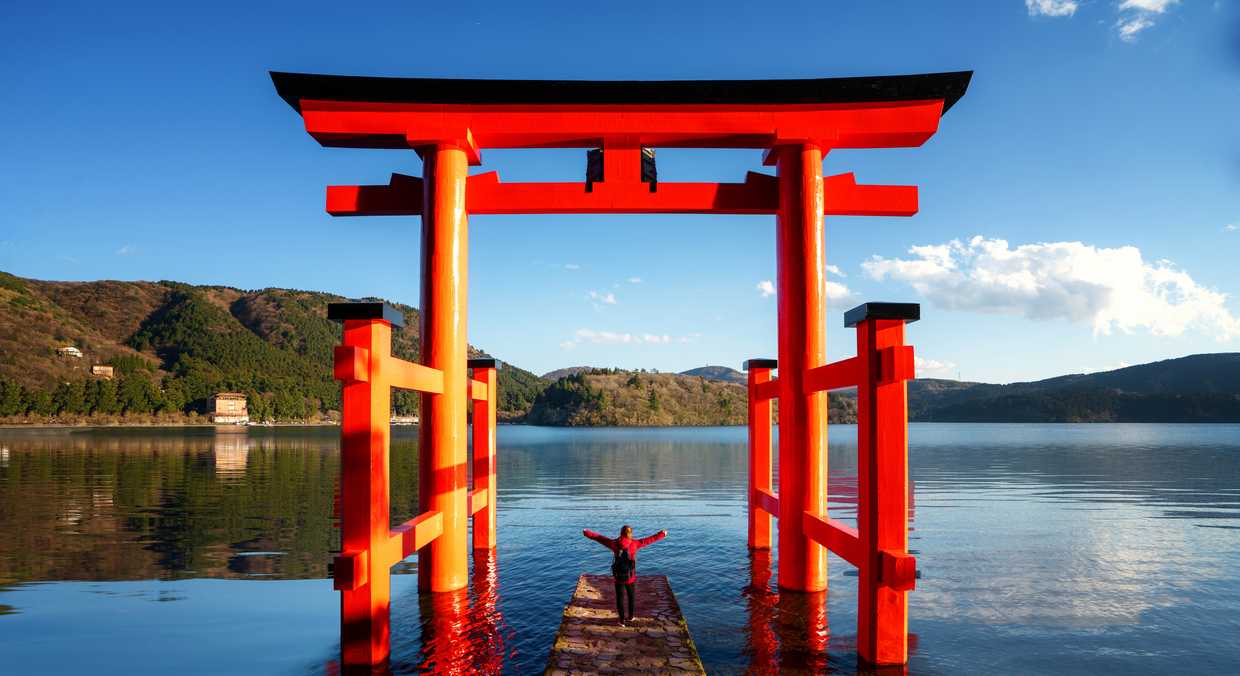
  • Hakone Shrine: A shrine on the shore of Lake Ashi, known for its striking red torii gate
  • Hakone Museum of Art / The Hakone Open-Air Museum: Distinctive museums where nature and art come together
  • Hakone-Yumoto Onsen: Home to several hot-spring facilities offering day-use bathing

Recommended Model Course: Hakone One-Day Tour

Morning: Spectacular views and local cuisine on a mountain route

  • Take the Odakyu Romancecar from Shinjuku Station to Hakone-Yumoto (about 1 hour 25 minutes)
  • Take the Hakone Tozan Railway to Gora, the cable car to Sounzan, and the ropeway to Owakudani
  • Stroll the volcanic steam vents and try the local specialty, kuro-tamago (black eggs)

Lunch: A lakeside lunch with views of Lake Ashi

  • Take the ropeway down to Togendai and cruise by pirate ship to Moto-Hakone Port
  • Enjoy a free-choice lunch at a lakeside café or soba restaurant

Afternoon: Relax at Hakone Shrine and the hot springs

  • Walk from Moto-Hakone Port to visit Hakone Shrine / Kuzuryu Shrine Shingu
  • Take commemorative photos at the Peace Torii (the torii standing in the water)
  • Take a local bus back to Hakone-Yumoto and relax in a day-use hot spring (such as Tenseien or Hakone Yuryo)

Return: Back to Shinjuku in the evening

  • Board the 6:00 p.m. Romancecar from Hakone-Yumoto Station
  • Arrive at Shinjuku Station around 7:30 p.m.

Recommended Day-Use Hot Springs for Foreign Visitors

Many foreign tourists are unfamiliar with public bathing culture, but the following facilities offer plenty of services geared toward foreign visitors:

  • Hakone Kowakien Yunessun: Includes hot-spring areas you can enter in a swimsuit — perfect for your onsen debut
  • Tenzan Tojikyo: Private, secluded room-baths are also available
  • Hakone Yuryo: Has English-speaking staff, and the views from the open-air baths are wonderful

Hakone offers a great-value ticket called the "Hakone Freepass," which gives you unlimited rides on the area's transport (buses, cable car, ropeway, pirate ship, and more). It also gets you discounts at many sightseeing facilities, so be sure to take advantage of it.

Recommended Day-Trip Sightseeing Spot: Mt. Fuji Area

View of Mt. Fuji and the surrounding area

The area where you can see Mt. Fuji, the symbol of Japan, up close can also be fully enjoyed on a day trip from Tokyo. At spots such as Mt. Fuji's 5th Station, Lake Kawaguchi, and Oshino Hakkai, you can take in the cultural landscape of Mt. Fuji and its surroundings, a registered World Heritage Site.

Access: About 2 hours from Shinjuku Station to Kawaguchiko Station on the Limited Express Azusa

Highlights of the Mt. Fuji Area

  • Mt. Fuji 5th Station: Feel Mt. Fuji up close from an elevation of 2,300 m (about 7,500 ft; accessible only in summer)
  • Lake Kawaguchi: Beautiful views of Mt. Fuji from the lakeshore, with a variety of activities to enjoy
  • Oshino Hakkai: Eight springs fed by Mt. Fuji's snowmelt, where you can experience Japan's original scenery
  • Arakurayama Sengen Park: A scenic spot where you can photograph Mt. Fuji together with a five-story pagoda
  • Fuji-Q Highland: A popular theme park full of thrill-ride attractions
  • Mt. Fuji World Heritage Center: A facility where you can learn about the history and culture of Mt. Fuji

Recommended Model Course: One-Day Sightseeing Around Mt. Fuji

Morning: A refreshing start with spring water and panoramic views of Fuji

  • 7:30 a.m. Depart Shinjuku Station by highway bus
  • 9:30 a.m. Arrive at Kawaguchiko Station; transfer to a local bus to Oshino Hakkai
  • Stroll Oshino Hakkai: Photograph the crystal-clear ponds against Mt. Fuji, and enjoy a tour of the springs

Lunch: Warm body and soul with hoto

  • Enjoy hoto (a hearty noodle hotpot) or Yoshida no udon at a local restaurant in Oshino Hakkai or by Lake Kawaguchi
  • Savor the gentle flavors brimming with vegetables from the foot of Mt. Fuji

Afternoon: A sky-high experience and a hunt for that classic Mt. Fuji view

  • Summer (July–September): Take a bus from Kawaguchiko Station to Mt. Fuji's 5th Station
  • At 2,300 m (about 7,500 ft), enjoy the above-the-tree-line scenery and a "Mt. Fuji melon bread"
  • Other seasons: Learn about Mt. Fuji's culture at the Yamanashi Prefectural Mt. Fuji World Heritage Center
  • Take the Fujikyuko Line to Shimoyoshida Station, then walk to Arakurayama Sengen Park
  • Enjoy the photogenic view of the five-story pagoda, Mt. Fuji, and seasonal flowers (cherry blossoms / autumn leaves)

Return: An easy bus ride home as the sun sets

  • 5:00 p.m. Board the highway bus from Kawaguchiko Station
  • 7:00 p.m. Arrive at Shinjuku Station — nicely done!

In the Mt. Fuji area, the chances of seeing Mt. Fuji vary greatly with the weather. Early morning on a clear day is said to offer the best chance of seeing the mountain, so if you can, check the weather forecast when deciding on your visit date.

Recommended Day-Trip Sightseeing Spot: Kamakura

Scenery of the ancient city of Kamakura

Access: About 1 hour from Tokyo Station on the JR Yokosuka Line (to Kamakura Station)

Kamakura is an ancient capital that was the political center of Japan from the late 12th to the early 14th century, and many historic buildings and natural sites remain. It's about an hour from Tokyo, and the chance to enjoy both temple-and-shrine visits and the coast makes it popular with foreign tourists.

Highlights of Kamakura

  • Great Buddha of Kamakura (Kotoku-in): The bronze Great Buddha — about 11.3 m tall (roughly 13.35 m including its pedestal) — is a symbol of Kamakura
  • Tsurugaoka Hachimangu: A leading Kamakura shrine founded by Minamoto no Yoritomo
  • Hasedera: A temple known as a famous spot for hydrangeas, with a wonderful view of the Kannon statue and the sea
  • Enoshima: A sightseeing spot near Kamakura, popular for the views from the Enoshima Sea Candle
  • Wakamiya-oji / Komachi-dori: Kamakura's main streets, lined with souvenir shops and cafés
  • The Kamakura coast: Open, breezy beaches such as Yuigahama and Zaimokuza

Recommended Model Course: Kamakura One-Day Stroll

Morning: Feel the spirit of the ancient capital on a historical walk

  • 8:30 a.m. Depart Tokyo Station on the JR Yokosuka Line
  • 9:30 a.m. Arrive at Kamakura Station — leave your bags in a coin locker to travel light
  • A 10-minute walk to Tsurugaoka Hachimangu / visit the Genji-linked shrine buildings and the great ginkgo tree
  • Head to Komachi-dori and snack your way through the variety shops and Japanese sweets

Lunch: A satisfying meal with Komachi-dori gourmet food

  • Savor Kamakura's specialty shirasu-don (whitebait rice bowl) or a Shonan-vegetable lunch at an old-house café
  • After eating, shop for souvenirs such as Kamakura-bori lacquerware and pickles

Afternoon: To the sea by the Enoden, a photo stroll with flowers and the Great Buddha

  • Take the Enoden from Kamakura Station to Hase Station (about 5 minutes)
  • Hasedera (the "hydrangea temple"): Stroll the Kannon hall overlooking the sea and the hydrangea path
  • A 10-minute walk to Kotoku-in (the Great Buddha of Kamakura): View the roughly 11.3 m (seated height) bronze Buddha up close
  • If you have time, head down to Yuigahama for a beach stroll and a café break in the sea breeze

Return: Heading home reluctantly with the sunset sea behind you

  • Take the Enoden back to Kamakura Station and do a final souvenir check
  • 6:00 p.m. Depart Kamakura Station for Tokyo on the JR Yokosuka Line
  • 7:00 p.m. Arrive at Tokyo Station — nicely done!

The "Enoden One-Day Pass" is handy for sightseeing in Kamakura. With this pass, you can get on and off freely along the entire Enoden line from Fujisawa to Kamakura for one day. It's common to sightsee in Kamakura by combining walking with the Enoden, but there are many hills and stairs, so we recommend visiting in comfortable walking shoes.

Recommended Day-Trip Sightseeing Spot: Nikko

Nikko's World Heritage shrines and natural scenery

Access: About 2 hours from Tokyo Station on a JR / Tobu limited express (to Tobu-Nikko Station or Nikko Station)

Nikko in Tochigi Prefecture is a sightseeing destination where lavish architecture and beautiful nature come together, including the World Heritage "Shrines and Temples of Nikko." It's a bit far from Tokyo, but with an early start you can comfortably enjoy it on a day trip.

Highlights of Nikko

  • Nikko Toshogu: A lavish complex of shrine buildings enshrining Tokugawa Ieyasu, famous for carvings such as the "Sleeping Cat" and the "Three Wise Monkeys"
  • Futarasan Shrine: A shrine also known as a power spot
  • Rinnoji: A great temple that conveys the history of Japanese Buddhism
  • Lake Chuzenji: A beautiful lake at an elevation of 1,269 m (about 4,160 ft)
  • Kegon Falls: A magnificent 97 m (about 320 ft) waterfall, one of Japan's three most famous falls
  • Irohazaka: A mountain road with 48 curves, especially beautiful in autumn-foliage season

Recommended Model Course: Nikko One-Day Tour

Morning: Recharge in the forest of the gods

  • 7:00 a.m. Depart Tokyo Station on the Tobu Limited Express Revaty Kegon
  • 9:00 a.m. Arrive at Tobu-Nikko Station — board the World Heritage Tour bus from the terminal right out front
  • 9:15 a.m. Arrive at the World Heritage area; walk to Nikko Toshogu
  • 10:30 a.m. Visit the adjacent Futarasan Shrine — pray for a good match at the sacred "married cedar" trees
  • 11:00 a.m. View the solemn Buddhist statues at the Sanbutsudo main hall of nearby Rinnoji, a few minutes' walk away

Lunch: Cozy up with the local specialty, yuba

  • 11:45 a.m. Enjoy a Buddhist-style lunch such as a yuba set meal or yuba soba at a long-established restaurant on the main approach
  • After eating, take a break with Nikko yuba sweets at a café in the temple town

Afternoon: Feel the power of the lake and the great waterfall

  • 12:40 p.m. Depart the World Heritage area bus stop on a bus bound for Lake Chuzenji / Kegon Falls (about 40 minutes of mountain road)
  • 1:20 p.m. Arrive at the Chuzenji Onsen bus stop — take the elevator to the Kegon Falls observation deck
  • 2:00 p.m. A 5-minute walk to stroll the shore of Lake Chuzenji and take in the spectacular view of Mt. Nantai
  • Relax on a sightseeing boat or at a lakeside café (seasonal operation)

Return: Leaving Nikko behind in the evening glow with fond memories

  • 3:45 p.m. Depart the Chuzenji Onsen bus stop for Tobu-Nikko Station (about 45 minutes)
  • 5:00 p.m. Board the Limited Express Revaty Kegon from Tobu-Nikko Station
  • 7:00 p.m. Arrive at Tokyo Station — nicely done!

For foreign visitors, there's a great-value ticket called the "NIKKO PASS all area." Buying this pass gives you a round trip on the Tobu Railway plus unlimited rides on buses in the Nikko area, and discounts on admission to some sightseeing facilities. Because Nikko is at a high elevation, mornings and evenings can be chilly even in summer. We recommend dressing for the season when you visit.

Recommended Day-Trip Sightseeing Spot: Kawagoe

The warehouse-style townscape of Kawagoe

Access: About 40 minutes from Shinjuku Station on the Seibu limited express (to Kawagoe Station or Hon-Kawagoe Station)

Kawagoe in Saitama Prefecture is a town called "Koedo" (Little Edo), where the atmosphere of the Edo period remains. Its kurazukuri (warehouse-style) townscape has been preserved, giving you the feeling of having traveled back in time. In recent years it has grown increasingly popular with foreign tourists as well.

Highlights of Kawagoe

  • Kurazukuri townscape: A historic streetscape that retains the look of Edo-period merchant houses
  • Toki no Kane (the Bell of Time): A symbol of Kawagoe, ringing out every hour
  • Kashiya Yokocho (Penny Candy Lane): A nostalgic lane lined with old-fashioned candy shops
  • Kawagoe Hikawa Shrine: A venerable shrine known as a deity of matchmaking
  • Koedo Yokocho: An alley lined with atmospheric restaurants
  • Kitain: A temple with precious cultural assets, including the room where Tokugawa Iemitsu was born

Recommended Model Course: Kawagoe One-Day Stroll

Morning: Start with the charm of Little Edo and a wish for a good match

  • 9:00 a.m. Depart Shinjuku Station on the JR Saikyo Line / Kawagoe direct rapid service
  • 9:40 a.m. Arrive at Kawagoe Station — a 6-minute bus ride from the station to Kawagoe Hikawa Shrine
  • Walk to the kurazukuri townscape (about 15 minutes)
  • Stroll the retro street lined with black-plastered merchant houses

Lunch: Savor Kawagoe's cuisine

  • Enjoy unagi kabayaki-ju (grilled eel over rice) or Kawagoe sweet-potato dishes at a long-established restaurant near the kurazukuri street
  • After eating, snack your way through Kashiya Yokocho on old-fashioned candy and sweet-potato treats

Afternoon: Dig into history with the bell and a famous temple

  • Stop by Toki no Kane and experience the sound of the time-bell that has continued since the Edo period
  • A 10-minute walk to Kitain
  • View the Tokugawa-linked guest hall and the Five Hundred Rakan, and enjoy the seasonal flowers in the grounds
  • If you have time, a café break at the Kawagoe Castle Honmaru Goten or along Taisho-roman Street is also lovely

Return: Leaving Little Edo behind at dusk

  • 4:50 p.m. From the kurazukuri area, walk 15 minutes / take a 10-minute bus to Kawagoe Station
  • 5:00 p.m. Depart Kawagoe Station for Shinjuku on a rapid train
  • 5:40 p.m. Arrive at Shinjuku Station — nicely done!

Kawagoe is a compact town, so sightseeing on foot is recommended. On weekends, free English guided tours by volunteer guides are sometimes offered. Kawagoe is famous for dishes and sweets made with imo (sweet potato), so be sure to give them a try. Sweet-potato confections and sweet-potato shaved ice, in particular, are popular with foreign tourists.

Recommended Day-Trip Sightseeing Spot: Yokohama

Yokohama's port town scenery

Access: About 30 minutes from Tokyo Station on the JR Tokaido Line (to Yokohama Station)

Yokohama is the major city closest to Tokyo, an attractive place where the international atmosphere of a port town blends with Japanese culture. With many exotic spots such as Chinatown and the Red Brick Warehouse, it's a popular and approachable destination for foreign visitors.

Highlights of Yokohama

  • Yokohama Chinatown: Japan's largest Chinatown, with around 600 restaurants and shops lining the streets
  • Minato Mirai 21: A modern area home to the Yokohama Landmark Tower and Cosmo World
  • Yamashita Park: A park facing the harbor, famous for the Hikawa Maru and the Girl with Red Shoes statue
  • Yokohama Red Brick Warehouse: A commercial facility created by renovating historic buildings
  • Cup Noodles Museum: A museum where you can learn about the history and culture of instant ramen
  • Sankeien: An expansive Japanese garden created by the businessman Hara Sankei

Recommended Model Course: Yokohama One-Day Stroll

Morning: Enjoy the sea breeze and a city of the future all at once

  • 9:00 a.m. Depart Tokyo Station on the JR Tokaido Line Rapid Acty
  • 9:30 a.m. Arrive at Yokohama Station → head to the Minato Mirai area on foot or via the Minatomirai Line
  • Take in Yokohama Bay and Mt. Fuji from the Sky Garden on the 69th floor of the Landmark Tower
  • Walk to the Red Brick Warehouse and browse the brick-built shops and cafés

Lunch: Recharge with authentic dim sum

  • A seaside walk from the Red Brick Warehouse → take in the Hikawa Maru and harbor views at Yamashita Park
  • A 5-minute walk to the entrance of Yokohama Chinatown
  • Choose lunch from about 500 shops — all-you-can-eat dim sum and xiaolongbao, and more
  • After eating, snack your way through peach buns and tapioca milk tea

Afternoon: Enjoy a historic garden and the lingering charm of the port town

  • From Motomachi-Chukagai Station, take a 15-minute bus / 10-minute taxi to Sankeien
  • Leisurely stroll the vast Japanese garden, the relocated temple buildings, and the seasonal flowers (cherry blossoms, autumn leaves, lotuses)
  • Take a short break with a matcha set at a teahouse
  • Take a bus back to the east exit of Yokohama Station and shop for souvenirs at Sogo or Yokohama Porta

Return: An easy trip home with the bay at dusk behind you

  • 6:00 p.m. Depart Yokohama Station for Tokyo on the JR Tokaido Line
  • 6:30 p.m. Arrive at Tokyo Station — nicely done!

The "Minatomirai Line One-Day Pass" is handy for sightseeing in Yokohama. The "Yokohama Tour Pass," which includes admission discounts at major sightseeing facilities, is also a good value. Sightseeing on foot is nice, but the loop bus known as the "Akai Kutsu" (Red Shoes) is convenient too. To enjoy the port-town atmosphere, a bay-area cruise boat is also recommended.

Recommended Day-Trip Sightseeing Spot: Izu

The coastline and hot-spring scenery of Izu

Access: About 2 hours from Tokyo Station on the JR Limited Express Odoriko (to Izukyu-Shimoda Station)

The Izu Peninsula in Shizuoka Prefecture is a popular resort area known for its beautiful coastline and numerous hot-spring towns. It's a bit far from Tokyo, but you can visit on a day trip if you use a limited express.

Highlights of Izu

  • Shuzenji Onsen: A historic hot-spring town representative of Izu
  • Izu Shaboten Zoo: A unique park where cacti and animals coexist
  • Jogasaki Coast: A dramatic coastline of sheer cliffs
  • Kawazu cherry blossoms: A famous spot for early-blooming cherry blossoms, at their best from February to March
  • Mt. Omuro: A cone-shaped mountain you can ascend by chairlift
  • Dogashima: A scenic spot lined with strangely shaped rocks, including the Tensodo sea cave

Recommended Model Course: Izu One-Day Sightseeing

Morning: Begin your adventure with the deep-blue sea and a cave of light

  • 7:00 a.m. Depart Tokyo Station on the Limited Express Odoriko
  • 9:00 a.m. Arrive at Izukyu-Shimoda Station → board the Tokai Bus bound for Dogashima from the bus terminal in front of the station (about 70 minutes)
  • 10:20 a.m. Arrive at Dogashima; board the Tensodo sightseeing boat from a nearby pier
  • Photograph the emerald light streaming in through the ceiling of the cave from aboard the boat

Lunch: Recharge with fresh seafood from the fishing town

  • 11:30 a.m. Enjoy a kinmedai (splendid alfonsino) simmered set meal or an assorted plate of local sashimi at a seafood eatery around Dogashima
  • After eating, take a break at a seaside foot bath or souvenir shop

Afternoon: Refresh at lava cliffs and a scenic open-air bath

  • 12:30 p.m. Depart Dogashima → take the Tokai Bus to Jogasaki-Kaigan Station (about 60 minutes + a 10-minute walk)
  • 1:40 p.m. Stroll the Jogasaki Coast — view the dramatic columnar joints from the Kadowaki Suspension Bridge and take commemorative photos at the lighthouse observation deck
  • 2:40 p.m. Take the Izukyu Line to Izu-Kogen Station → take the Tokai Bus to the Akazawa Day-Use Hot Spring (about 15 minutes)
  • 3:00–4:20 p.m. Relax at the scenic open-air bath overlooking Sagami Bay and the sea terrace

Return: Bid farewell to the sea breeze and head straight back to Tokyo

  • 4:25 p.m. Depart the Akazawa Day-Use Hot Spring by bus → Izukyu-Shimoda Station (about 35 minutes)
  • 5:00 p.m. Board the Limited Express Odoriko from Izukyu-Shimoda Station
  • 7:00 p.m. Arrive at Tokyo Station — nicely done!

Izu is a large area, so on a day trip you'll only be able to visit some of the spots. It's efficient to decide where you want to go before you visit. If you'd like to enjoy a hot spring, places that cater to foreign visitors — such as the "Akazawa Day-Use Hot Spring" — are recommended. Its ocean-view sauna and open-air baths are popular.

Recommended Day-Trip Sightseeing Spot: Chichibu

The rich nature and traditional culture of Chichibu

Access: About 80 minutes from Ikebukuro Station on the Seibu limited express (to Seibu-Chichibu Station)

Chichibu in western Saitama Prefecture is a region where rich nature and traditional culture remain. It has good access from Tokyo, and its appeal includes traditional events such as the Chichibu Night Festival and a distinctive food culture.

Highlights of Chichibu

  • Chichibu Shrine: A shrine revered as the chief guardian shrine of the Chichibu region
  • Nagatoro Gorge: A beautiful gorge created by the clear stream of the Arakawa River and strangely shaped rocks
  • Mitsumine Shrine: A power spot at an elevation of about 1,100 m (about 3,600 ft)
  • Chichibu Muse Park: A comprehensive park with wonderful views from its observation deck
  • Shibazakura Hill: In spring, you can enjoy a carpet of pink moss phlox
  • Chichibu Onsen: Home to hot-spring facilities offering day-use bathing

Recommended Model Course: Chichibu One-Day Sightseeing

Morning: Experience "nature × faith" at an ancient shrine and a gorge

  • 8:00 a.m. Depart Ikebukuro Station on the Seibu Limited Express Laview
  • 9:20 a.m. Arrive at Seibu-Chichibu Station → a 10-minute walk to visit Chichibu Shrine
  • Tour the blessings of the vividly colored carvings — "children, learning, and fortune"
  • Take a bus from the station to Nagatoro Gorge (about 25 minutes)
  • Board the river-boat descent: Enjoy the contrast of the rocky rapids with fresh greenery / autumn leaves

Lunch: Recharge with local gourmet food

  • Around Nagatoro Station, enjoy Chichibu soba, miso potato, and local-sake gelato
  • After eating, take a break on the Iwadatami terrace while gazing at the clear stream of the Arakawa River

Afternoon: To a power spot in the heavens

  • Take a bus back from Nagatoro Station to Seibu-Chichibu Station / board the express bus bound for Mitsumine Shrine from the station-front bus center (about 75 minutes)
  • Visit Mitsumine Shrine at an elevation of 1,100 m
  • Take in the majestic mountain range from the Mitsu-Torii (triple torii gate) and the rear-shrine worship hall
  • Pray for good fortune with the limited-edition "Ki-mamori" amulet or a wolf fortune slip

Return: Cap it off with a hot spring to warm body and soul

  • On the return bus, get off at Seibu-Chichibu Ekimae Onsen Matsuri no Yu (directly connected to the station)
  • 4:45–5:15 p.m. Enjoy the open-air bath and a finishing pudding at the food court
  • 5:30 p.m. Depart Seibu-Chichibu Station for Ikebukuro on the Laview
  • 6:50 p.m. Arrive at Ikebukuro Station — nicely done!

The "Seibu Railway One-Day Free Pass" is handy for sightseeing in Chichibu. Chichibu also has charms throughout the four seasons — moss phlox in spring, river play in summer, autumn leaves in fall, and snowy scenery and the Night Festival in winter — so you can enjoy a different face of the area in every season.

Recommended Day Trips by Season

Japan has distinct seasonal changes, so even the same place offers completely different scenery depending on the season. Below we introduce recommended day-trip destinations by season.

Spring (March–May)

DestinationRecommended HighlightBest Time
KamakuraCherry blossoms, hydrangeasLate March–early April (cherry blossoms), June (hydrangeas)
KawazuKawazu cherry blossomsMid-February–early March
ChichibuMoss phloxMid-April–early May
YokohamaTulips at Yamashita ParkMid–late April
NikkoFresh greenery and waterfallsMid–late May

Spring is high season, when many foreign tourists visit. The cherry-blossom period in particular gets crowded, so we recommend booking early and sightseeing in the early morning.

Summer (June–August)

DestinationRecommended HighlightBest Time
Mt. FujiClimbing Mt. Fuji, 5th Station sightseeingJuly–August
KamakuraSea bathing, hydrangeas at HasederaJuly–August (sea bathing), June (hydrangeas)
HakoneCool highland climate, art museumsJuly–August
NagatoroRafting, river descentsJuly–August
NikkoKegon Falls, Lake ChuzenjiJuly–August

Summer brings intense heat and humidity, so highland and mountain destinations are popular. Take ample precautions against heatstroke, and sightsee during the relatively cool early-morning and evening hours.

Autumn (September–November)

DestinationRecommended HighlightBest Time
YokohamaIlluminationsFrom late November
Mt. Fuji areaAutumn leaves at Lake Kawaguchi with Mt. FujiEarly–mid November

Autumn's appeal lies in its comfortable temperatures and beautiful foliage. The autumn-foliage season bustles with many tourists, so weekday visits are recommended. Japan's autumn leaves are famous worldwide, and the foliage in Nikko and Hakone in particular is highly rated by foreign tourists.

Winter (December–February)

DestinationRecommended HighlightBest Time
HakoneSnowy scenery and hot springsDecember–February
KawazuEarly-blooming Kawazu cherry blossomsMid-February–early March
YokohamaIlluminations, Chinatown's Lunar New YearDecember–February
KawagoeThe kurazukuri townscape in the snowJanuary–February
IzuEarly-spring flowers and hot springsFrom late February

Winter is a relatively quiet time for tourism, but hot-spring towns and places where you can see early-blooming cherry blossoms are popular. Take good precautions against the cold, and since the sun rises late and sets early, build extra time into your itinerary.

Tips and Etiquette for Travelers

Here are some tips and etiquette to help foreign tourists visiting Japan enjoy a more comfortable day trip.

Tips for Efficient Travel

  • Start early: For popular destinations especially, departing early in the morning helps you avoid crowds and visit more spots.
  • Use transit apps: Apps such as "Japan Transit Planner" and "Google Maps" make it easy to navigate Japan's complex transit systems.
  • Pack light: Keeping your luggage to a minimum makes sightseeing more comfortable on a day trip.
  • Use coin lockers: Major stations have coin lockers where you can temporarily store your luggage.
  • Check the weather: When visiting destinations affected by weather, such as Mt. Fuji, check the forecast in advance.

Etiquette and Points to Note in Japan

  • Etiquette on public transit: Refrain from talking on the phone on trains and buses, and give up your seat to elderly people and pregnant women, especially in designated priority seats.
  • Take your trash with you: Many sightseeing spots in Japan have few trash cans, so take your trash with you or sort it into the designated bins.
  • Onsen etiquette: Wash your body before bathing, don't put your towel in the bath, and if you have tattoos, check the facility's rules in advance.
  • Photography rules: Photography inside many shrines and temples is prohibited. Always check whether photos are allowed.
  • Be quiet: Worship quietly, especially at shrines and temples, and refrain from talking loudly.

Common Challenges for Foreign Tourists and How to Handle Them

  • Language barrier: English signage is increasing at major destinations, but it's limited in rural areas. It helps to have a translation app and a few simple Japanese phrases.
  • Wi-Fi access: Free Wi-Fi is offered at many destinations, but renting a pocket Wi-Fi is also worth considering for a stable connection.
  • Payment methods: Cash is still the norm in many places in Japan, so carrying a reasonable amount of cash is recommended. Credit cards and mobile payments have recently become more common at major destinations.
  • Complexity of public transit: Japan's rail network is complex, but you can get English route maps and timetables at tourist information centers.
  • Check business hours: Sightseeing facilities — especially in rural areas — often close early, so check the hours in advance.

Common questions from foreign tourists include "the scarcity of trash cans," "the difficulty of communicating in English," and "how to use public transit." To handle these challenges, we recommend preparing thoroughly in advance.

Day-Trip Packing Checklist

Below is a packing list to help you enjoy a comfortable day trip.

Essential ItemDescription
PassportNeeded when using discount passes for foreign visitors
CashEspecially in rural areas, many places don't accept electronic payment
Transit IC cardSuch as Suica or PASMO
Mobile batteryTo prevent your smartphone from running out of charge
DrinksA must, especially in summer
Light snacksHandy while traveling or waiting in line
Rain gearA folding umbrella or raincoat
Season-appropriate clothingKeep in mind that mountains and highlands are colder than the lowlands
Basic Japanese phrasebookA note with simple greetings and emergency expressions
English-capable map appHandy to download offline maps in advance

Depending on the season, it's a good idea to bring extras — heatstroke-prevention items (a hat, sunscreen, cooling sheets) in summer, and cold-weather gear (gloves, a scarf) in winter.

Crowd Conditions at Each Spot and How to Avoid Them

On a day trip, avoiding crowds lets you sightsee efficiently. Below is a summary of typical crowd conditions and ways to avoid them at each spot.

DestinationCrowded Periods / TimesHow to Avoid Crowds
HakoneWeekends, holidays, autumn-foliage seasonVisit on weekdays, start early, take the route in reverse
Fuji Five LakesSummer vacation, autumn-foliage seasonVisit on weekdays, view Mt. Fuji in the early morning
KamakuraWeekends, cherry-blossom and autumn-foliage seasonsVisit on weekdays, hit popular spots first thing in the morning
NikkoGolden Week, autumn-foliage seasonVisit the World Heritage area right after it opens
KawagoeWeekends, festival periodsVisit early on weekday mornings
YokohamaWeekends, summer vacationVisit on weekdays, avoid Chinatown at lunchtime
IzuSummer vacation, Kawazu cherry-blossom seasonVisit on weekdays, hit the hot springs in the morning

Japan's public holidays and long weekends (Golden Week, Obon, New Year's, etc.) get extremely crowded, so if possible, we recommend avoiding these periods.

Summary

A day trip from Tokyo is a wonderful option for efficiently experiencing Japan's many charms in a limited amount of time. By understanding what makes each destination special and choosing where to go according to your interests and the season, you can have a more fulfilling experience.

For those interested in history and culture — Kamakura → Nikko → Kawagoe: If you want to enjoy historic buildings and traditional culture, we recommend touring the temples and shrines of the ancient city of Kamakura, the lavish decoration of Nikko Toshogu, and the Edo-flavored streets of Kawagoe.

For those who want to enjoy natural scenery — Mt. Fuji → Hakone → Izu: For those seeking beautiful natural scenery, the combination of iconic views of Mt. Fuji, the lake-and-mountain scenery of Hakone, and Izu's coastline and hot springs is ideal.

For those seeking urban appeal — Yokohama → Kawagoe → Kamakura: For those who like places where modern city atmosphere mingles with history, we recommend combining international Yokohama, Kawagoe with its lingering Little Edo atmosphere, and the seaside ancient city of Kamakura.

For those who want to enjoy hot springs — Hakone → Izu → Nikko Yumoto: For those who want to experience hot-spring culture, a good combination is Hakone with its variety of day-use hot springs, Izu where you can bathe while gazing at the sea, and the historic Nikko Yumoto Onsen.

The key to a successful day trip from Tokyo is to plan a manageable schedule. Rather than greedily cramming in many spots, we recommend narrowing it down to two or three places and enjoying them at a leisurely pace. It's also reassuring to have a backup plan for spots that depend on the weather (such as Mt. Fuji).

For foreign tourists, a day trip from Tokyo is a wonderful opportunity to efficiently experience Japan's diversity in a short time. Use this article as a reference to plan your own special day trip and create unforgettable memories of Japan.

関連記事

おすすめ記事