Kusatsu Travel Guide | Highlights and Things to Do Across the Region - GTN MAGAZINE
日本語
日本語
English

Kusatsu Travel Guide | Highlights and Things to Do Across the Region

Many international visitors to Japan may think of a beautiful hot spring town when they hear the name “Kusatsu.” However, Japan is actually home to two well-known places called Kusatsu: Kusatsu Onsen, a famous hot spring destination in Gunma Prefecture, and Kusatsu City in Shiga Prefecture.

This guide takes a closer look at the attractions, highlights, and access options for both, helping you decide which Kusatsu to visit. If you’re looking to experience Japan’s beautiful nature and culture, use this guide to help plan your trip.

1. What Is Kusatsu Onsen in Gunma Prefecture?

1-1. The History of Kusatsu Onsen, One of Japan's Finest Hot Springs

Kusatsu Onsen sits in the northwestern part of Gunma Prefecture at an elevation of about 1,200 meters, and ranks among Japan's most famous hot springs. Long known as one of the "Three Great Hot Springs of Japan," it was beloved even by the Tokugawa shogunate during the Edo period. Its history goes back more than 1,200 years, and it established itself early on as a toji (hot-spring cure) destination, prized as "water that heals illness."

The folk song "Kusatsu yoi toko, ichido wa oide" ("Kusatsu is a wonderful place — come at least once") became famous nationwide, a sign of how deeply the Japanese have loved this hot-spring town over the years.

1-2. The Characteristics and Water Quality of Kusatsu Onsen

The greatest feature of Kusatsu Onsen is its abundant flow of more than 323,000 liters per minute and its strongly acidic water. With a pH of 1.6 to 2.1, the water is highly acidic and strongly antibacterial. It is said to have so many benefits that "the only illness it can't cure is lovesickness."

Water quality: acidic spring, sulfur spring (hydrogen sulfide type), aluminum-containing spring, sulfate spring, chloride spring

Benefits:

  • Neuralgia, muscle pain, joint pain
  • Frozen shoulder, motor paralysis, joint stiffness
  • Chronic skin conditions
  • Chronic gynecological conditions
  • Fatigue recovery
  • Beautifying the skin

The water at Kusatsu is so strongly acidic that a one-yen coin will completely dissolve in about a week. This powerful water is believed to be effective against a range of conditions, and it is especially well regarded for treating skin ailments and muscle pain.

2. Highlights of Kusatsu Onsen

2-1. The Symbol: "Yubatake" (Hot Water Field)

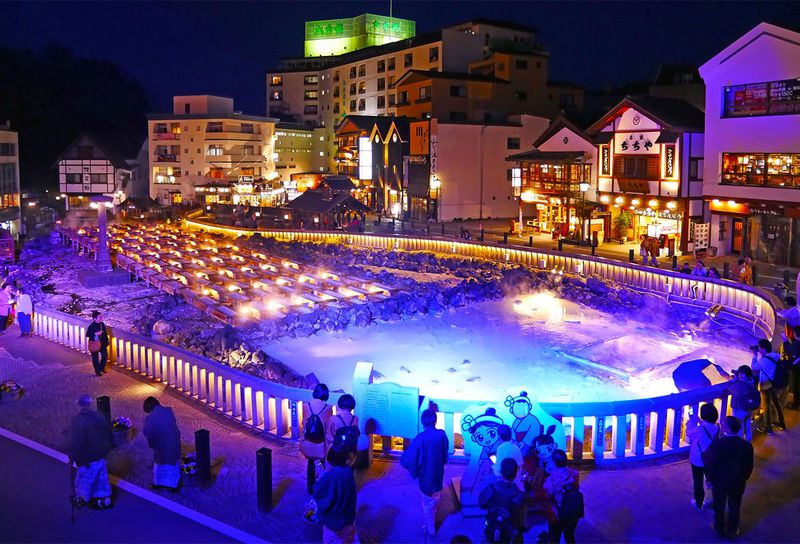
The symbol of Kusatsu Onsen is the Yubatake ("hot water field") at the center of the hot-spring town. About 4,000 liters of hot spring water gush out every minute, and the sight of steam constantly rising is spectacular. The surrounding area has tiled walkways and stone railings, along with the "Shirane Bench" shaped after Mount Shirane (Shirane-san).

At night, the illuminated Yubatake takes on a magical atmosphere. (Travel.jp)

Night view of the Yubatake at Kusatsu Onsen

The Yubatake also serves as a cooling system to lower the temperature of the spring water. As the water flows through the seven wooden troughs lined up across the Yubatake and time passes, the hot-spring minerals condense and settle, producing a substance called yu no hana ("hot spring flower"). The name "Yubatake" comes from this place where yu no hana is harvested.

At night in particular, the Yubatake is lit up, letting you soak in the atmosphere of the hot springs amid a magical scene. The area around the Yubatake is also lined with many souvenir shops and cafés, bustling with visitors.

2-2. Sai no Kawara Park

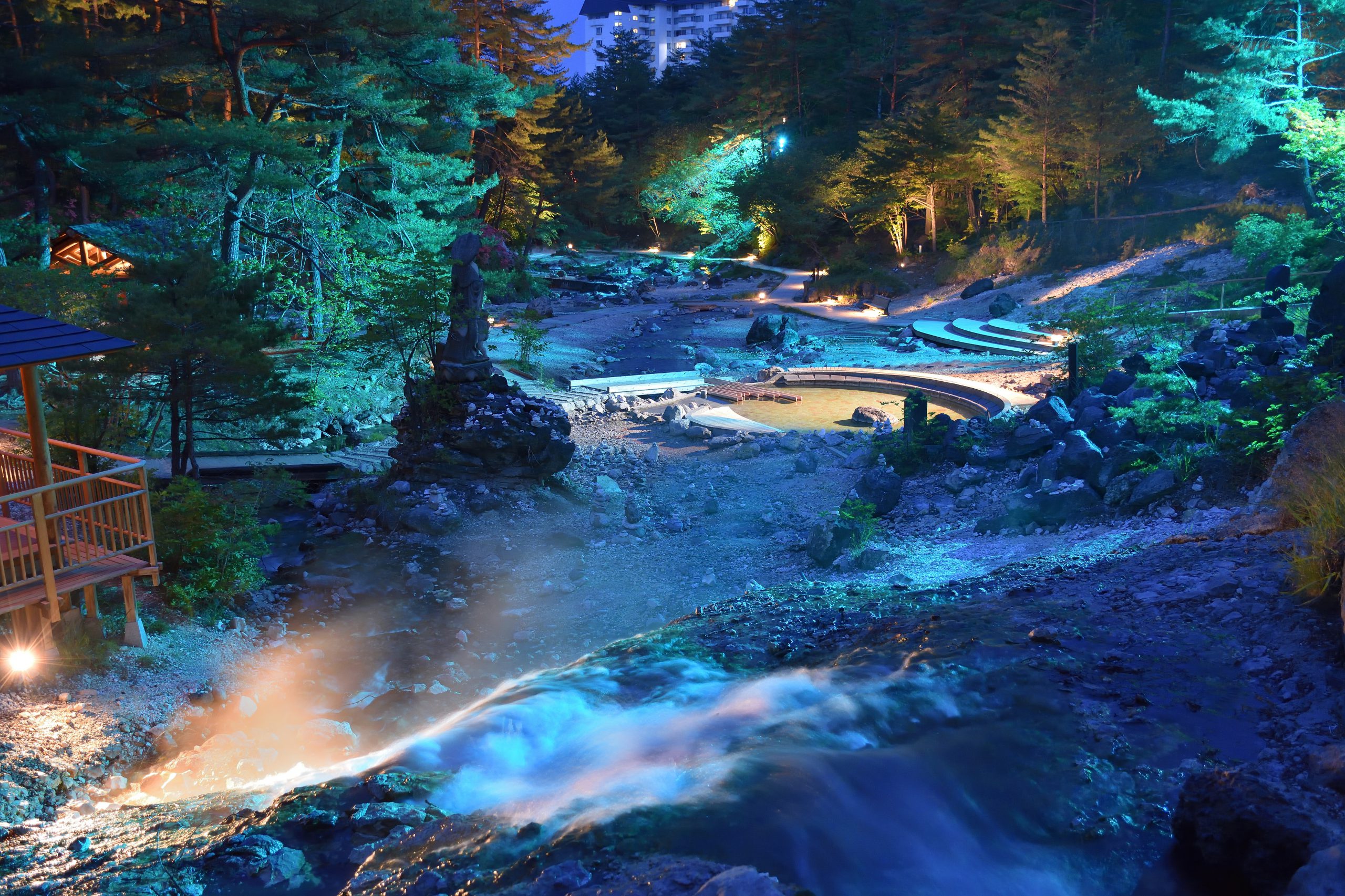
About a 15-minute walk from the Yubatake, Sai no Kawara Park is a popular spot where you can fully enjoy hot springs surrounded by nature. Across its vast grounds of about 8,000 tsubo (roughly 26,000 sq m), the Yu River flows, dotted with pools of hot water large and small.

Sai no Kawara Park is a place to enjoy natural beauty through all four seasons. (Kanko Gunma)

Sai no Kawara Park

The park is home to the "Sai no Kawara Open-Air Bath," which you can enter for about ¥500. It is a rustic open-air bath where you can enjoy the luxury of soaking while taking in the seasonal scenery. The view changes with the seasons — fresh green leaves in spring, cool breezes in summer, autumn foliage, and snowy landscapes in winter.

2-3. Netsu no Yu and the Yumomi Show

Netsu no Yu, where you can watch yumomi — a traditional part of Kusatsu Onsen's culture — is another popular spot. Yumomi is a traditional method of cooling the very hot spring water by stirring it with wooden boards, and it is presented to visitors as the "Yumomi and Dance Show."

The yumomi show, with the yumomi maidens performing songs and dances, is a popular attraction that lets you enjoy and experience Kusatsu Onsen's culture. There are also explanations in English for foreign visitors, making it a great chance to understand Japanese hot-spring culture.

As a paid sightseeing bathhouse, you can also bathe after watching the show (¥600 for adults, ¥300 for children). The show is held daily, but it gets especially crowded on weekends and holidays, so we recommend checking in advance.

2-4. Touring Kusatsu's Public Bathhouses

Kusatsu Onsen has several public bathhouses long cherished by locals. Two we especially recommend are "Goza no Yu" and "Shirahata no Yu."

Goza no Yu: The bathhouse with the oldest history in Kusatsu Onsen, distinguished by its traditional bathhouse architecture. You can enjoy 100% free-flowing water straight from the source.

Shirahata no Yu: A small bathhouse, but known for water that feels especially gentle on the skin, even by Kusatsu Onsen standards. It is a hidden gem loved by locals.

These public bathhouses are open to visitors as well, and you can experience authentic Kusatsu Onsen at relatively reasonable prices (around ¥200 to ¥500).

3. How to Get to Kusatsu Onsen

3-1. Access from Tokyo

Kusatsu Onsen is about 3 to 4 hours from Tokyo, with several routes to choose from.

By train:

  1. Take the limited express "Kusatsu/Shima" from JR Ueno Station (about 2 hours 30 minutes) → Naganohara-Kusatsuguchi Station → about 30 minutes by bus → Kusatsu Onsen Bus Terminal
  2. From Tokyo Station, take the Hokuriku Shinkansen to Karuizawa Station (about 1 hour 10 minutes) → bus bound for Kusatsu Onsen, about 1 hour 20 minutes → Kusatsu Onsen Bus Terminal
  3. From Ueno Station, take the Takasaki Line to Takasaki Station (about 1 hour 45 minutes) → Agatsuma Line to Naganohara-Kusatsuguchi Station (about 1 hour 30 minutes) → about 30 minutes by bus → Kusatsu Onsen Bus Terminal

By highway bus: The "Joshu Yumeguri-go" bus runs directly from Tokyo Station and Shinjuku Station (Busta Shinjuku) to Kusatsu Onsen. The trip takes about 4 hours, and fares start at ¥3,100.

3-2. Access by Car

Getting there by private car is also convenient.

  • From the Tokyo area: Kan-Etsu Expressway → Shibukawa-Ikaho IC → National Route 17 → National Route 353 → Kusatsu Onsen (about 3 hours 30 minutes)
  • From the Osaka area: Meishin Expressway → Hokuriku Expressway → Joshin-etsu Expressway → Usui-Karuizawa IC → National Route 146 → Kusatsu Onsen (about 6 hours)

3-3. Getting Around Within Kusatsu Onsen

The central area of Kusatsu Onsen is small enough to explore comfortably on foot, but if you want to reach somewhat distant spots such as Sai no Kawara Park, the "Yu-Wakuwaku Bus" that circulates around town is convenient. A one-day pass is ¥500 for adults and connects the main spots in the hot-spring town.

4. Recommended Places to Stay

Kusatsu Onsen offers a wide range of accommodations, from traditional inns to modern resort hotels. Here are a few we especially recommend for foreign visitors.

4-1. Ranking of Popular Inns in Kusatsu Onsen

Here are some of the most popular accommodations in Kusatsu Onsen:

AccommodationFeaturesPrice RangeForeign Language Support
La Vista Kusatsu HillsA resort hotel with modern facilities and an open-air bath with a view¥¥¥English, Chinese
Hotel IchiiA great location overlooking the Yubatake, blending the dignity of a long-established inn with comfort¥¥¥English
Kusatsu Onsen Hotel SakuraiA hot-spring inn where you can enjoy Japanese aesthetics and seasonal cuisine¥¥English (partial)
Yuyado Toki no NiwaA luxury hot-spring inn with an open-air bath in every room¥¥¥¥English
NarayaA long-established inn founded in the Edo period, with appealing traditional architecture and gardens¥¥¥English, Chinese (partial)

4-2. What Makes Certain Inns Popular with Foreign Visitors

Inns popular with foreign visitors tend to share the following features:

  1. In-room open-air baths: Rooms with open-air baths where you can enjoy the hot spring in a private space
  2. English-speaking staff: Multilingual staff for smooth communication
  3. Wi-Fi throughout: Free Wi-Fi available anywhere in the building
  4. Diverse dining options: Not only traditional Japanese kaiseki cuisine but also Western food and accommodations for special dietary needs
  5. Well-stocked amenities: Instructions on how to wear a yukata and easy-to-use amenities

A growing number of accommodations have enhanced their services for foreign visitors, such as "Kusatsu Onsen Hotel Village" and "Kusatsu Onsen Bo-un." More and more places now offer English brochures and in-house signage, with foreign staff on hand.

5. The Charm of Kusatsu Onsen Through the Four Seasons

Kusatsu Onsen has something to offer year-round, with different ways to enjoy it in each season.

5-1. Spring (April to June)

In spring, Kusatsu Onsen is a season of fresh greenery and mountain flowers. Mid- to late May is the best time to enjoy the blooms. At Sai no Kawara Park, cherry blossoms and azaleas burst into flower. With daytime temperatures around 15°C and mornings and evenings cooling to about 5°C, you can enjoy the contrast between the cool air and the warm springs.

Recommended spring events:

  • Kusatsu Onsen Thanksgiving Festival (early May)
  • Mount Shirane Opening (late May)

5-2. Summer (July to September)

Located on a highland at an elevation of 1,200 meters, Kusatsu Onsen stays cool even in summer, with average temperatures around 18°C — making it an ideal place to escape the heat. Since it is 7 to 8°C cooler than major cities like Tokyo, you can enjoy the hot springs away from the heat.

Recommended summer activities:

  • Footbath experience at the Yubatake
  • Outdoor activities at Kusatsu Forest Stage
  • Trekking on Mount Shirane

5-3. Autumn (October to November)

Autumn at Kusatsu Onsen is defined by the beauty of its foliage. Centered on Sai no Kawara Park, vivid autumn colors spread across the landscape. The foliage begins in mid-September and peaks in mid- to late October.

Recommended autumn spots:

  • Autumn foliage at Sai no Kawara Park
  • Illuminated autumn foliage around the Yubatake
  • Leaf-viewing at the "Undo Chaya Koen" roadside station

5-4. Winter (December to March)

In winter, Kusatsu Onsen creates a magical scene with steam rising amid the snow. The snowy view of the Yubatake is especially exceptional. There is also a "Kusatsu Onsen Ski Resort" nearby, so you can enjoy hot springs and skiing at the same time.

Recommended winter events:

  • Yubatake illumination (December to February)
  • Snow activities at the Kusatsu International Ski Resort
  • Yugetsuki Festa, a winter festival (January)

6. Sightseeing Spots in Kusatsu City, Shiga Prefecture

Apart from Kusatsu Onsen in Gunma Prefecture, Shiga Prefecture has a city called "Kusatsu." Facing Lake Biwa, it is a city rich in nature with its own distinct appeal.

6-1. Lake Biwa Museum

The most popular sightseeing spot in Kusatsu City, Shiga Prefecture, is the "Lake Biwa Museum." It is known as a comprehensive museum where you can learn about the nature, history, and culture of Lake Biwa, Japan's largest lake.

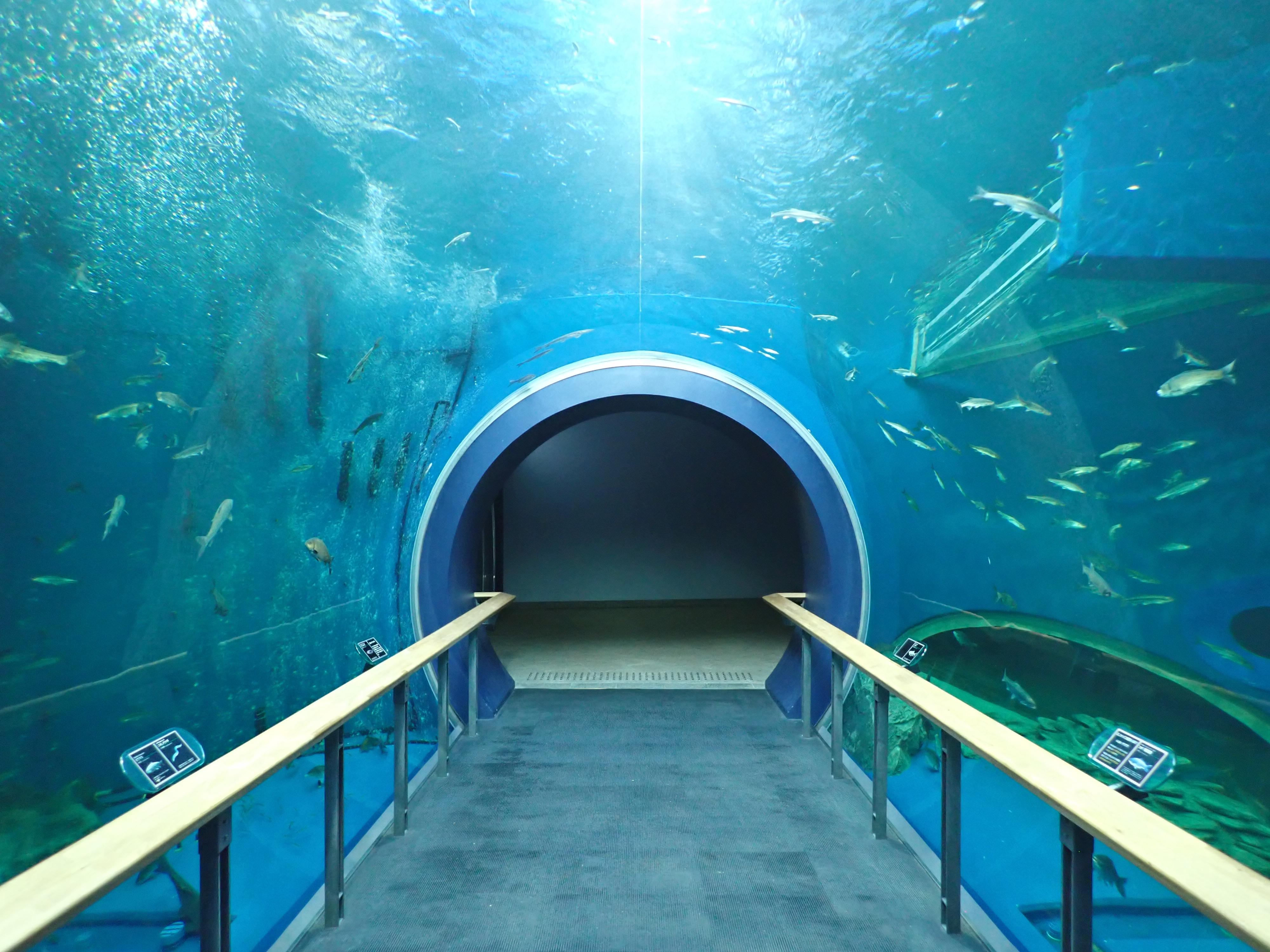
At the Lake Biwa Museum, you can learn about the lake's ecosystem and history. (Lake Biwa Museum)

Lake Biwa Museum

The museum includes an aquarium exhibition room displaying creatures that live in Lake Biwa, and an area introducing how the lake formed — a facility that both children and adults can enjoy. English signage is plentiful, so foreign visitors can tour with peace of mind.

6-2. Karasuma Peninsula

The Karasuma Peninsula, home to the Lake Biwa Museum, is a beautiful peninsula jutting out into Lake Biwa and a spot where you can fully enjoy nature. At the "Mizu no Mori Aquatic Botanical Garden," you can enjoy Japan's largest collection of water lilies.

6-3. Kusatsu-juku Honjin

Kusatsu City flourished as the junction of the Tokaido and Nakasendo highways, and many historic buildings remain. The "Kusatsu-juku Honjin" is a valuable building that conveys the atmosphere of an Edo-period post town to this day, where you can learn about the life and culture of the era.

6-4. Tachiki Shrine

"Tachiki Shrine," with a history of more than 1,000 years, is another highlight of Kusatsu City. Said to bring blessings for matchmaking, it is a shrine cherished by locals.

7. The Difference Between Kusatsu Onsen and Kusatsu City in Shiga Prefecture

The two regions that share the name "Kusatsu" differ greatly in location and character. To help foreign visitors avoid confusing them, here is a summary of the main differences.

ItemKusatsu Onsen, Gunma PrefectureKusatsu City, Shiga Prefecture
LocationKusatsu Town, Agatsuma District, Gunma Prefecture (Kanto region)Kusatsu City, Shiga Prefecture (Kansai region)
Distance from TokyoAbout 150 km (3 to 4 hours by train)About 450 km (about 2.5 hours by Shinkansen)
CharacterHot-spring townCity facing Lake Biwa
Main attractionsYubatake, hot springs, natural sceneryLake Biwa, museum, historic buildings
ElevationAbout 1,200 m (highland)About 90 m (lowland)
ClimateHighland climate (cool summers)Mild climate influenced by the lake
Share of foreign visitorsAbout 5% (rising trend)No data

7-1. Suggested Itinerary Planning

Visiting both "Kusatsu" places within a limited travel schedule may be difficult, so we recommend choosing based on the purpose of your trip:

  • If you want hot springs and nature: Kusatsu Onsen in Gunma Prefecture is the best choice
  • If you want to combine it with Lake Biwa or sightseeing in Kyoto and Osaka: Kusatsu City in Shiga Prefecture is the best choice

If you want to visit both, an efficient route is to first spend 1 to 2 nights at Kusatsu Onsen in Gunma Prefecture from Tokyo, then take the Shinkansen from Tokyo toward Kyoto and visit Kusatsu City in Shiga Prefecture on a day trip.

8. Frequently Asked Questions

Q1: Is Kusatsu Onsen an easy place for foreign visitors to get to?

A: Yes. In recent years, services for foreign visitors have expanded, with a growing number of accommodations offering English signage and multilingual staff. Many facilities also provide explanations in English on how to bathe in the hot springs.

Q2: What is the bathing etiquette at Kusatsu Onsen?

A: At Japanese hot springs, there is etiquette such as washing your body before entering and not putting your towel in the bath. Many accommodations provide explanations in English. Policies on tattoos vary by accommodation, so we recommend checking in advance.

Q3: How far apart are Kusatsu Onsen and Kusatsu City in Shiga Prefecture?

A: They are about 350 km apart, and traveling between them by public transportation takes around 6 to 7 hours. Because direct transportation options are limited, it is common to go via major cities such as Tokyo or Osaka.

Q4: What is the best season to visit Kusatsu Onsen?

A: Every season has its appeal, but summer (as a cool retreat from the heat) and autumn (for the beauty of the foliage) are especially recommended. Winter offers beautiful snowy scenery, but be aware that access can become more difficult.

Q5: Can you take a day-trip bath at Kusatsu Onsen?

A: Yes, many hot-spring facilities accept day-trip bathers. Public bathhouses such as "Goza no Yu" and "Shirahata no Yu," as well as the "Sai no Kawara Open-Air Bath," are popular. Some accommodations also offer day-trip bathing plans.

Conclusion

When they hear "Kusatsu," many Japanese people picture the celebrated Kusatsu Onsen in Gunma Prefecture, but "Kusatsu City" in Shiga Prefecture is also an appealing place rich in nature and history.

The one especially popular with foreign visitors is "Kusatsu Onsen," where you can fully enjoy traditional Japanese hot-spring culture. With its excellent water quality, beautiful natural scenery, and the chance to experience traditional hot-spring culture, it is valued by travelers from around the world as a destination where you can savor what makes Japan special.

On your trip to Japan, be sure to visit the "Kusatsu" that suits your travel style and experience the depth of Japan's nature and culture. A moment spent gazing at the starry sky while soaking in the hot springs of Kusatsu Onsen is sure to become an unforgettable memory of your trip to Japan.

関連記事

おすすめ記事