Hie Shrine | Discover Edo’s Guardian Deity in the Heart of Tokyo - GTN MAGAZINE
日本語
日本語
English

Hie Shrine | Discover Edo’s Guardian Deity in the Heart of Tokyo

Nestled in Akasaka in the heart of Tokyo, Hie Shrine is a historic shrine that has been cherished for centuries. Affectionately known as Sanno-san, it has remained an important place of worship from the Edo period to the present day. Located next to the Imperial Palace, the shrine offers a peaceful escape from the city's busy streets, making it a favorite destination for both locals and international visitors.

Known for blessings related to love, business success, and career advancement, Hie Shrine is also admired for its distinctive architecture and rich cultural heritage. Whether you're interested in Japanese history, traditional culture, or simply looking for a tranquil place to explore, Hie Shrine is one of Tokyo's must-visit shrines. In this guide, we'll introduce everything that makes this remarkable shrine worth visiting.

目次

Hie Shrine

Hie Shrine

Hie Shrine (Hie-jinja) sits in Nagatacho, the political heart of central Tokyo. Long known affectionately as "Sanno-san," it is a historic shrine that has been loved by countless people from the Edo period right up to the present day. Set beside the Imperial Palace, it keeps a quiet, serene atmosphere even amid the bustle of the city—and that calm is a big part of its appeal for foreign visitors.

Known for a wide range of blessings, including matchmaking, business prosperity, and career success, Hie Shrine combines a distinctive setting with a rich cultural backdrop. It's one of those shrines you simply have to visit when you're in Tokyo. This article walks you through everything that makes Hie Shrine special.

Address2-10-5 Nagatacho, Chiyoda-ku, Tokyo 100-0014
AccessA 3-minute walk from Akasaka Station (Exit 2) on the Tokyo Metro Chiyoda Line
Official Websitehttps://www.hiejinja.net/

The History and Background of Hie Shrine

From Its Founding to the Present Day

The origins of Hie Shrine date back to the Kamakura period. It began when the Edo clan enshrined a Sanno deity while cultivating the Musashino region. Later, in 1478 (Bunmei 10), Ota Dokan—the warlord who built Edo Castle—invited the spirit of the Sanno Shrine in Kawagoe (the Senba Hie Shrine that once served as the guardian shrine of present-day Kitain and Nakain temples) to serve as the castle's guardian deity. This is the direct origin of today's Hie Shrine.

In 1590 (Tensho 18), when Tokugawa Ieyasu entered Edo, he built a new shrine hall on Momijiyama within the castle grounds and revered it deeply as the "guardian shrine of the castle." Tokugawa Iemitsu, the third shogun, held a particularly deep faith in the shrine—he had been born on this very site, and he venerated it as the "guardian deity of my birthplace."

After the shrine hall burned down in the Great Fire of 1657 (Meireki 3), it was rebuilt at its current location in Nagatacho during the reign of the fourth shogun, Ietsuna. It has stood on this spot ever since, for more than 350 years. In the Meiji era it was elevated to the rank of Kanpei-taisha (a top-tier imperial shrine), and it has continued to draw the faith of Tokyo's residents into the modern age.

The Enshrined Deities and the Shrine's Significance

The principal deity of Hie Shrine is Oyamakui-no-kami. Revered as a god of the mountains, this deity governs mountains and water, rules over the earth, and is said to hold vast divine power that nurtures the growth and development of all things and oversees industry of every kind.

Enshrined alongside the main deity are Kunitokotachi-no-kami, Izanami-no-kami, and Tarashinakatsuhiko-no-mikoto.

Since ancient times, Hie Shrine has been revered as a deity of protection from misfortune, safe childbirth, matchmaking, business prosperity, and good fortune for organizations. Even today, it is beloved as a true "power spot in the heart of the city," visited by many businesspeople and politicians.

Getting There and Tips for Your Visit

Access by Train

Hie Shrine is conveniently located in central Tokyo and is within walking distance of several stations.

  • 3 minutes on foot from Exit 2 of Akasaka Station (Tokyo Metro Chiyoda Line)
  • 3 minutes on foot from Exit 7 of Tameike-Sanno Station (Tokyo Metro Namboku Line / Ginza Line)
  • 5 minutes on foot from Exit 5 of Kokkai-Gijidomae Station (Tokyo Metro Chiyoda Line)
  • 8 minutes on foot from Exit 11 of Akasaka-Mitsuke Station (Tokyo Metro Ginza Line / Marunouchi Line)

Approach Paths and Your Options

Hie Shrine has three main approach paths.

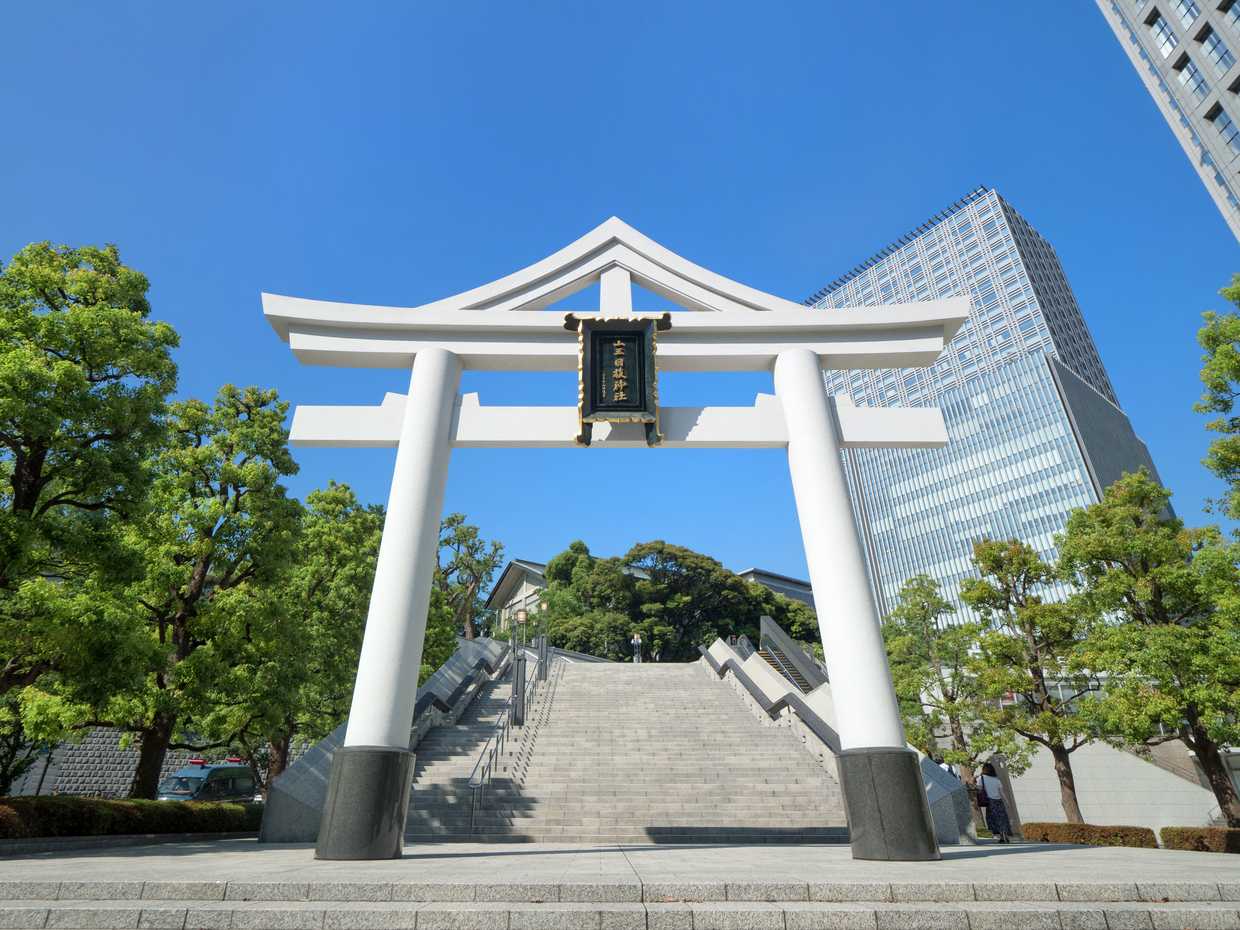
The Main Approach (Otoko-zaka) — The formal approach, marked by a large torii gate and a flight of stone steps. Because the steps are steep and long, this route is also called "Otoko-zaka" (the men's slope).

The West Approach — Connected directly to Tameike-Sanno Station and fitted with an escalator. This is the route we recommend if you're not confident about the climb, or if you're with elderly companions or young children.

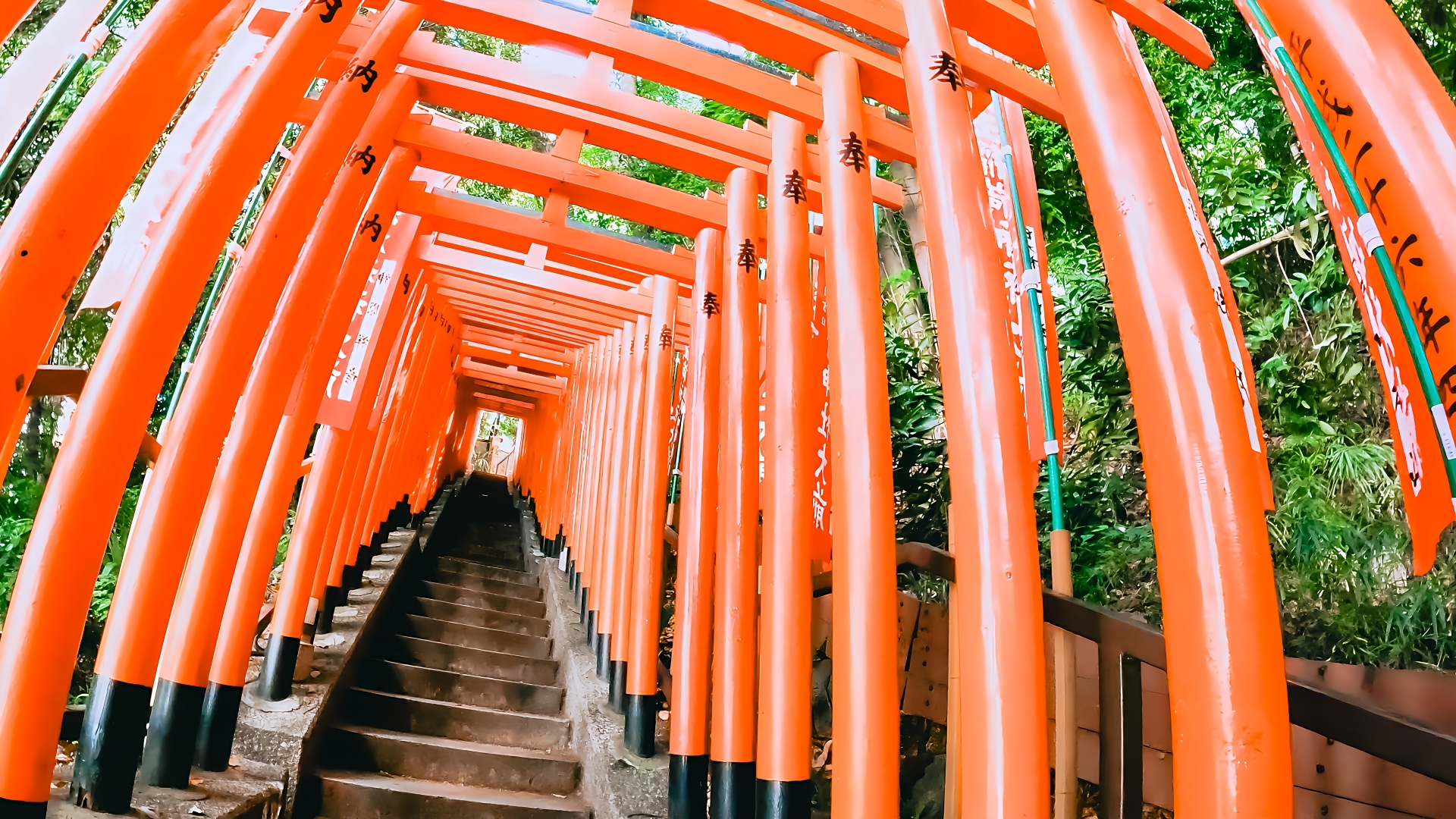
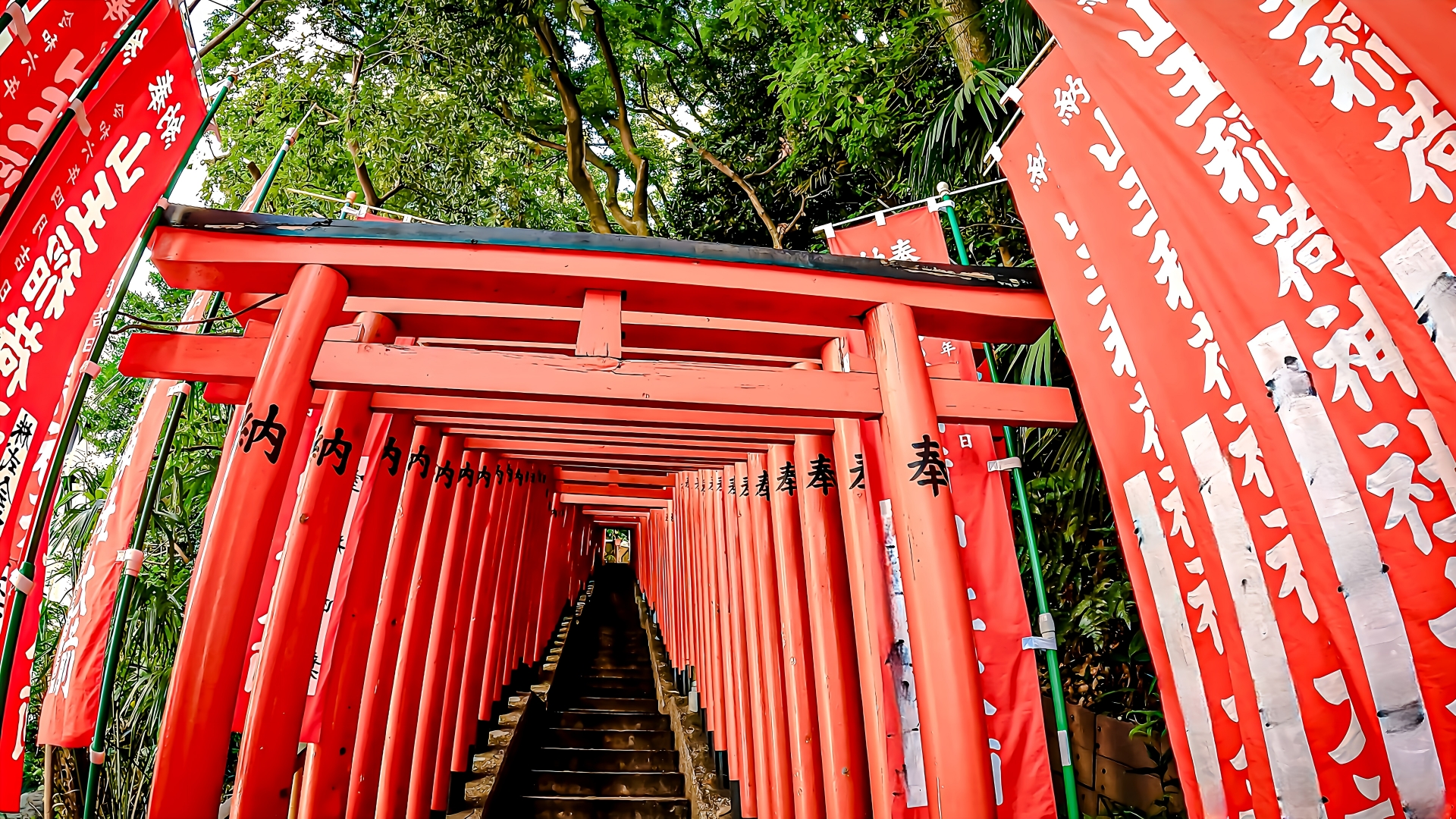
The Inari Approach (the Thousand Torii Gates) — The path leading to Sanno Inari Shrine, lined with a "thousand torii gates" reminiscent of Fushimi Inari Taisha in Kyoto. This sight is rare in Tokyo and has become a popular spot for photos.

The Best Seasons to Visit

You can visit Hie Shrine in any season, but a few times of year are especially worthwhile.

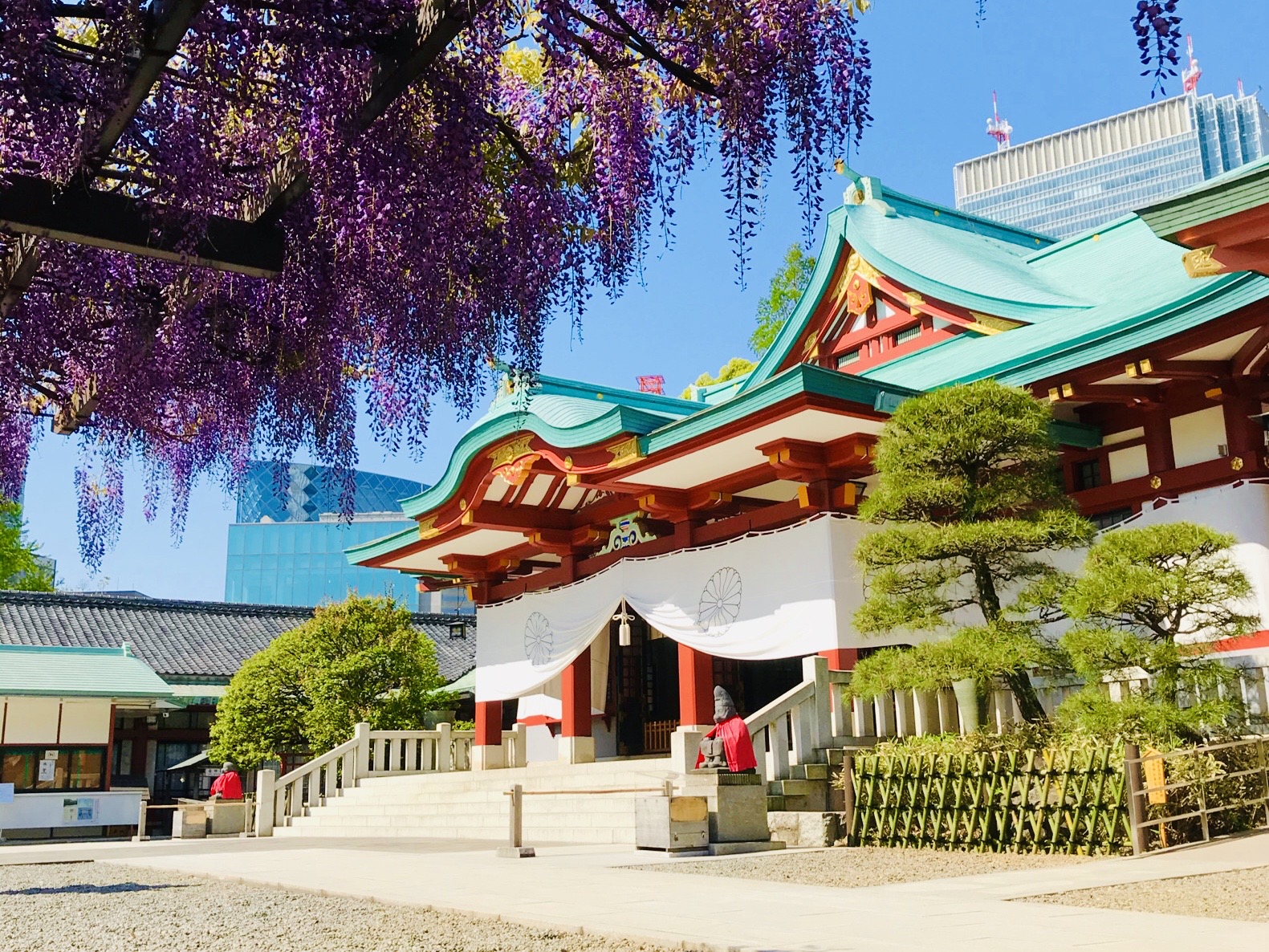
  • Spring (April–May) — Cherry blossoms and wisteria bloom beautifully across the grounds. The wisteria in particular is spectacular.
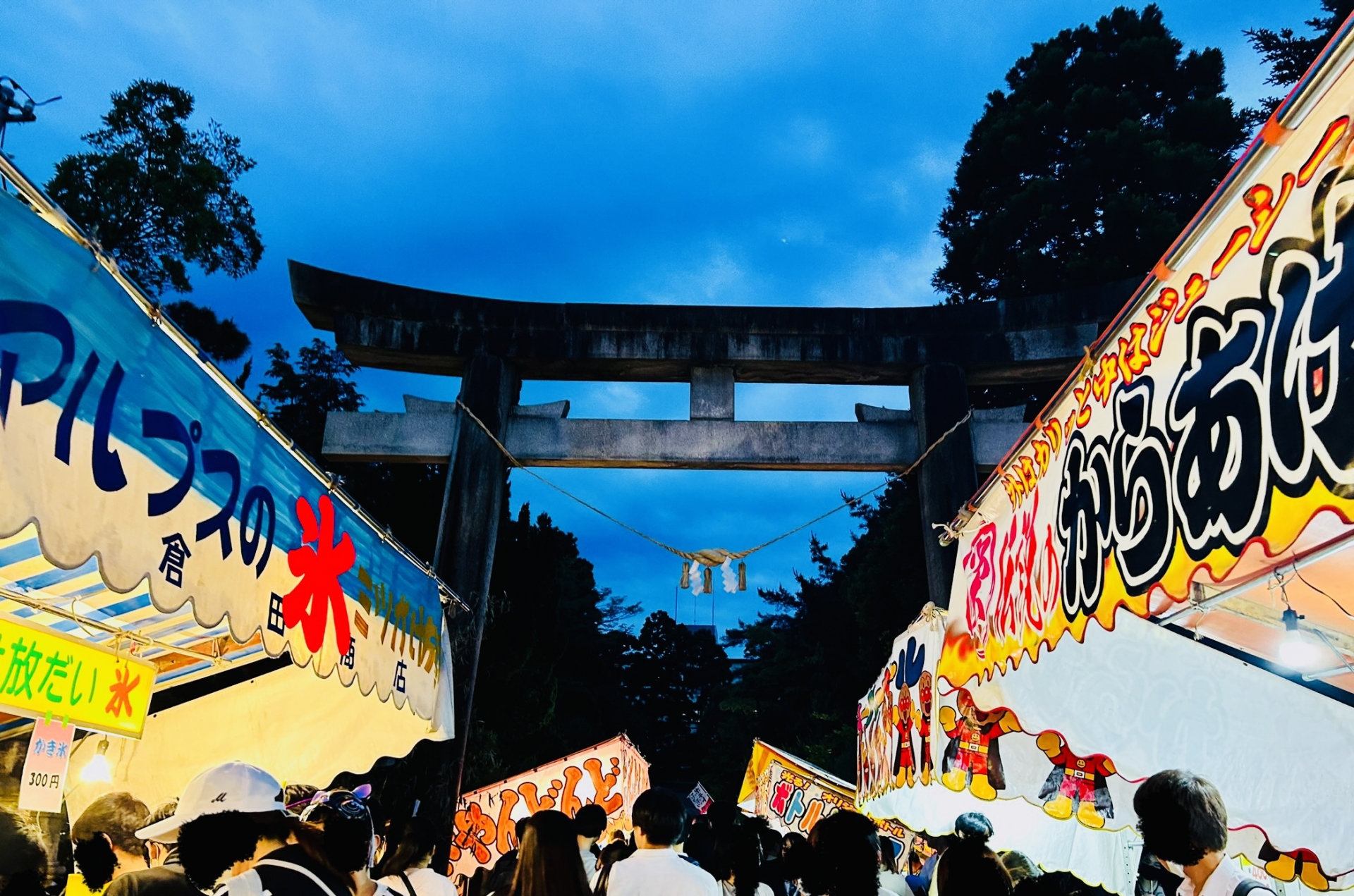
  • June — The Sanno Festival, one of Edo's three great festivals, takes place, letting you experience a traditional event straight out of the Edo period.
  • Autumn (October–November) — The fall foliage is lovely, and you can worship in a calm, relaxed atmosphere.

How to Avoid the Crowds

  • Weekday mornings are often relatively quiet.
  • Weekends and public holidays tend to get crowded, so early morning or evening visits are best.
  • The first three days of the new year are extremely busy with hatsumode (New Year's worship).

Hours and Admission

  • Opening hours: 6:00 a.m. to 6:00 p.m. (open year-round)
  • Admission: Free (the Treasure Hall is also free to visit)
  • Treasure Hall hours: 9:00 a.m. to 4:00 p.m. (closed Tuesdays and Fridays)

Highlights of the Grounds and How to Explore Them

The Shinmon Gate and Main Hall

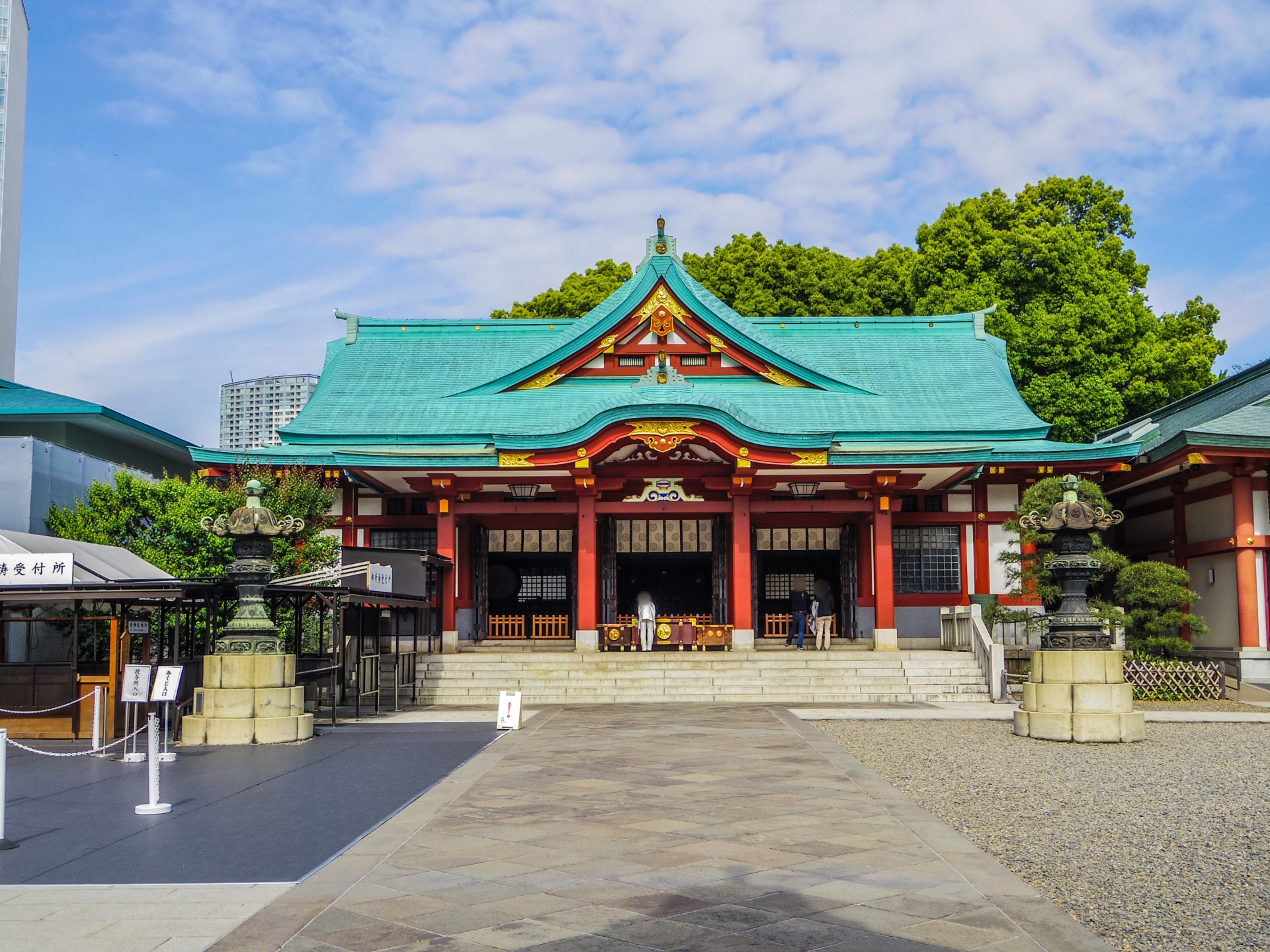
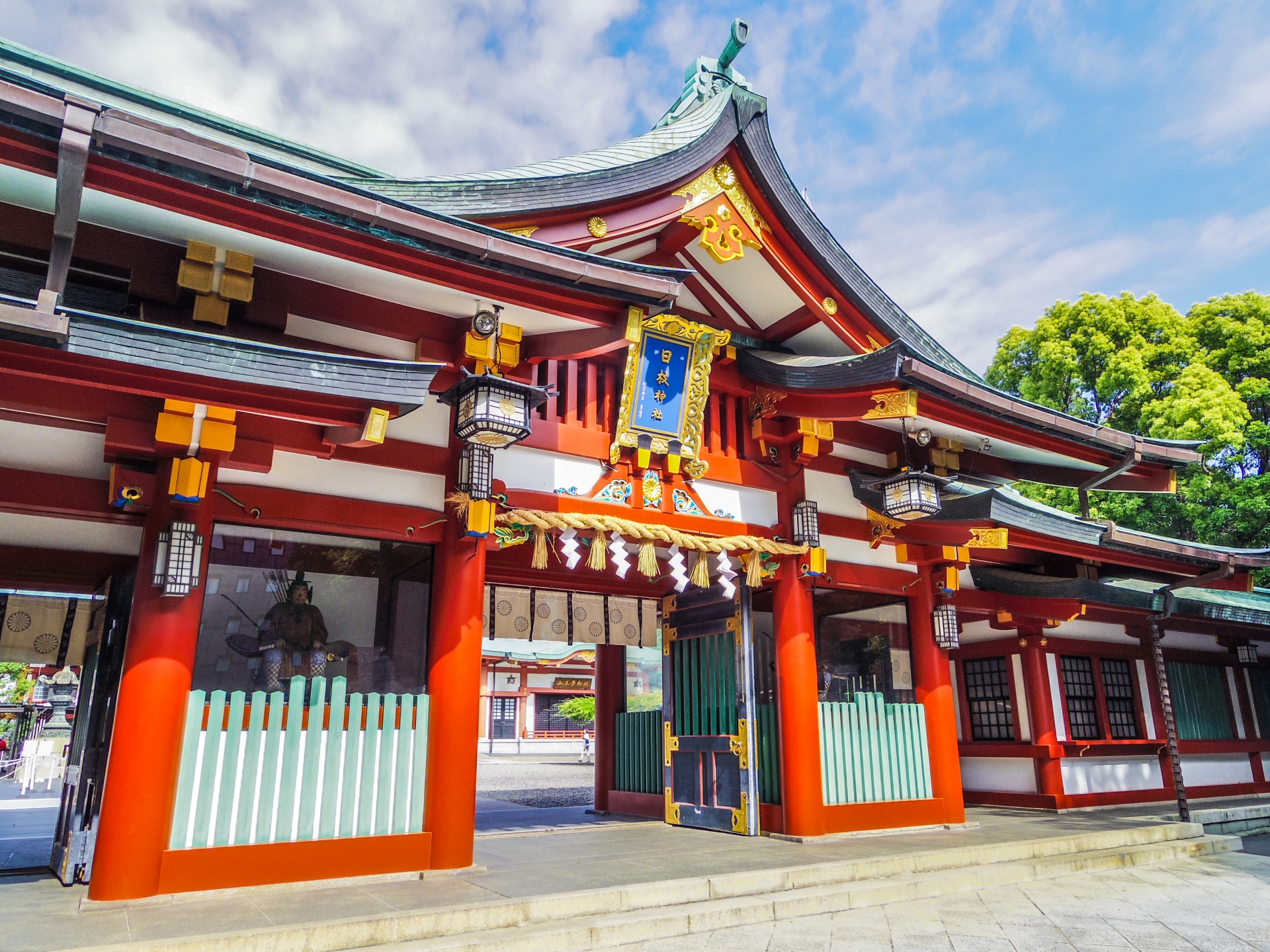
At the entrance to Hie Shrine stands a large Shinmon gate in vivid vermilion. Pass through it and the spacious grounds open up before you, with the Main Hall (Honden) directly ahead. The Main Hall was rebuilt in 1958 (Showa 33), following the form of the Edo-period building—a National Treasure—that had been lost to war. It is a beautiful vermilion-lacquered structure in the gongen-zukuri style (a traditional style of Shinto shrine architecture), wrapped in a solemn atmosphere.

The ceiling of the Main Hall features 123 ceiling paintings dedicated in 2008 (Heisei 20). Created under the supervision of the Tokyo University of the Arts, they depict the flowers, birds, and insects of Edo and Musashino in rich colors using natural mineral pigments.

The Sacred Monkey Statues and the "Petting Monkeys"

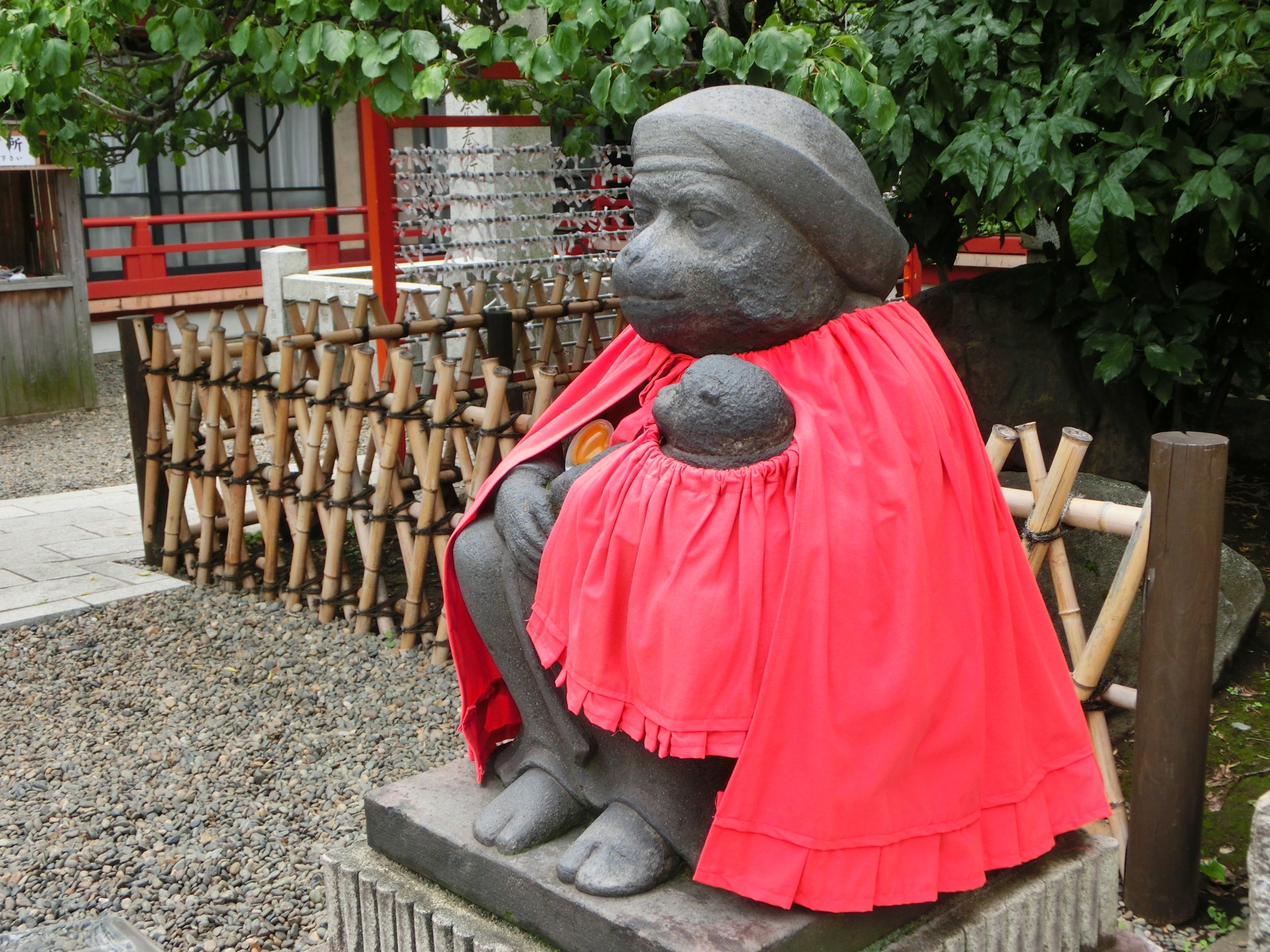
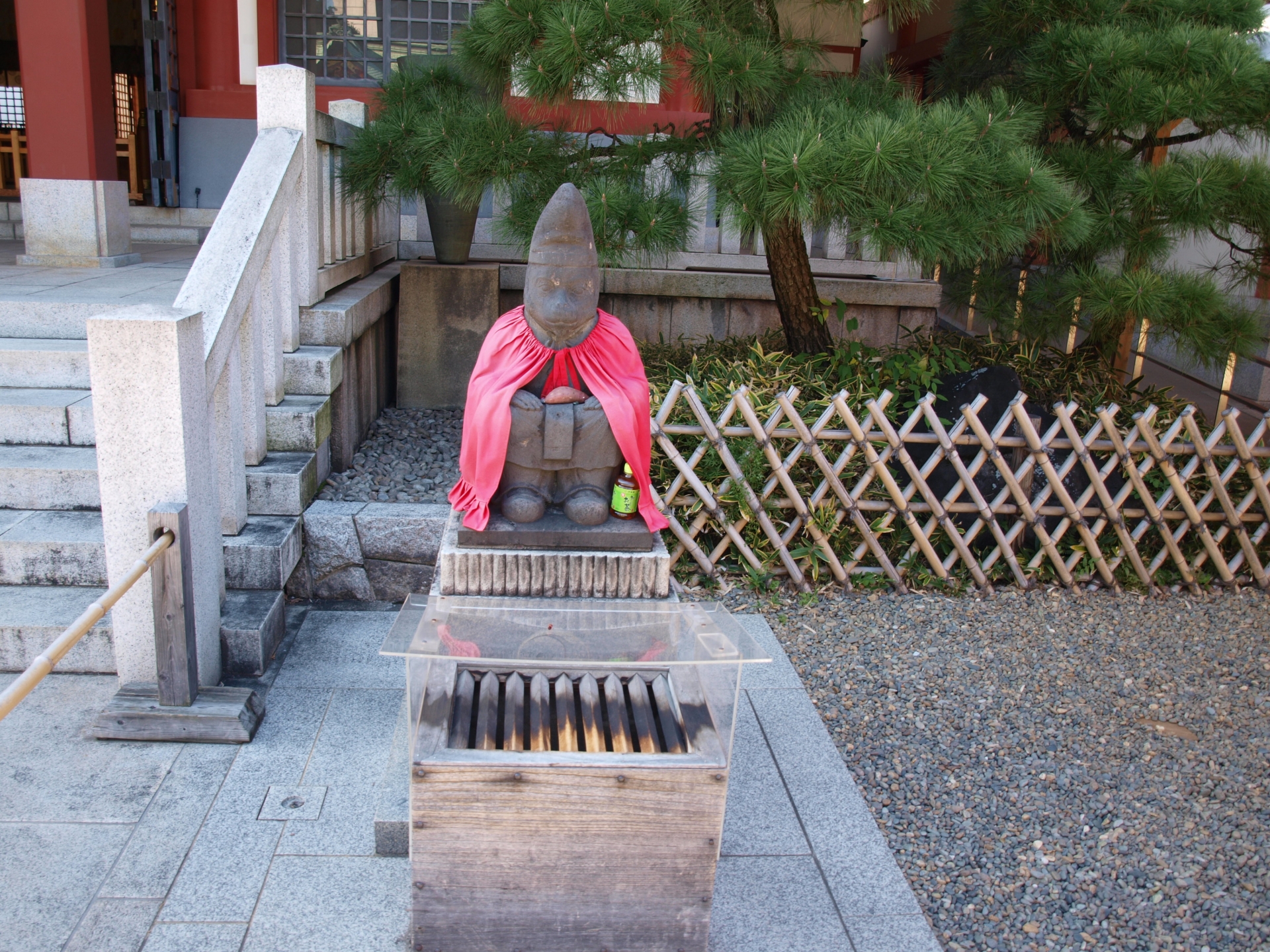
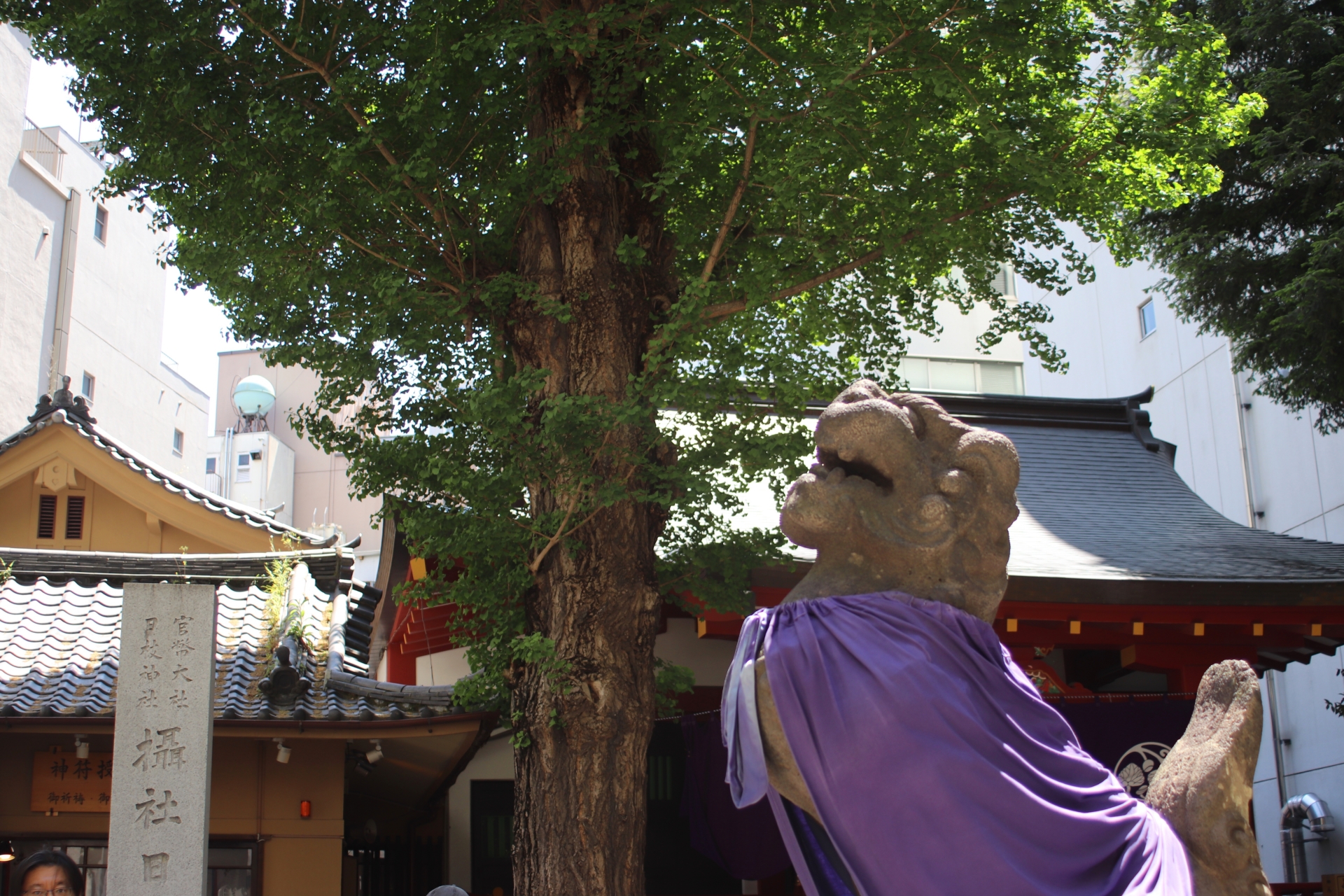
One of Hie Shrine's most distinctive features is the "sacred monkey" (masaru). The grounds hold statues of a parent-and-child pair of monkeys, and touching each is said to bring a different blessing. Monkeys have long been revered as the messengers of the deity of Hiyoshi Taisha at the foot of Mount Hiei.

  • The mother monkey — Petting her is said to bring blessings for family safety, conceiving a child, and safe childbirth.
  • The father monkey — From the wordplay on "masaru" (to surpass / to ward off evil), he is said to bring blessings for business prosperity, the warding off of misfortune, and good relationships.

Sanno Inari Shrine and the Thousand Torii Gates

Located on the west side of the grounds, Sanno Inari Shrine is famous for its "thousand torii gates," which call to mind Fushimi Inari Taisha in Kyoto. The long rows of vermilion gates are strikingly beautiful and have become a popular photo spot among foreign visitors. The shrine is said to grant blessings for business prosperity and bountiful harvests.

The Treasure Hall

Built in 1979 (Showa 54), the Treasure Hall houses many treasures connected to the Tokugawa shogunal family, including 31 swords designated as National Treasures and Important Cultural Properties. Since admission is free, it's an especially good stop for anyone interested in Japan's traditional culture and history.

The Sacred Monkey (Masaru) and Its Blessings

The Origins of Sacred Monkey Worship

The connection between Hie Shrine and monkeys traces back to Hiyoshi Taisha in Shiga Prefecture (the head shrine of all Hie shrines). Monkeys have a long history of being revered as the messengers of Oyamakui-no-kami, the principal deity. Because the Japanese words for "monkey" (saru) and "to leave" (saru) sound the same, the monkey also carries the meaning that "misfortune leaves."

There's also a tradition that the monkey brings good relationships—a play on saru, "monkey," and en, "connection"—so it is believed to bestow the blessing of good matches as well. And since "masaru" can also mean "to surpass," it is said to bring good fortune in competition and in one's career.

How to Pet the Sacred Monkey Statues Effectively

When you pet the sacred monkey statues, keep the following points in mind.

  1. Calm yourself — First, take a deep breath and settle your mind.
  2. Clarify your wish — Be clear about which blessing you're seeking.
  3. Choose the right statue — Pick the father or mother monkey statue to match your wish.
  4. Pet gently — Stroke the statue carefully and gently, not roughly.
  5. Show gratitude — Finally, bow once with a feeling of thanks.

The Seven-Color Sacred Monkey Charm

One of Hie Shrine's most popular charms is the "seven-color sacred monkey charm." Each color carries a different blessing.

ColorBlessing
PurpleWarding off disaster and inviting good fortune
BlueCareer advancement (success at work)
GreenLong life and good health
WhiteFulfillment of one's wishes
YellowConceiving a child and safe childbirth
OrangeBusiness prosperity (success in business)
RedFinding a good match

The Thousand Torii Gates and Sanno Inari Shrine

A Rare Sight in Tokyo: The Thousand Torii Gates

The approach to Sanno Inari Shrine, located within the grounds of Hie Shrine, is known for its vivid vermilion "thousand torii gates." They evoke the thousand torii gates of Fushimi Inari Taisha in Kyoto—a rare sight that you won't often find within Tokyo.

These torii gates have a distinctive shape, opening slightly wider toward the top to follow the line of a person's height, and their vermilion color is brilliant. Lit by the morning or evening sun, the view becomes even more beautiful.

Tips for Taking Photos

Photographing the thousand torii gates is one of the highlights for many visitors to Hie Shrine. Here are a few tips for getting better shots.

  • Early-morning light — Arrive early and you'll find fewer people and the soft light of the morning sun illuminating the gates beautifully.
  • Play with the angle — Shooting upward from a slightly low position makes the rows of gates look especially striking.
  • Go vertical — Since the gates line up lengthwise, hold your phone vertically for the best composition.
  • Aim for quieter times — Weekday mornings are often relatively uncrowded.

That said, lingering for long photo sessions can inconvenience other worshippers, so be mindful of those around you.

The Blessings of Sanno Inari Shrine

Sanno Inari Shrine is said to grant blessings for business prosperity, bountiful harvests, and family safety. Foxes are known as the messengers of the Inari deity, and they're believed to carry your wishes to the gods.

Charms and Goshuin Stamps

Distinctive Charms

Hie Shrine offers many distinctive charms featuring the sacred monkey motif.

  • Masaru charm — A charm with the sacred monkey motif; the blessing varies by color.
  • Business charm — A charm for success at work and in one's career. It's a fitting offering for a shrine located in Nagatacho, the center of politics.
  • Michibiki charm — A charm for those setting out on a journey, advancing their studies, or starting down a new path.
  • Matchmaking charm — A charm for finding a good match.
  • Safe-childbirth charm — A charm to pray for a safe delivery.
Type of CharmPrice (approx.)Blessing
Masaru charmFrom ¥1,000Varies by color
Business charm¥1,000Success at work and in one's career
Michibiki charm¥800Safe travels, opening new paths
Matchmaking charm¥1,000Finding a good match
Safe-childbirth charm¥1,000Praying for a safe delivery

Prices are subject to change.

About Goshuin Stamps

At Hie Shrine, you can receive goshuin (red ink stamps) from both the main shrine and its auxiliary shrines.

  • Main shrine goshuin — Available at the shrine office.
  • Sanno Inari Shrine goshuin — Available in front of the Inari shrine.
  • Sarutahiko Shrine goshuin — Available in front of Sarutahiko Shrine.

Goshuin are issued from 9:00 a.m. to 4:00 p.m. They can take a while during busy periods, so we recommend allowing yourself plenty of time.

Limited-edition goshuin notebooks are also sold, and the ones featuring distinctive sacred monkey designs are especially popular.

The Sanno Festival: Edo's Magnificent Traditional Celebration

One of Japan's Three Great Festivals

The Sanno Festival is counted among Japan's three great festivals, alongside the Gion Festival in Kyoto and the Tenjin Festival in Osaka. It is also known as the foremost of Edo's three great festivals (the others being the Kanda Festival and the Fukagawa Hachiman Festival).

In the Tokugawa era it was held as the "Tenka Festival" (the shogun's festival), receiving special reverence from the shogunal family, and it was the only festival whose portable shrines (mikoshi) were permitted to enter Edo Castle. From the time of the third shogun, Iemitsu, onward, successive shoguns attended and paid their respects, making it a grand event that came to represent the culture of Edo.

The Festival's History and Highlights

The origins of the Sanno Festival go back to the era of Tokugawa Iemitsu, the third shogun. Because Iemitsu was born within Edo Castle, he held Hie Shrine in special reverence as the "guardian deity of my birthplace," and the festival grew from that devotion.

In the festival's centerpiece, the Shinko-sai procession, a parade of some 500 people dressed in splendid costumes winds through the heart of the city in an atmosphere straight out of the Edo period. This procession carries on the tradition of the "Joran-sai," when the shogun once welcomed the portable shrine from within the castle.

Suspended during the war, the Sanno Festival resumed in 1952 (Showa 27) and is still held every other year today.

Festival Dates and How to Take Part

The Sanno Festival is held every June, with the main Sanno festival typically taking place around June 15. Various events unfold over roughly ten days, and the Shinko-sai (the portable shrine procession) is held in alternate years.

During the festival, traditional performing arts are dedicated and a variety of events are held on the grounds. Limited-edition Sanno Festival charms and tenugui hand towels are also offered, so visiting during this season makes for an even more special experience.

Taking part is generally free and open: you can watch the portable shrine procession or enjoy the events on the grounds. Note that the roadsides can get crowded during the procession, so it's a good idea to secure a good spot early.

National Treasures and Important Cultural Properties at the Treasure Hall

An Overview of the Collection

The Treasure Hall of Hie Shrine houses many precious treasures connected to the Tokugawa shogunal family, including 31 swords designated as National Treasures and Important Cultural Properties. These treasures are all of great historical value, telling the story of the deep ties between the Tokugawa family and Hie Shrine.

What to Look For

When you visit the Treasure Hall, paying attention to the following will give you a deeper understanding of Japanese history and culture.

  • Swords — Admire the beauty and refined craftsmanship of Japanese swords. Take note of each blade's swordsmith and historical background.
  • Items connected to the Tokugawa family — The treasures dedicated by the shogunal family reflect the faith and aesthetic sense of the powerful figures of the time.
  • Old documents — Valuable records that document historical events are also on display.

The Treasure Hall is open except on Tuesdays and Fridays, but closing days may change due to shrine events. We recommend checking in advance.

Sightseeing Spots Around Hie Shrine

The National Diet Building

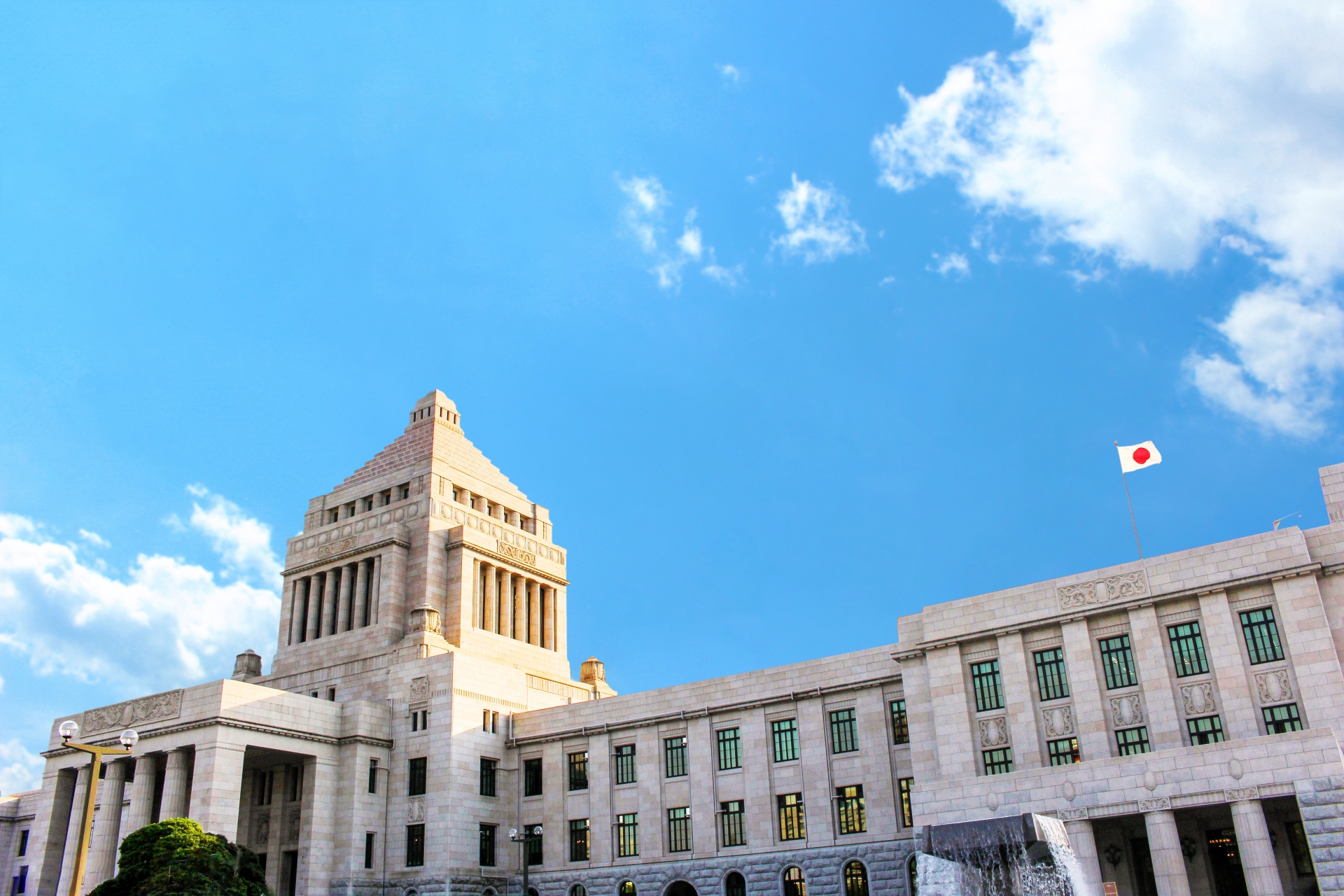
About a five-minute walk from Hie Shrine stands the National Diet Building, the seat of Japan's legislature. Guided tours are offered (advance reservations may be required), letting you experience the center of Japanese politics firsthand.

Akasaka Sacas

Akasaka Sacas, a complex near Akasaka Station on the Tokyo Metro, is a popular spot gathering restaurants, cafés, and shops. It makes a great stop before or after visiting Hie Shrine.

Tokyo Midtown

A short walk from Hie Shrine brings you to Tokyo Midtown in Roppongi. This complex houses shops, offices, a hotel, and museums; the Suntory Museum of Art in particular offers a rich program of exhibitions on Japanese traditional crafts and contemporary art.

The Imperial Palace

Walk from Hie Shrine toward the Imperial Palace and you'll reach this symbol of Japan. The Imperial Palace Outer Garden and Nijubashi Bridge are popular sightseeing spots. The Imperial Palace East Gardens are open to the public, where you can take in the beauty of a Japanese garden.

Worship Etiquette for Foreign Visitors

The Basic Way to Worship

There is a set etiquette for worshipping at a Japanese shrine. The following steps will guide you.

1.Bow before passing through the torii gate

 Give a slight bow before entering the sacred grounds.

2.Purify yourself at the temizuya 

Once inside the grounds, cleanse your hands and mouth at the temizuya (water pavilion).

  • Hold the ladle in your right hand and wash your left hand.
  • Switch the ladle to your left hand and wash your right hand.
  • Switch back to your right hand, pour water into your left hand, and rinse your mouth (the key is not to put the ladle directly to your mouth, but to rinse using the water cupped in your left hand).
  • Finally, stand the ladle upright so the water runs down the handle to cleanse it, then return it to its original place
    Bow before passing through the torii gate — Give a slight bow before entering the sacred grounds.

3.Worship at the Main Hall 

Bow slightly before the Main Hall, offer a coin, and ring the bell (if there is one). Then perform "two bows, two claps, one bow" (bow twice, clap your hands twice, and bow once at the end).

About Photography

Photography is generally permitted on the grounds of Hie Shrine, but keep the following in mind.

  • Photography is prohibited inside the Main Hall, inside the prayer hall, and at the souvenir counter.
  • The use of tripods and reflector boards is prohibited as a rule.
  • Be considerate so as not to inconvenience other worshippers.
  • Photography for commercial purposes requires permission.

What's Prohibited and What to Keep in Mind

  • Loud conversation — Worship quietly.
  • Eating and drinking — As a rule, eating and drinking on the grounds is prohibited (except during special events).
  • Smoking — A shrine is a sacred place, so please refrain from smoking.
  • Off-limits areas — Do not enter areas marked off by ropes or fences.

Frequently Asked Questions

Q: Which deity does Hie Shrine enshrine?

A: The principal deity is Oyamakui-no-kami, a god who governs mountains and water. The shrine offers a wide range of blessings, including matchmaking, business prosperity, and career success.

Q: Which of Hie Shrine's charms are especially popular?

A: The "masaru charm," featuring the sacred monkey (masaru) motif, is especially popular. It offers different blessings depending on the color, and comes in seven varieties.

Q: When is the Sanno Festival held?

A: It's held every June, with various events unfolding over roughly ten days. The especially splendid Shinko-sai (the portable shrine procession) is held in alternate years.

Q: What's the best time of day to visit Hie Shrine?

A: Weekday mornings are often relatively quiet, letting you worship at a leisurely pace. Weekends and holidays tend to get crowded, so an early-morning or evening visit is best.

Q: Are there places to eat near Hie Shrine?

A: There are plenty of restaurants and cafés around Akasaka Station and Tameike-Sanno Station. Akasaka Sacas in particular has dining options across a range of cuisines, making it a great stop before or after your visit.

In Closing

Standing in the heart of Tokyo, Hie Shrine continues to carry the history and traditions of the Edo period into the present, captivating countless people as a modern-day power spot. Even amid the clamor of the city, take a single step into the grounds and you'll feel a mysteriously calming, sacred atmosphere settle over you.

With its sacred monkey statues, thousand torii gates, Treasure Hall, and many other highlights, the shrine offers a wonderful chance to connect with Japan's traditional culture. And if you can visit during the Sanno Festival in June, you can experience the grandeur of a celebration that has carried on since the Edo period.

When you're sightseeing in Tokyo, be sure to visit Hie Shrine and connect with Japan's Shinto culture and history. It's bound to be a special experience that stays with you.


A note about the information in this article
Prices and fees commonly change with the season or the plan you book.

Recent economic shifts and the recovery of inbound tourism have also led to fee revisions at many sites.

Treat the prices in this article as approximate, and check each venue's official website for the latest information before booking.

関連記事

おすすめ記事